




நற்றிணை 123
பாடல் · The poem
Tap a word to see where else it occurs.
பொருள் · Meaning in TamilAI
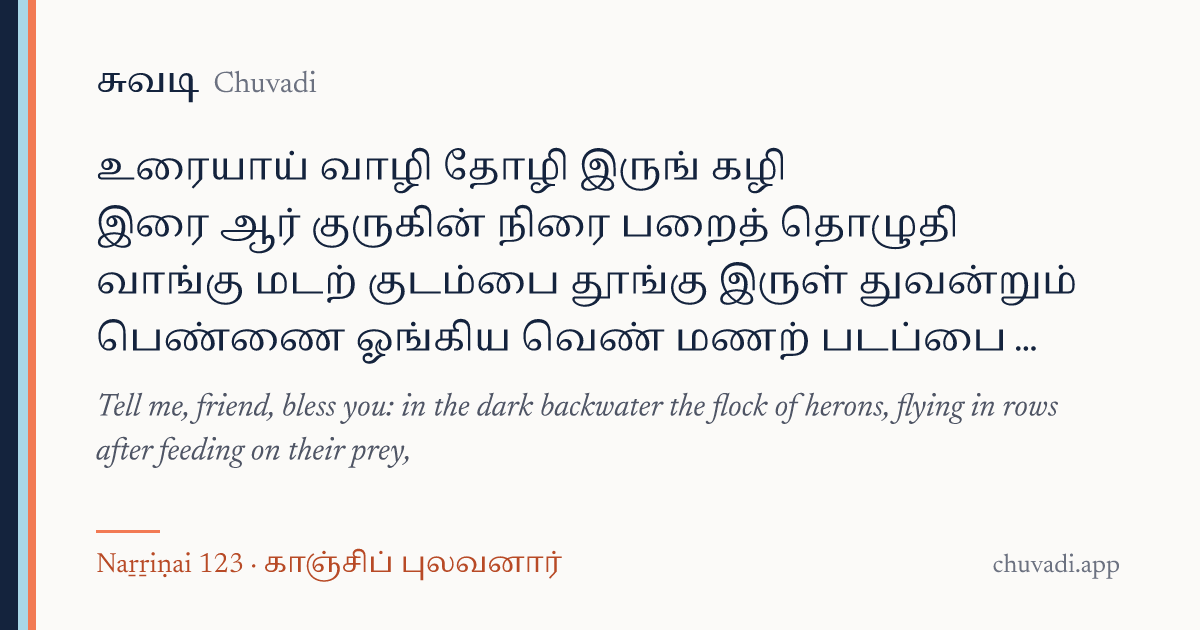
தோழி, வாழ்வாயாக! சொல். கரிய உப்பங்கழியில் இரையைத் தின்று நிறைந்த நாரைகளின் கூட்டம், வரிசையாகப் பறந்து வந்து, இருள் அடர்ந்து வரும் வேளையில், உயர்ந்த பனைமரங்கள் நிற்கும் வெண்மணல் தோட்டத்தில் வளைந்த மட்டைகளுக்கு இடையே உள்ள கூடுகளில் நெருங்கித் தங்குகின்றன. நாமோ தோழியர் கூட்டத்தோடு கடற்கரைச் சோலையில் காலையில் தேன் மணக்கும் மலர்ந்த குளிர்ந்த நறுமணமுள்ள குவளை மலர்களைப் பறித்தோம்; மாறுபட்ட நிறங்களும் மடிப்புகளும் உடைய தழையாடையை அழகாகத் தொடுத்தோம்; கோடு கிழித்துக் கட்டிய மணல் சிற்றில்களை நோக்கி ஆர்வத்தோடு ஓடினோம்; புலால் நாறும் அலைகள் மோதும் வளைந்த அடியையுடைய கண்டல் மரத்தின் அருகே அழகிய கரையில் ஈரமான வளையில் இருக்கும் நண்டைப் பார்த்து நின்றோம். அந்தச் சிறு விளையாட்டுகளும் நின்றுபோய், நினைத்து நினைத்து வருந்தும் பெருந்துன்பமாக இந்த நோய் ஆனது ஏன்?
நெய்தல் திணை; தலைவன் மறைவில் நின்று கேட்கும்படி தோழி தலைவியிடம் சொல்லியது. மாலையில் நாரைகள் தம் கூடுகளுக்குத் திரும்புவது, எல்லா உயிர்க்கும் உறைவிடம் உண்டு, தலைவிக்கும் மணவாழ்க்கை என்னும் உறைவிடத்தைத் தலைவன் தர வேண்டும் என்பதைக் குறிப்பாக உணர்த்துகிறது.
ஆங்கிலம் · English translationAI
Translation
- Tell me, friend, bless you: in the dark backwater
- the flock of herons, flying in rows after feeding on their prey,
- crowds into nests among the curving fronds in the thickening dark
- in the white-sand garden where the palmyras rise tall;
- with our band of friends in the seaside grove we plucked in the morning
- cool, fragrant water-lilies whose open petals smell of honey,
- and wove leaf-skirts, lovely in their contrasting colours and pleats;
- we ran eagerly to the little sand-houses we had drawn in lines,
- and by the crooked-stemmed kaṇṭal kicked by the fish-smelling waves
- we watched the crab in its wet hole on the lovely shore;
- why have even these little games given way
- to this sickness that has turned to great grief to brood on?
What the poem says
The friend talks to the heroine while the hero, unseen, can hear (neytal; poem by Kāñcip Pulavaṉār). She recalls the girls' carefree days on the shore and asks why all that has turned into a lovesickness that leaves the heroine brooding.
The games she lists belong to girlhood on the coast: gathering water-lilies (kāvi) in the morning, weaving leaf-skirts, building toy houses of sand, watching crabs in their holes under the kaṇṭal (a mangrove) that the waves batter. These are the very places where the heroine first met the hero, and they are now lost to her.
The opening image is the evening return of the herons: having fed in the backwater, they crowd into their nests in the palmyra fronds as the dark comes down. Every creature has a home to go to at nightfall; the suggestion for the listening hero is that he should give the heroine one too, by marrying her. The line structure is loose: the question begun in line 1 is only completed at the end.