




நற்றிணை 124
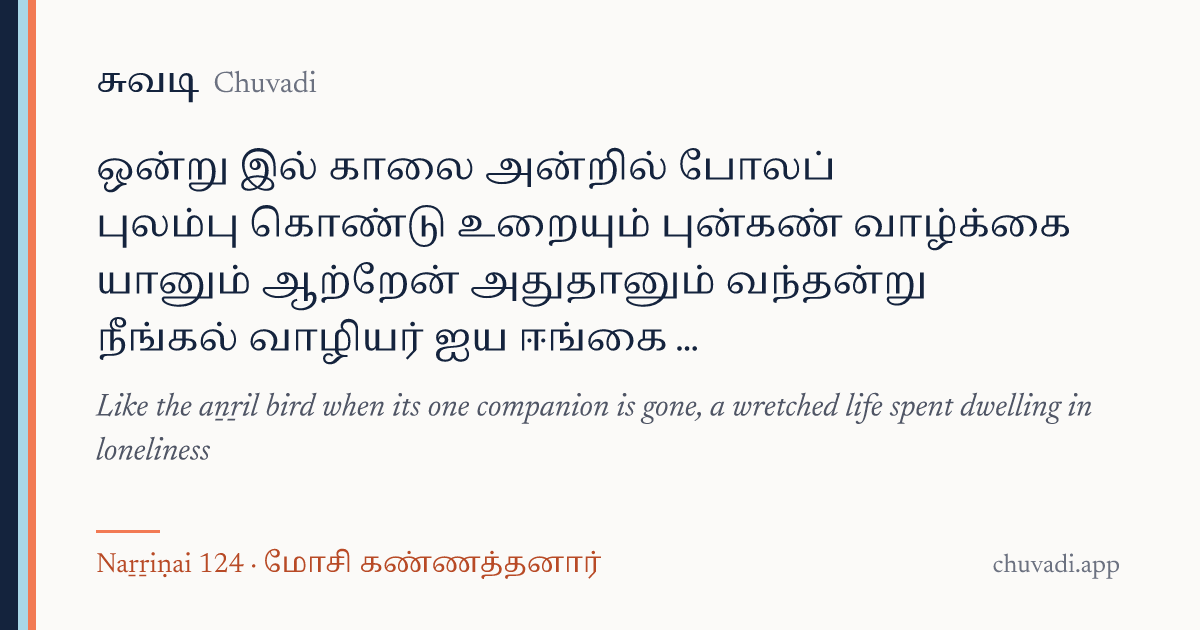
பாடல் · The poem
Tap a word to see where else it occurs.
பொருள் · Meaning in TamilAI
தன் ஒரு துணை இல்லாதபோது வருந்தும் அன்றில் பறவையைப் போலத் தனிமையில் துயருற்று வாழும் துன்ப வாழ்க்கையை நானும் தாங்க மாட்டேன்; அந்தப் பருவமும் இப்போது வந்துவிட்டது. ஐயனே, வாழ்வாயாக! பிரிந்து செல்லாதே. உயர்ந்த மணல் மேட்டில் ஈங்கையின் மொட்டுகளும் அதிரலின் மலர்களும் பரவிக் கிடக்கின்றன. அங்கே பெண்மானின் வலிய குளம்புகள் அழுந்திய பள்ளங்களில், உருகும் வெள்ளியைக் கொண்ட கலம் போலக் காண விருப்பம் தரும்படி, தெளிந்த நீர்க்குமிழிகள் பொங்கி வழிகின்றன. இப்படிக் குளிர்ந்த நீர் எங்கும் நிறைந்து நிற்கும் இந்தப் பருவத்திலா நீ பிரிவது?
நெய்தல் திணை; தலைவன் பிரியப்போவதை அறிந்த தோழி அவனிடம் சொல்லியது. துணையைப் பிரிந்தால் உயிர் வாழாத அன்றில் பறவை தலைவியின் நிலையைக் காட்டுகிறது. மான் குளம்புச் சுவடுகளில் நீர் பொங்குவதை உருகும் வெள்ளியோடு ஒப்பிடுவது, பிரிவு தாங்க முடியாத குளிர்ந்த மழைக்காலத்தைக் காட்டுகிறது. மணல்மேடு, மான், அதிரல் ஆகியவை நெய்தல் நிலத்துக்கு அவ்வளவு பொருத்தமாகத் தோன்றவில்லை.
ஆங்கிலம் · English translationAI
Translation
- Like the aṉṟil bird when its one companion is gone,
- a wretched life spent dwelling in loneliness
- I cannot bear, I too; and see, that season too has come.
- Do not leave, sir, bless you: now, when the īṅkai
- buds and the atiral blossoms on the high dune of sand
- are pressed down by the strong hooves of the doe, and like silver
- in a crucible as it melts, a pleasure to watch,
- bubbles of clear water well up and flow down,
- in this very season when cool water stands brimming everywhere.
What the poem says
The hero has told the friend that he must go away for a time, and she answers him on the heroine's behalf (neytal by the label; poem by Mōci Kaṇṇattaṉār).
She begins with the aṉṟil, a bird believed to pine and die when parted from its mate even briefly. A life of such loneliness, she says, "I cannot bear, I too," speaking as one who shares the heroine's every feeling. Then she points to the season itself: it is the cool, wet time when separation is hardest. On the high dunes the īṅkai is in bud and the atiral (a wild jasmine) is in flower; where a doe's hooves have pressed into the soaked sand, clear water bubbles up in the prints, glittering like silver melting in a crucible.
The simile of molten silver is unusual and exact, catching the shine of water welling into a small hollow. The setting of dunes, does and flowering creepers fits neytal only loosely, and "that too has come" in line 3 is taken here to mean the rainy season.