



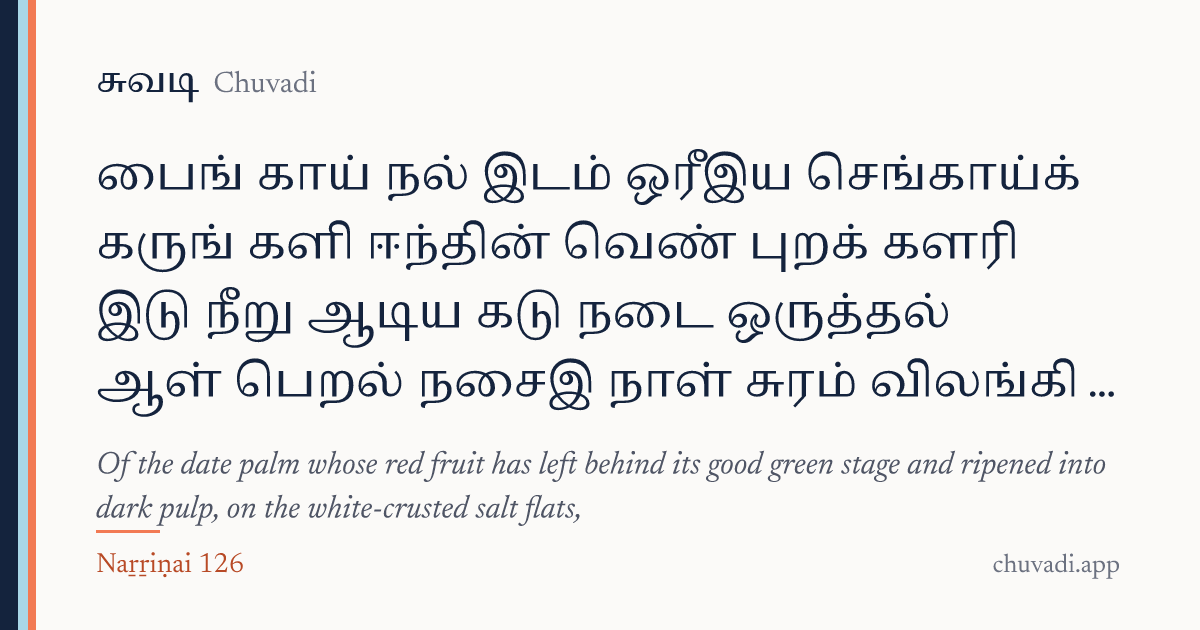

நற்றிணை 126
பாடல் · The poem
Tap a word to see where else it occurs.
பொருள் · Meaning in TamilAI
பசுங்காய் என்னும் நல்ல நிலையைக் கடந்து செங்காயாகி, கரிய கனியாகப் பழுத்த ஈச்சமரங்கள் நிற்கும் வெண்மையான மேற்பரப்புடைய உவர் நிலத்தில், தானே வாரி இறைத்த புழுதியில் குளித்த, விரைந்து நடக்கும் ஆண்யானை, மனிதரைப் பிடிக்கும் ஆசையோடு பகலில் பாலைவழியைத் தடுத்து நிற்கும். விரைந்து வரும் வழிப்போக்கர் யாரையும் காணாததால், அந்தச் சினத்தைப் பனைமரத்தின் மீது கொட்டித் தணியும். அத்தகைய பாழான நாட்டு வழியைக் கடந்து சென்று ஈட்டும் பொருள் இன்பம் தரும் என்றாலும், இளமையைவிடச் சிறந்த செல்வம் இல்லை. இளமை கழிந்த பிறகு செல்வம் காம இன்பத்தைத் தருவதும் இல்லை. ஆகவே, நெஞ்சே, நிலைக்காத பொருள்மீது கொண்ட ஆசையால் கட்டுண்டு நீ செல்வதானால் விரைந்து செல்; உன் செயல் வெற்றி பெறுவதாக!
பாலைத் திணை; பொருள் தேடச் செல்லத் துணிந்த தன் நெஞ்சைக் கடிந்து, தலைவன் பயணத்தைக் கைவிட்டது. வழியில் காத்திருந்து பனைமரத்தின் மீது சினத்தைத் தீர்க்கும் யானை பாலை வழியின் கொடுமையைக் காட்டுகிறது. இறுதி அடிகள் கேலியானவை: போவதானால் நெஞ்சு தனியாகப் போகட்டும், தான் தலைவியோடு தங்குவேன் என்பது கருத்து.
ஆங்கிலம் · English translationAI
Translation
- Of the date palm whose red fruit has left behind its good green stage
- and ripened into dark pulp, on the white-crusted salt flats,
- the fast-striding bull elephant, bathed in the dust it has thrown,
- eager to catch a man, blocks the wasteland path by day,
- and finding no hurrying travellers, the rage it holds
- it vents upon a palmyra and grows calm: such is the road of that ruined land.
- Even if the wealth earned by crossing it can give delight,
- there is no wealth better than youth;
- and once youth has passed, wealth
- cannot give the joy of love. So,
- if you go, bound by the craving for wealth that never stays,
- go quickly, heart, and may your task succeed!
What the poem says
The hero has half decided to cross the wasteland in search of wealth. Here he argues with his own heart and, the colophon says, gives up the journey (pālai; the poet's name is lost).
The first six lines describe the road. On white salt flats where date palms (īntu) carry ripening fruit, a bull elephant powdered with dust lies in wait for travellers; when none come, it turns its anger on a palmyra tree. The picture is meant to frighten: this is the country the heart is so ready to cross.
The argument that follows is plain and pointed. Wealth may bring pleasure, but nothing is richer than youth, and once youth is gone no amount of wealth can buy back love. The last lines are ironic: if the heart must go, let it go alone, quickly, and good luck to it; the man himself will stay with his wife.