




நற்றிணை 127
பாடல் · The poem
Tap a word to see where else it occurs.
பொருள் · Meaning in TamilAI
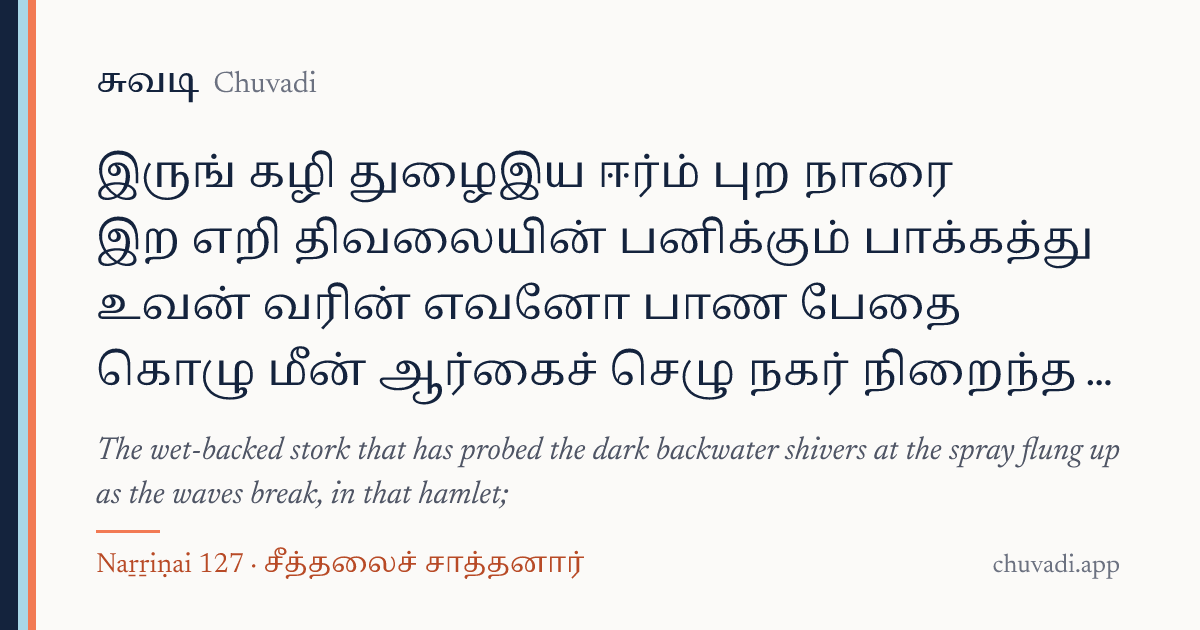
கரிய உப்பங்கழியில் இரை தேடித் துழாவிய ஈரமான முதுகையுடைய நாரை, அலைகள் உடைந்து எறியும் நீர்த்துளிகளால் குளிரில் நடுங்கும் கடற்கரைச் சிற்றூர் அது. பாணனே, அங்கே அவன் வந்தால் என்ன ஆகும்? கொழுத்த மீனை உண்ணும் வளமான மனைகள் நிறைய, கல்வியில்லாத, சினம் மிக்க அண்ணன்மார் அவளுக்கு இருந்தாலும், அந்தப் பேதைப்பெண் தன் தோழியரோடு முன்பு மணல்வீடு கட்டி விளையாடிய, குழந்தை பெறாத பாவையை முதன்மையாக எடுத்துக்கொண்டு, மென்மையான கடற்கரைத் தலைவனுக்காக மட்டுமன்றி, கடற்கரைச் சோலைக்குப் போவோம் என்று சொல்கிறாள்.
நெய்தல் திணை; தலைவனுக்காகத் தூது வந்த பாணனுக்குத் தோழி வாயில் மறுத்தது. தலைவி இன்னும் பாவை விளையாடும் சிறுமி போலவே இருக்கிறாள், அவள் அண்ணன்மாரும் கடுமையானவர்கள் என்பதைச் சொல்லித் தோழி மறுக்கிறாள். நாரை குளிரில் நடுங்குவது தலைவியின் நிலையைக் குறிக்கலாம். இற எறி, தலையிட்டு ஓரும் என்னும் சொற்களின் பொருள் உறுதியாகத் தெரியவில்லை; பாடலின் கருத்தொடர்பும் தெளிவாக இல்லை.
ஆங்கிலம் · English translationAI
Translation
- The wet-backed stork that has probed the dark backwater
- shivers at the spray flung up as the waves break, in that hamlet;
- what would it matter if he came there, bard? The simple girl,
- though the rich houses that feed on fat fish are full
- of her brothers, untaught and quick to anger,
- takes the doll she once played with among her sand-play friends,
- the doll that bears no young, and setting it first,
- not only for the gentle lord of the shore,
- says, "Let us go," to the seaside grove.
What the poem says
A bard has come as the hero's go-between, and the friend sends him away (neytal; poem by Cīttalaic Cāttaṉār). The poem is hard to construe, and the reading given here is one of several possible.
As understood here, the friend's point is that the hero's coming would change nothing. The heroine is still a guileless girl: her family's prosperous houses are full of fierce, unlettered brothers, yet she goes on saying "Let us go to the grove," taking along the childhood doll she played with in the sand, as though she were still a child, and not only to meet the shore-lord there. The friend either doubts the hero or is warning that the brothers make any open approach dangerous.
The opening image of the stork shivering under the spray of the breaking surf may hint at the girl's own vulnerability. The words iṟa eṟi (line 2) and talaiyiṭṭu ōrum (line 7) are uncertain, and the logic linking the doll to the refusal is not fully clear.