




நற்றிணை 128
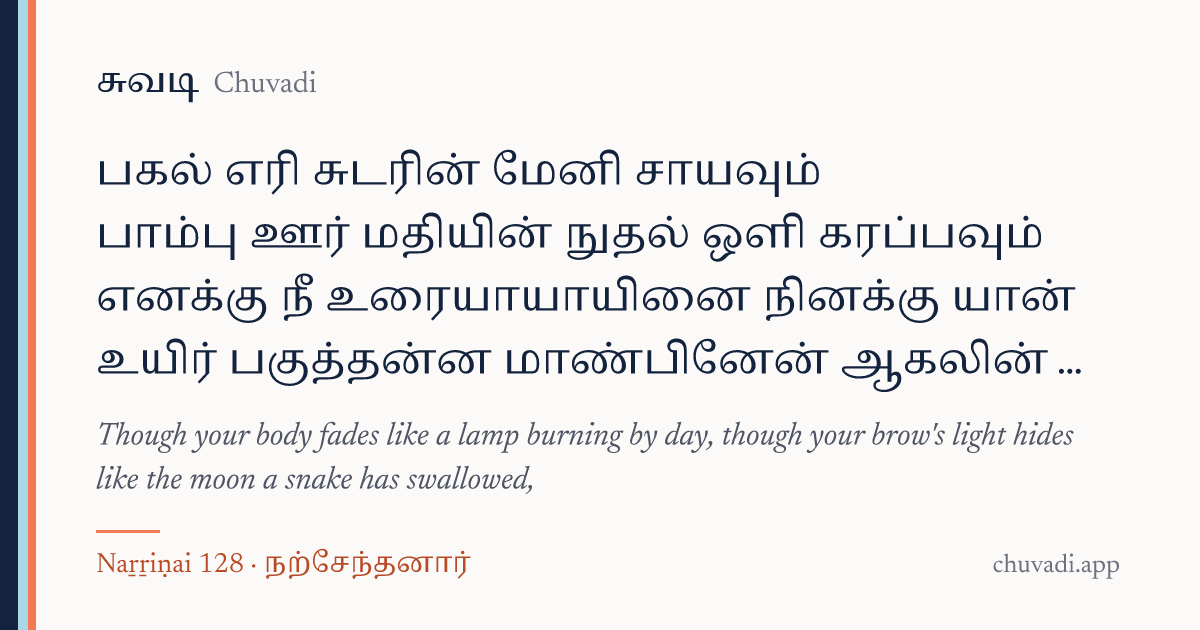
பாடல் · The poem
Tap a word to see where else it occurs.
பொருள் · Meaning in TamilAI
பகலில் எரியும் விளக்கைப் போல உன் மேனி ஒளி குன்றவும், பாம்பு விழுங்கிய நிலவைப் போல உன் நெற்றியின் ஒளி மறையவும், நீ எனக்கு எதையும் சொல்லவில்லை. உன் உயிரில் பாதியைப் பகிர்ந்துகொண்டவள் போன்ற பெருமை உடையவள் நான்; ஆகவே அதை நானே அறிந்துகொண்டேன். அழகிய அணிகலன் அணிந்தவளே, இவ்வளவு அழுவதை நிறுத்து. செழித்த கதிர்களையுடைய தினைப்புனத்தைக் காவல் காத்துக்கொண்டிருந்தபோது, கண்ணியும் கழலும் மாலையும் அணிந்த ஒருவன் அருகே வந்து, குளிர்ச்சியாக என் சிறிய முதுகைத் தழுவிக்கொண்டான். அன்றுமுதல் அதையே நினைக்கும் நெஞ்சோடு நான் உற்ற நோய் இப்படி ஆகிவிட்டது.
குறிஞ்சித் திணை; தலைவனின் வேண்டுகோளை ஏற்ற தோழி, தலைவி தன் காதலை ஒப்புக்கொள்ளும்படி, அந்த நிகழ்ச்சியைத் தனக்கே நடந்ததாகச் சொல்லியது. இறுதி அடி பாடலின் பகுதி அன்று; அது பாடலின் சூழலைச் சொல்லும் குறிப்பு, பாடலுக்குள் வந்து சேர்ந்துவிட்டது. தோழிக்குத் தலைவி அறத்தொடு நின்றது என்றும் இதற்கு வேறொரு சூழல் சொல்லப்படுகிறது.
ஆங்கிலம் · English translationAI
Translation
- Though your body fades like a lamp burning by day,
- though your brow's light hides like the moon a snake has swallowed,
- you would not tell me. Since I am to you
- as worthy as one who shares half your very life,
- I know how it is, I myself; so this great
- weeping, stop it now, you of fine jewels. In the thick-eared
- millet field, while I was on guard, a man came close,
- with a head-garland, an anklet, a chest-wreath, and coolly
- he clasped my small back; and since then,
- with a heart that thinks only of that,
- this is what it has become, the sickness I suffer.
What the poem says
The heroine is wasting away and will not say why. Her friend, who has already met the hero and agreed to help him, uses a trick to make her talk: she confesses a love affair of her own, which is really the heroine's (kuṟiñci; poem by Naṟcēntaṉār).
The two opening similes are striking: the heroine's body has lost its glow like a lamp lit in daylight, and her bright brow is dimmed like the moon in eclipse, which Tamil tradition pictures as a snake swallowing it. The friend scolds her gently for keeping silent with one who is as close as half of her own life, then tells "her" story: a man wearing garland, anklet and chest-wreath came upon her in the millet field and embraced her from behind, and ever since she has thought of nothing else. The heroine is meant to recognise herself and own her feelings.
The separate colophon gives a second reading: the heroine speaking openly to her friend.