



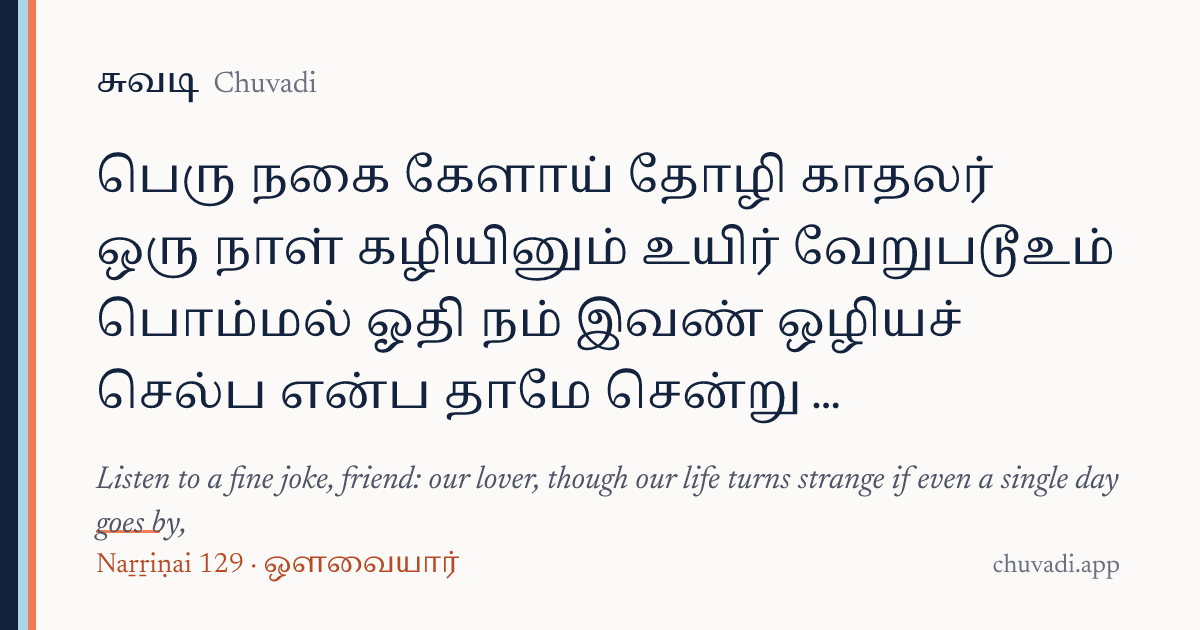

நற்றிணை 129
பாடல் · The poem
Tap a word to see where else it occurs.
பொருள் · Meaning in TamilAI
தோழி, ஒரு பெரிய வேடிக்கையைக் கேள். ஒரு நாள் கழிந்தாலும் உயிர் வேறுபடும் நிலையில் இருக்கும் அடர்ந்த கூந்தலையுடைய நம்மை இங்கே விட்டுவிட்டு, நம் காதலர் தாம் பிரிந்து செல்வாராம். அவர் சென்று, தம் செயலை முடித்துத் திரும்பி வரும்வரை, நாம் நம் வீட்டில் வாழ்ந்திருப்போமாம். அதற்கு மேலும், ஒளிவிடும் புள்ளிகளையுடைய படத்தைக் கொண்ட பாம்பின் தலை நடுங்கும்படி, பெய்யும் மழையோடு வரும் இடியின் முழக்கத்தை நள்ளிரவு யாமத்திலும் நாம் தனியாகக் கேட்டுக்கொண்டிருக்க வேண்டும்.
திணை குறிஞ்சி என்று குறிக்கப்பட்டுள்ளது; தலைவன் பிரியப்போவதை அறிந்த தோழி அச்செய்தியைத் தலைவியிடம் சொல்லியது. அவர் போவாராம், நாம் இருப்போமாம் என்று கேலியாகச் சொல்வதில், அவரைப் பிரிந்து வாழ்வது இயலாது என்ற வேதனை வெளிப்படுகிறது. இடிக்குப் பாம்பு நடுங்கும் என்பது பழைய நம்பிக்கை; இரவு இடிமுழக்கம் தனிமைத் துயரைப் பெருக்குகிறது. பிரிவுச் சூழல் பாலைத் திணைக்கு நெருக்கமானது.
ஆங்கிலம் · English translationAI
Translation
- Listen to a fine joke, friend: our lover,
- though our life turns strange if even a single day goes by,
- leaving us here, we of the thick, full hair,
- will go, they say, he himself; and until he has gone
- and finished his task and come back, in our house
- we shall live, they say, we ourselves! And on top of that,
- while the snake with the bright, glowing mark on its hood trembles,
- the roaring voice of thunder in the pouring rain
- we must hear alone, even in the dead of midnight.
What the poem says
Avvaiyār gives the friend a bitter, mocking voice. The friend has just been told that the hero is leaving, and she breaks the news to the heroine as a "great joke" (labelled kuṟiñci).
The joke lies in the two "they say" clauses set side by side. He, they say, will go; and we, they say, will stay at home and live until he returns, as if living without him were possible for women whose life changes when one day passes without him. The repeated tāmē (he himself) and nāmē (we ourselves) sharpen the irony.
The last lines add the season to the grievance. They will lie alone at midnight hearing thunder in the storm, the thunder that in Tamil belief makes the cobra quake (the hood-mark, utti, is its spotted crest). Storm and thunder belong to the hill country and the rains, which fits the kuṟiñci label, though the situation of a man leaving on a task is closer to pālai.