



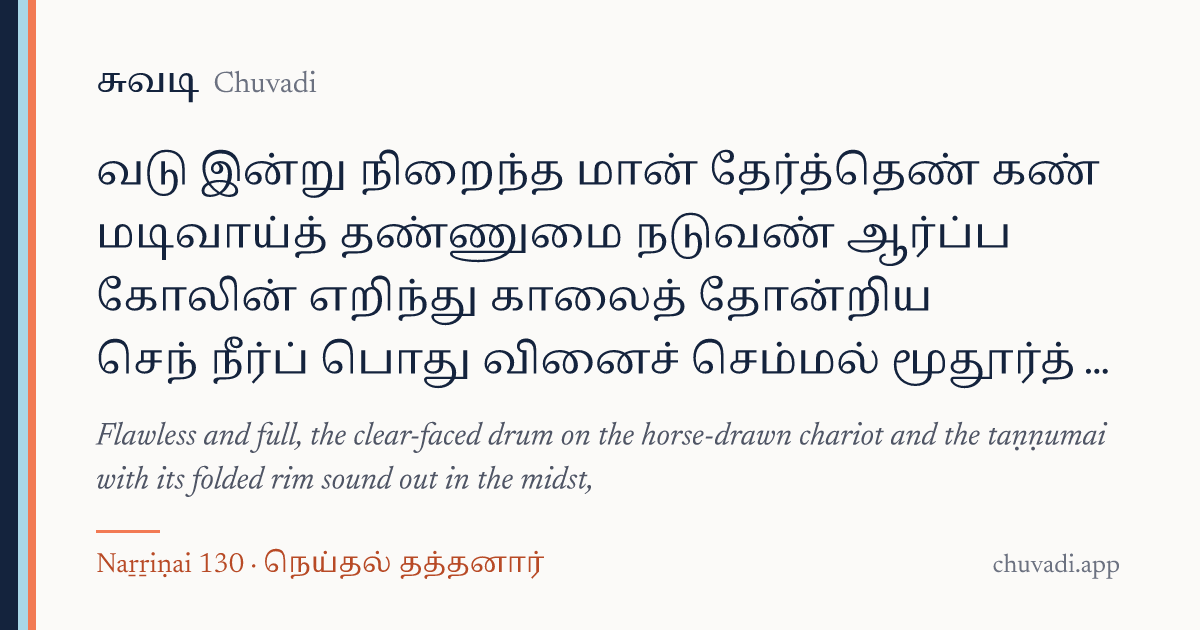

நற்றிணை 130
பாடல் · The poem
Tap a word to see where else it occurs.
பொருள் · Meaning in TamilAI
குறையில்லாமல் நிறைந்த, குதிரை பூட்டிய தேரில் உள்ள தெளிந்த முகமுடைய முரசும், மடிந்த விளிம்பையுடைய தண்ணுமையும், கோல்களால் அடிக்கப்பட்டு, காலையில் நடுவே முழங்குகின்றன. குருதி சிந்தும் பொதுப்பணி நடக்கும் பெருமைமிக்க பழைய ஊரில் வாழும் அவர்களுக்குத் தாம் செய்யும் தொழில் வாழ்க்கையைவிட இனியது வேறு உண்டோ? என்மேல் எவ்வளவு விருப்பம் உடையவராயினும், அவர் அதை நினைப்பதில்லை. அவரை ஏற்றுக்கொண்ட என் நெஞ்சையும், மெலிந்து தளர்ந்த தோள்களையும், வாடிப்போன அழகுக் கோடுகளையும் பார்த்தும், இப்பெருந்துயரில் வாடுபவள் என்ன செய்தாள் என்று ஒரு நாளும் அவர் கேட்டதில்லை. பரந்த கடல் சூழ்ந்த உலகத்தின் எல்லையையும் கடந்த இந்தத் துன்ப நோய்க்கு, அதைப் பகிர்ந்து தணிக்கும் வேறு துணை இல்லை.
நெய்தல் திணை என்று குறிக்கப்பட்டுள்ளது; பிரிவில் மெலிந்த தலைவி, தோழியின் ஆறுதல் மொழிக்கு உடன்படாமல் சொல்லியது. செந்நீர்ப் பொதுவினை என்பதைப் போர் என்று கொண்டோம்; அதன் பொருள் உறுதியாகத் தெரியவில்லை. பாடலில் கடற்கரைக் காட்சி எதுவும் இல்லை; தனிமையில் வருந்தும் உணர்வாலேயே இது நெய்தல் ஆகிறது.
ஆங்கிலம் · English translationAI
Translation
- Flawless and full, the clear-faced drum on the horse-drawn chariot
- and the taṇṇumai with its folded rim sound out in the midst,
- struck with sticks, as morning breaks,
- for the common task of red water, in the proud old town;
- is anything sweeter to them than the life of their own work?
- However much they may desire me, they give it no thought;
- my heart that once consented, my arms grown loose,
- my faded lines of beauty, they look at, and yet do not soon
- say, "What has she done, this one in such great distress?" —
- not even on one day have they said it. In the wide-watered
- earth, past the limit of its very bounds,
- this pain of grief has no other companion to ease it.
What the poem says
The hero is away and the heroine is wasting; the friend has tried to reassure her, and in reply she breaks down (neytal by the label; poem by Neytal Tattaṉār).
She opens with the world her man belongs to: in the old town, drums sound at dawn from the chariots, the clear-faced drum and the taṇṇumai with its folded rim, calling men to a "common task of red water." That phrase most likely means war, where blood is shed, though it could mean some other public duty; the line is not certain. Men like him, she says, find nothing sweeter than the life of their own work.
Against that she sets herself: the heart that gave its consent, the arms so thin that the bangles slide, the faded marks of beauty. He has seen them all and never once asked what was wrong with her. Her grief is wider than the sea-girt earth, and there is no one to share it. Nothing in the poem belongs to the seashore, so the neytal label rests on the mood of lonely pining rather than on landscape.