




நற்றிணை 141
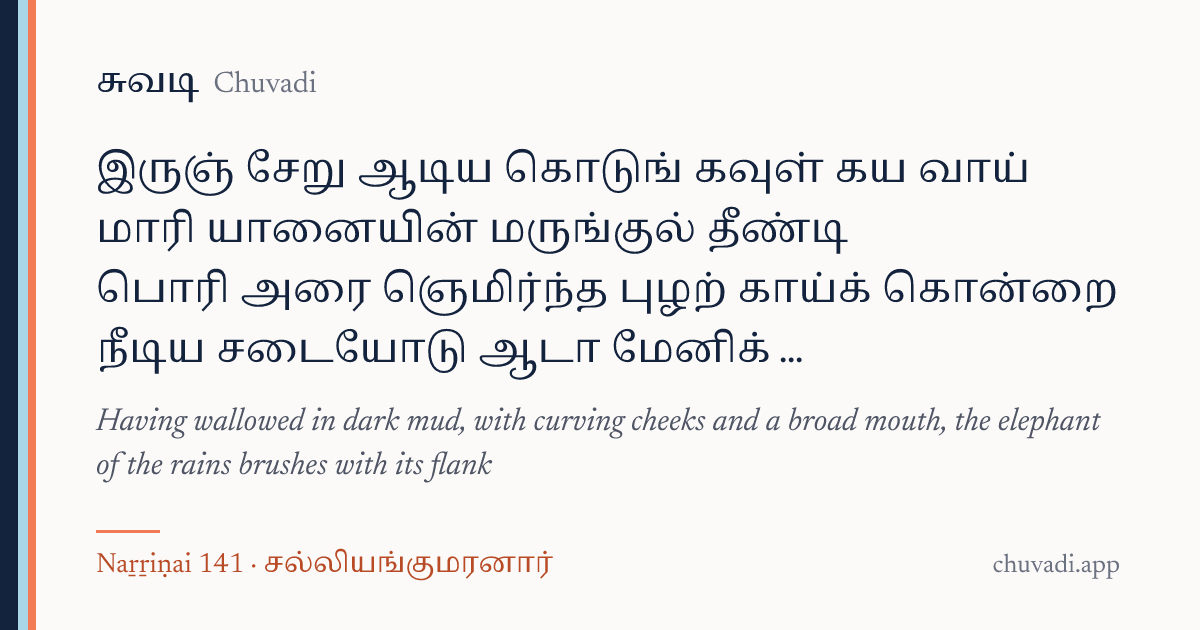
பாடல் · The poem
Tap a word to see where else it occurs.
பொருள் · Meaning in TamilAI
கரிய சேற்றில் புரண்டு ஆடிய, வளைந்த கன்னங்களும் அகன்ற வாயும் உடைய மழைக்கால யானையின் விலாப்புறம் உரசுவதால், பொரிந்த அடிமரம் விரிந்த, உள்ளீடற்ற காய்களையுடைய கொன்றை மரங்கள், நீண்ட சடையும் நீராடாத உடலும் கொண்டு குன்றில் வாழும் தவசிகளைப் போலப் பல ஒன்றாகச் சேர்ந்து, வெயில் மிகுந்த நீண்ட வழியில் அழகாகத் தோன்றும். அத்தகைய அரிய பாலைவழி உனக்கு எளிதாக இருக்கலாம். ஆனால், பருந்துகள் வந்து வீழும்படி தேர்ப்படையோடு போரிட்ட, பல சுருக்கங்களையுடைய பெரிய கையும் உயர்ந்த கொம்பும் கொண்ட யானைகளையுடைய, புகழ்மிக்க கொடிய வீரனான கிள்ளியின், துணிக்கொடிகள் அணிந்த உயர்ந்த கொடிகளையுடைய அம்பர் என்னும் ஊரைச் சூழ்ந்த அரிசில் ஆற்றின் அழகிய குளிர்ந்த கருமணலைப் போன்ற இவளுடைய விரிந்த அடர்ந்த கூந்தலை விட்டு நான் அமைதியாக இருக்க மாட்டேன்.
பாலைத் திணை; பொருள் தேடச் செல்லத் தூண்டிய நெஞ்சுக்குத் தலைவன் சொல்லிப் பயணத்தைக் கைவிட்டது. கொன்றையின் தொங்கும் காய்கள் தவசிகளின் சடைக்கு ஒப்பிடப்படுகின்றன. அம்பர் கிள்ளி என்னும் சோழ மன்னனின் ஊர்; அதைச் சூழ்ந்தோடும் அரிசில் ஆற்றின் கருமணல் தலைவியின் கூந்தலுக்கு உவமை.
ஆங்கிலம் · English translationAI
Translation
- Having wallowed in dark mud, with curving cheeks and a broad mouth,
- the elephant of the rains brushes with its flank
- the koṉṟai, its rough trunk spreading, its pods hollow;
- like ascetics with long matted locks and unbathed bodies
- who dwell on the hill, the trees, many together,
- appear in beauty along the long, sun-scorched way;
- this hard wasteland may well be easy for you; but, so that kites swoop down,
- with broad, deep-wrinkled trunks that battled the chariots,
- the fierce Kiḷḷi, famed for his elephants with lifted tusks:
- around his Ampar of tall flags hung with bunting,
- runs the Aricil; like its lovely cool rippled sand is her
- spreading, thick, rustling hair; I cannot leave it and be at peace.
What the poem says
The heart wants to go after wealth; the hero tells it why he cannot, and stays (pālai; poem by Calliyaṅkumaraṉār).
The first half sets out the road. In the long dry tract koṉṟai trees stand together, their rough bark rubbed by passing elephants still caked with mud from the rains, their long pods hanging like the matted hair of ascetics who live on the hill and never bathe. The comparison is vivid and a little comic, and it lets the hero concede the point: the wasteland may be easy enough for the heart.
The second half gives his reason for staying. The heroine's hair is like the dark rippled sand of the Aricil river that flows round Ampar, the town of Kiḷḷi, a Cōḻa king praised here for his war elephants that fought against chariots until kites gathered over the field. A wife's hair compared to dark river sand (aṟal) is a standard figure; naming a famous king's town adds splendour to it. He cannot leave that hair and live content.