




நற்றிணை 142
பாடல் · The poem
Tap a word to see where else it occurs.
பொருள் · Meaning in TamilAI
வானம் தாழ்ந்து பொழிந்த ஒளிமிக்க மழைக்காலத்தின் இறுதி நாள்களில், பல கயிறுகளால் பின்னிய மெல்லிய உறியைக் கையில் கொண்டு, தீக்கடைகோலையும் கலங்களையும் தோலோடு சேர்த்துச் சுருட்டி முதுகில் உள்ள பறியின் மேல் இட்டுக்கொண்ட, பால் விற்கும் இடையன், நுண்ணிய அடர்ந்த மழைத்துளிகள் உடலின் ஒரு பக்கத்தை நனைக்க, கோலைக் காலாக ஊன்றி ஒடுங்கி நின்று, நாவை மடித்துச் சீழ்க்கை அடிப்பான். அதைக் கேட்ட சிறிய தலையையுடைய ஆட்டுக்கூட்டம் அச்சம் நீங்கித் தங்கும். குறையாத வளமுடைய அத்தகைய முல்லைக் காட்டில் இருக்கிறது, இரவிலும் விருந்தினர் வந்தால் மகிழ்ந்து வரவேற்கும், முல்லைக்கு ஏற்ற கற்பும் மென்மையான இயல்பும் உடைய இளம்பெண் வாழும் ஊர்.
முல்லைத் திணை; வினையை முடித்துத் திரும்பும் தலைவன் தேர்ப்பாகனுக்குச் சொல்லியது. மழையில் ஆடுகளை அமைதிப்படுத்தி நிற்கும் இடையனின் அமைதியான காட்சி, தலைவனுக்காகப் பொறுமையோடு காத்திருக்கும் தலைவியின் இல்லற அமைதியை முன்னறிவிக்கிறது. இடையனின் பொருள்களைச் சொல்லும் இரண்டு முதல் நான்கு அடிகளின் சில சொற்களின் பொருள் உறுதியாகத் தெரியவில்லை.
ஆங்கிலம் · English translationAI
Translation
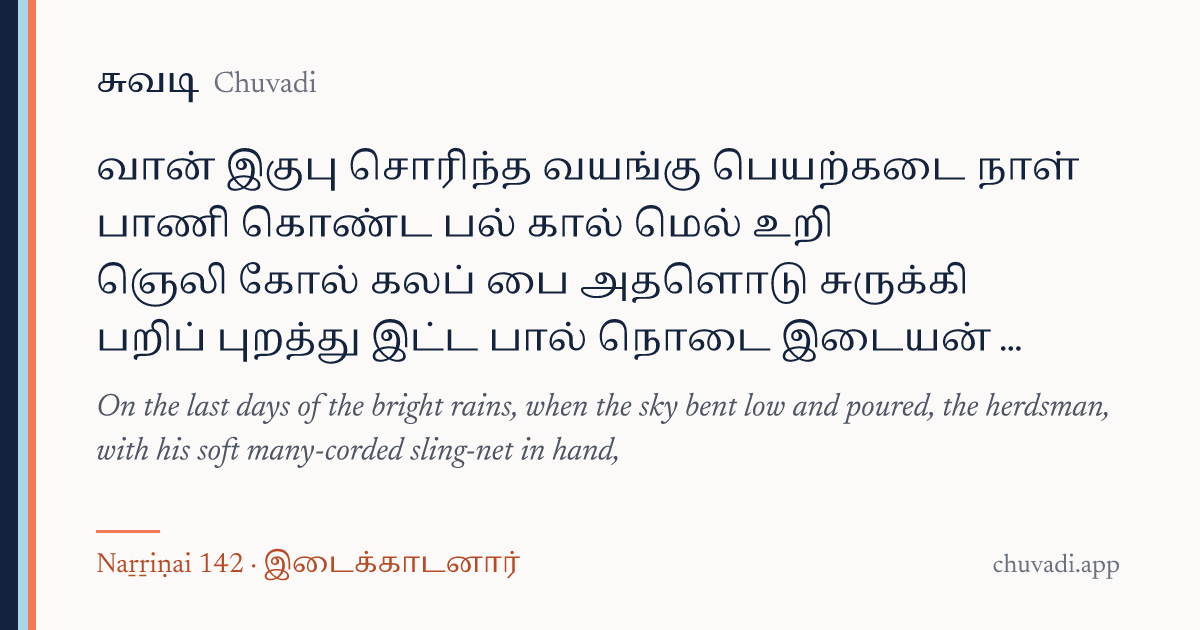
- On the last days of the bright rains, when the sky bent low and poured,
- the herdsman, with his soft many-corded sling-net in hand,
- his fire-drill and his gear bundled up in a hide
- and slung on the back of his pack, the herdsman who trades in milk,
- while the fine, thick drizzle wets one side of him,
- leaning on his staff as on a third leg, standing hunched, whistles with curled lip,
- and his small-headed flock, reassured, settles to rest:
- in such forest country, of never-failing plenty,
- even at night she rejoices if a guest arrives,
- perfect in the chaste fidelity of mullai,
- the gentle young woman; that is the town where she lives.
What the poem says
With his task finished, the hero is on his way home and tells his charioteer where his wife lives (mullai; poem by Iṭaikkāṭaṉār).
Most of the poem is a picture of the herdsman's life at the end of the rains. A milk-seller has packed up his things, the rope sling, the fire-drill sticks, a hide, and stands leaning on his staff in the drizzle, wet down one side, giving a low whistle; his small sheep or goats hear it and settle down. Everything is quiet, cared for and safe. This is the mullai forest country, where nothing is ever lacking.
In such a place lives the hero's wife, and the last three lines praise her as the ideal of the tiṇai: patient, faithful (kaṟpu, wifely chastity) and generous, glad to receive a guest even at night. The calm of the herdsman and his flock prepares for the calm of the home he is returning to. Some details of the herdsman's gear in lines 2 to 4 are not certain.