




நற்றிணை 143
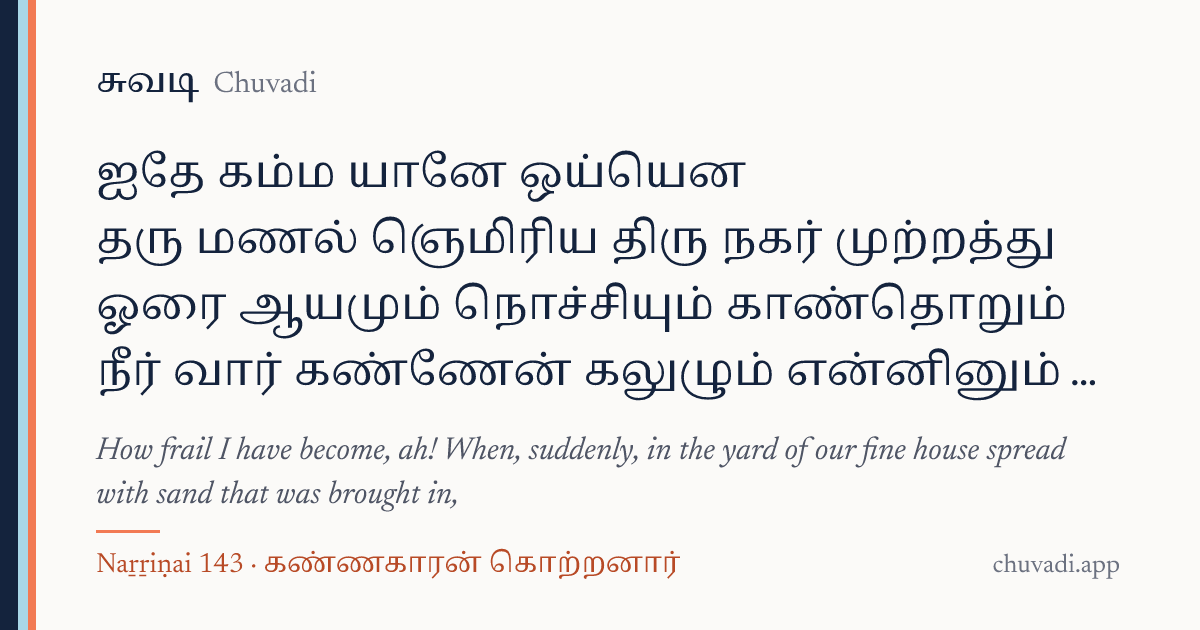
பாடல் · The poem
Tap a word to see where else it occurs.
பொருள் · Meaning in TamilAI
ஐயோ, நான் எவ்வளவு மெலிந்துவிட்டேன்! புதிதாகக் கொண்டுவந்து பரப்பிய மணலையுடைய அழகிய மாளிகையின் முற்றத்தில், அவளோடு ஓரை விளையாடிய தோழியர் கூட்டத்தையும் நொச்சி மரத்தையும் காணும்போதெல்லாம், என் கண்களில் நீர் வழிந்து நான் அழுகிறேன். அப்படி அழுதாலும், கிளியையும் தன் உறவு என்று அழைக்கும் அந்த இளையவள் குற்றம் இல்லாதவள். பழைய ஊரில் கூடிநின்று பழிபேசும் வாயையுடைய பெண்கள் சொன்ன, இனிமையாகத் தோன்றும் கொடிய பேச்சைச் சில நாள்கள் கேட்டும், நான் அறியாதவள் போல ஒன்றும் பேசாமல் இருந்தேன்; உன் கூந்தல் நறுமணம் வீசுகிறது என்று மட்டுமே சொன்னேன்.
பாலைத் திணை; மகள் காதலனோடு உடன்போக்கில் சென்றபின், வீட்டில் மயங்கி வருந்தும் நற்றாய் சொல்லியது. கூந்தலில் வீசும் புதிய மலர் மணம் காதலனோடு பழகியதன் அடையாளம்; அதைக் குறிப்பாகச் சுட்டிய தன் சொல்லே மகளைப் போகச் செய்தது என்று தாய் தன்னையே பழிக்கிறாள். ஐதே கம்ம என்னும் தொடக்கச் சொற்களின் பொருள் உறுதியாகத் தெரியவில்லை.
ஆங்கிலம் · English translationAI
Translation
- How frail I have become, ah! When, suddenly,
- in the yard of our fine house spread with sand that was brought in,
- I see her band of playmates and the nocci tree,
- my eyes stream with water; and though I weep,
- the young one, who would call even the parrot her kin,
- is free of fault, surely, she herself. Gathering together,
- the women of the old town with mouths full of gossip:
- their cruel, sweet-sounding talk I heard for some days,
- and, as though I knew nothing, I did not breathe a word;
- "Your hair smells so fragrant," was all I said.
What the poem says
The daughter has eloped with her lover, and her mother is left alone at home. The colophon calls the poem "bewilderment in the house": the mother speaks (pālai; poem by Kaṇṇakāraṉ Koṟṟaṉār).
Everything she sees reminds her of the girl. In the courtyard spread with fresh sand, the friends her daughter played with and the nocci tree by the house bring tears to her eyes. Yet she will not blame her child, a girl so loving that she called even the pet parrot her kin.
The blame she takes on herself. For days she had heard the gossip of the town's women, "sweet" words with poison in them, and pretended not to know. Instead of speaking openly, she made one remark: "Your hair smells so fragrant." A girl's hair perfumed with flowers she had not gathered at home was a sign of a lover, and the mother's hint, she now feels, may be what drove her daughter away. The opening exclamation aitē kamma is not certain; it is taken here as the mother's lament at her own weakness.