




நற்றிணை 149
பாடல் · The poem
Tap a word to see where else it occurs.
பொருள் · Meaning in TamilAI
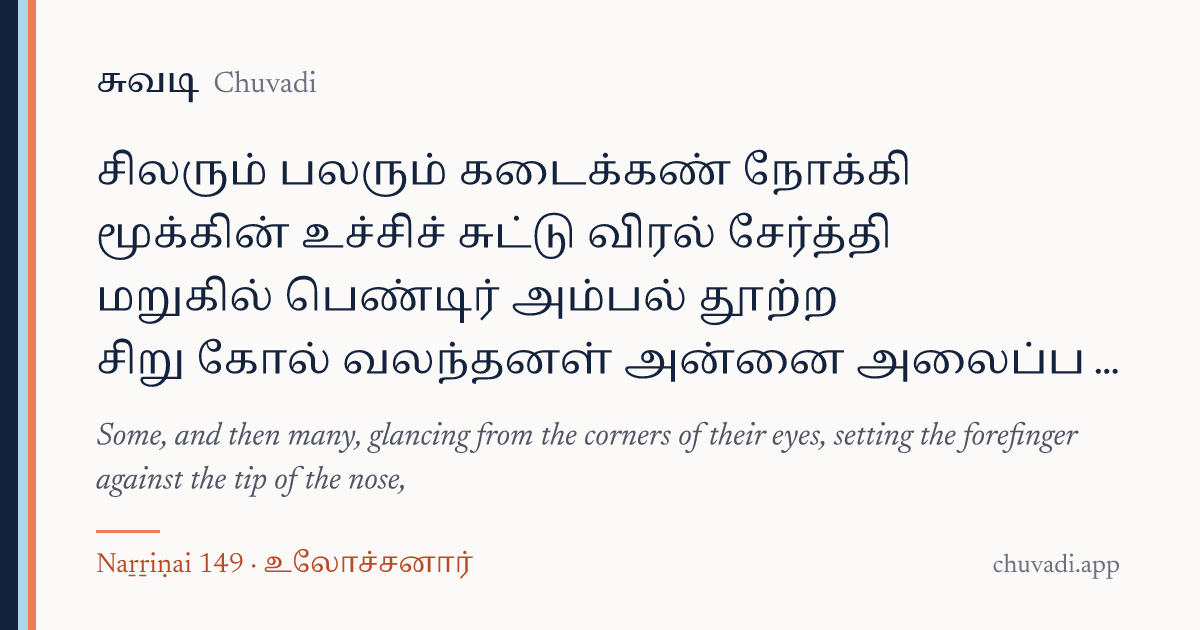
சிலரும் பின்னர் பலரும் கடைக்கண்ணால் பார்த்து, சுட்டுவிரலை மூக்கின் நுனியில் வைத்துக்கொண்டு, தெருவில் உள்ள பெண்கள் பழிச்சொல்லைப் பரப்புகிறார்கள். அன்னையோ சிறிய கோலைச் சுழற்றி என்னை அடிக்கிறாள். தோழி, வாழ்வாயாக! நான் மிகவும் வருந்தி நொந்துவிட்டேன். கடற்கரைச் சோலையின் புதிய மலர்கள் உரசியதால் பூமணம் வீசும் நிறமுடைய பிடரியையுடைய விரைந்து செல்லும் குதிரைகளை வேகமாகச் செலுத்தி, நள்ளிரவில் நன்கு அமைந்த தேரில் வரும் கடற்கரைத் தலைவனோடு நானே செல்லத் துணிந்துவிட்டேன். ஆரவாரம் மிக்க இந்த ஊர் தன் பழிச்சொல்லைத் தானே சுமந்துகொண்டு கிடக்கட்டும்!
நெய்தல் திணை; அலரும் அன்னையின் கண்டிப்பும் தாங்க முடியாத தலைவி உடன்போக்குக்குத் துணிந்து சொல்லியது; தலைவன் மறைவில் கேட்கும்படி சொல்லியதாகவும் கொள்ளலாம். மூக்கின் நுனியில் விரல் வைப்பது வியப்பையும் பழிப்பையும் காட்டும் செய்கை. உடன்போக்கு பொதுவாகப் பாலைத் திணைக்கு உரியது.
ஆங்கிலம் · English translationAI
Translation
- Some, and then many, glancing from the corners of their eyes,
- setting the forefinger against the tip of the nose,
- the women in the street scatter their gossip;
- mother, wielding a small stick, beats me;
- I am worn out, friend, bless you. Of the seaside grove
- the fresh flowers brush their coloured, flower-scented manes,
- the swift horses at a racing gallop he drives,
- coming at midnight, the lord of the shore with his well-made chariot;
- with him I have made up my mind to go, I myself;
- let this clamorous town carry its gossip, and be done with it!
What the poem says
The heroine has had enough. The town is talking and her mother is beating her, so she decides to run away with the hero. The colophon reads it either as the heroine resolving to elope, or as words said so that the hero, waiting nearby, will hear them (neytal; poem by Ulōccaṉār).
The first lines are a sharp little picture of gossip in action: a few women and then many, looking sideways, putting a finger to the tip of the nose (a gesture of mock astonishment), and passing the story along the street. At home the mother takes a small stick to her daughter.
Against this she sets the hero arriving at midnight, his swift horses galloping, their manes brushed with the scent of the seaside groves' fresh flowers. She will go with him. Her last line throws the gossip back at the town: let it carry its scandal by itself. Elopement (uṭaṉpōkku) more usually belongs to pālai, though the coastal setting here is neytal.