



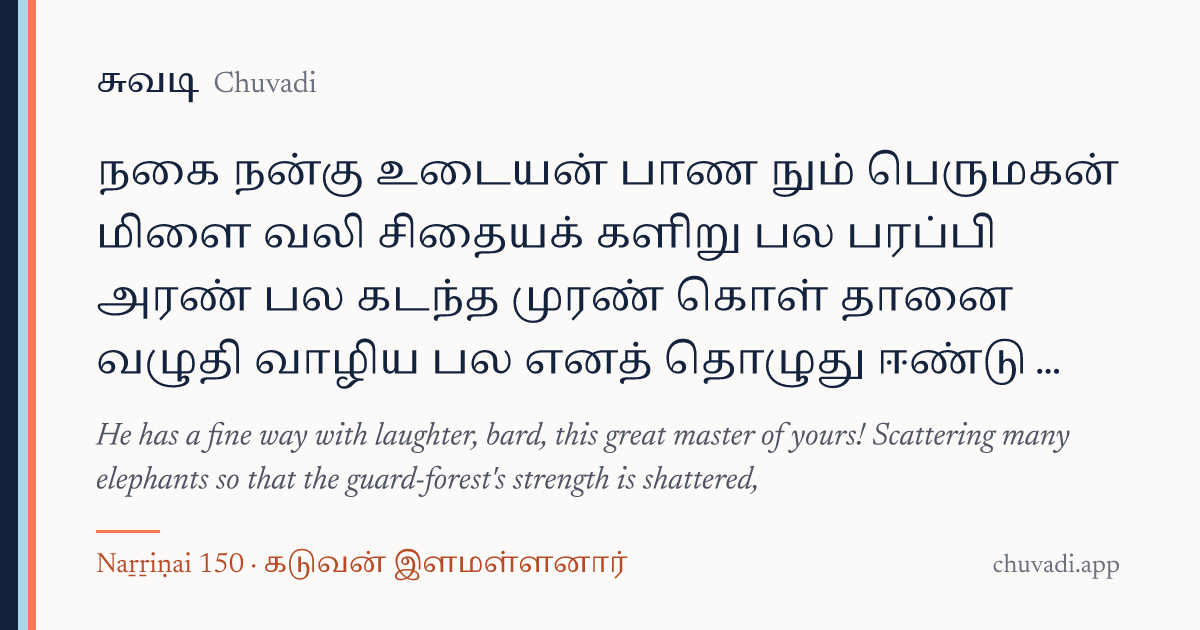

நற்றிணை 150
பாடல் · The poem
Tap a word to see where else it occurs.
பொருள் · Meaning in TamilAI
பாணனே, உன் பெருமைமிக்க தலைவன் நன்றாக நகைக்கத் தக்கவன்! காவற்காடுகளின் வலிமை சிதையும்படி பல யானைகளைப் பரப்பி, பல அரண்களைக் கடந்து வென்ற பகைமை மிக்க படையையுடைய வழுதியை, பல்லாண்டு வாழ்க என்று வணங்கி இங்கே தங்கள் வலிய கோட்டைகளைக் காத்துக்கொள்ளும் சிற்றரசர்களைப் போல, அவன் பணிந்து வந்தான். அதைப்பற்றி நான் சிறிதும் கவலைப்படவில்லை என்று சொல்லி, மெல்லிய நடையையுடைய செருக்கான குதிரையைச் செலுத்தி எம் தெருவுக்கு வந்து, தன் மாலையையும் கண்ணியையும் காட்டி, ஒன்றையே நினைக்கும் என் நெஞ்சைக் கவர்ந்துகொண்டான். அதை அவன் திருப்பித் தருவானோ? நான் அஞ்சும்படி கணுக்களையுடைய சிறிய கோலைப் பற்றிக்கொண்டு என் தாய் பெரும் சினத்தோடு இருக்கிறாள்; அவள் சினம் தணியவில்லை.
மருதத் திணை; முன்பு முதன்மை பெற்றிருந்து இப்போது புறக்கணிக்கப்பட்ட பரத்தை, தலைவனைக் கடிந்து பாணனிடம் சொல்லியது. வழுதி பாண்டிய மன்னன். அவன் சொன்ன அது என்பது தலைவியையோ வீட்டுக் கடமைகளையோ குறிக்கலாம்; உறுதியாகத் தெரியவில்லை.
ஆங்கிலம் · English translationAI
Translation
- He has a fine way with laughter, bard, this great master of yours!
- Scattering many elephants so that the guard-forest's strength is shattered,
- his army, fierce in battle, has overcome many forts;
- to Vaḻuti, "Long may you live!" they cry, and, bowing, here
- keep their strong forts: like such men, "That, we
- do not trouble about at all," he said, and, driving his cool-paced
- spirited horse, he came into our street,
- showed off his chest-garland and his head-wreath, and our single-minded
- heart he has carried off; will he give it back? So that I tremble,
- gripping a small knotted stick,
- my mother is in a great rage, and she does not relent.
What the poem says
This is a marutam poem in the voice of a parattai, a courtesan who was once the hero's favourite and is now no longer given first place. She speaks to the bard who serves the hero (poem by Kaṭuvaṉ Iḷamaḷḷaṉār).
She opens with heavy irony: "your great master" is quite a joker. The central comparison is to the Pāṇṭiya king Vaḻuti, whose army breaks the defences of forest and fort with its elephants; the chiefs who keep their strongholds do so only by bowing to him and wishing him long life. So it was with the hero. He came into her street on his prancing horse, humbly, saying that "that" did not matter to him at all, made a show of his garlands, and won her whole heart.
What "that" refers to is not stated; most likely it is his wife or his obligations at home, which he claimed not to care about. Now he has gone back to them, her heart is still his, and her mother, furious, stands over her with a stick. The tone mixes mockery and real hurt.