




நற்றிணை 15
பாடல் · The poem
Tap a word to see where else it occurs.
பொருள் · Meaning in TamilAI
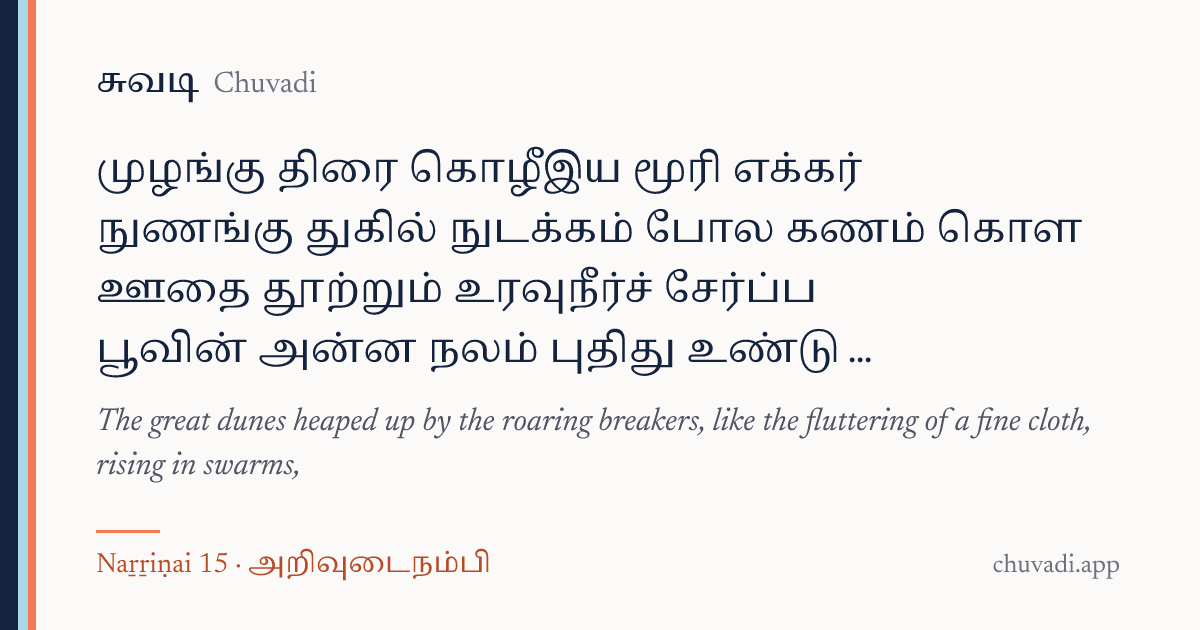
முழங்கும் அலைகள் குவித்த பெரிய மணல்மேடுகளை, மெல்லிய துணி அசைவது போலக் கூட்டம் கூட்டமாக எழும்படி ஊதைக் காற்று தூற்றி வீசும் வலிய கடலின் கரைக்குத் தலைவனே! பூவைப் போன்ற இவளுடைய அழகைப் புதிதாக நீ நுகர்ந்தாய்; ஆனால் நீ எம்மை முறையாக மணந்து உனக்கு உரியவராக்கவில்லை. ஆகவே, உடன்பட்ட எம் நெஞ்சத்தை அடக்க அடக்கி இதுவரை பொறுத்திருந்தோம். குற்றமற்ற கற்புடைய ஒரு பேதைத் தாய், தன் குழந்தையைப் பேய் பறித்துக் கொண்டபோது கையை விட்டுவிட்டது போல, நெடுந்தூரமும் எம்மோடு வந்த நாணத்தை நாங்களும் விட்டுவிட்டோம். இந்த ஊர் அலர் தூற்றட்டும்!
நெய்தல் திணை; மணத்தைத் தலைவன் நீட்டித்தபோது தோழி அவனிடம் சொல்லி மணம் செய்யத் தூண்டியது. அலை குவித்த மணலைக் காற்று சிதறடிப்பது, தலைவியின் நற்பெயர் அலரால் சிதைவதைக் குறிப்பதாகக் கொள்ளலாம். பேயிடம் குழந்தையை இழந்த தாயின் உவமை, தம் கட்டுப்பாட்டை மீறி நாணம் போவதைக் காட்டுகிறது. ஐந்தாம் அடியின் பொருள் சுருக்கமாக இருப்பதால் சற்று உறுதியில்லை.
ஆங்கிலம் · English translationAI
Translation
- The great dunes heaped up by the roaring breakers,
- like the fluttering of a fine cloth, rising in swarms,
- are scattered by the north wind: lord of the shore of the mighty sea,
- you tasted afresh her flowerlike beauty,
- and since we are not ones you have openly made your own, we
- held back our heart that was willing, held it back;
- but as a guileless mother of spotless virtue, when a demon
- snatched away her baby, let it go from her hands,
- so the modesty that went with us everywhere
- we too have let go: let this town gossip!
What the poem says
The hero keeps putting off the marriage, and the friend confronts him directly (neytal, poem by Aṟivuṭainampi).
The opening image is of sand dunes on the shore, piled up by the waves and then blown away by the ūtai wind like a fine cloth fluttering. What the sea builds, the wind scatters. Read as uḷḷuṟai, it may suggest how easily the heroine's reputation, carefully built, is being blown away.
The friend says that he has enjoyed the heroine's beauty, yet has not made her his own by marriage. They have been holding back their hearts all this while. Now they are giving up the modesty that has gone with them everywhere, as helplessly as a mother lets go of her baby when a demon (pēy) snatches it from her hands. 'Let this town gossip!' is a challenge: they will no longer hide the affair, and he must act.
The demon simile is stark and unusual. Line 5 is compressed; 'not ones you have openly made your own' is one reasonable reading of the Tamil.