




நற்றிணை 14
பாடல் · The poem
Tap a word to see where else it occurs.
பொருள் · Meaning in TamilAI
நம் பழைய அழகு கெடவும், தோள்களின் நலம் மெலியவும், அவர் அன்பு காட்டாமல் நம்மை விட்டுச் சென்றார். ஆனாலும் அவர் அன்பு செய்வார்; ஏனெனில் அவர் நம்மோடு நட்பு கொண்டவர், தோழி, நீ வாழ்க. குட்டுவனுடைய அகப்பா என்னும் கோட்டை அழியும்படி அதைத் தகர்த்து, செம்பியன் பகலிலேயே தீயிட்டு எரித்த போரின் ஆரவாரத்தைவிட மிகப் பெரிய அலர் எழும்படி அவர் சென்றார். ஆயினும், பூக்கள் கவிழ்ந்து பெரிய இதழ்கள் விரிந்த காந்தள் மலர்ந்த மலைச்சாரலில், கூட்டத்துக்குத் தலைமை தாங்கும் வலிய ஆண் யானை மலைப்பாம்பிடம் அகப்பட்டதால், உறக்கமில்லாத் துயரத்தோடு அஞ்சிய பெண் யானை எழுப்பும் கதறல் நீண்ட மலையின் பிளவுகளில் எதிரொலிக்கும், கொடிய விலங்குகள் வாழும் காட்டைக் கடந்து சென்ற அவர் அன்பு செய்வார்.
பாலைத் திணை; தலைவனைப் பழித்துப் பேசிய தோழிக்கு, தலைவி அவன் பக்கம் நின்று சொல்லியது. சோழ மன்னன் செம்பியன், சேரனான குட்டுவனின் அகப்பாக் கோட்டையை எரித்த வரலாற்று நிகழ்ச்சி இங்கே சுட்டப்படுகிறது. துணையை இழந்து இரவெல்லாம் கதறும் பெண் யானை, தலைவியின் துயரத்துக்கு இறைச்சியாக நிற்கிறது.
ஆங்கிலம் · English translationAI
Translation
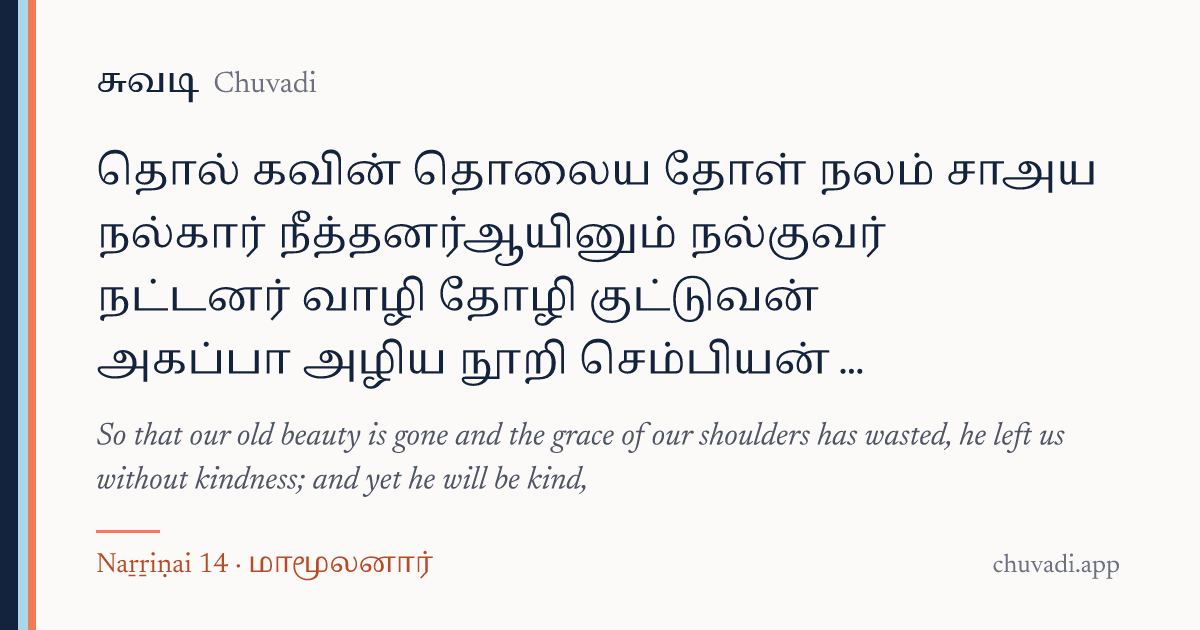
- So that our old beauty is gone and the grace of our shoulders has wasted,
- he left us without kindness; and yet he will be kind,
- for he has made us his friend, long life to you, friend. When Kuṭṭuvaṉ's
- Akappā was smashed to ruin and Cempiyaṉ
- made his fire-offering of it by daylight, greater by far than that battle's din
- was the gossip that rose as he went; and yet, where flowers droop
- and great petals have opened on the kāntaḷ slope,
- the mighty bull, leader of his herd, has been seized by a python,
- and the cry of his frightened mate in sleepless grief
- echoes in the clefts of the tall mountain,
- he it is who crossed the forest where fierce beasts roam.
What the poem says
The friend has been blaming the hero for going away; the heroine answers in his defence (pālai, poem by Māmūlaṉār).
She admits everything the friend could say: her beauty has faded, her arms have grown thin, he left without pity, and the gossip in the village was louder than the uproar of a famous battle. Even so, she insists, he will be kind, because he has truly loved her.
The battle is a real historical reference, typical of Māmūlaṉār: Cempiyaṉ, a Cōḻa king, destroyed Akappā, a stronghold belonging to Kuṭṭuvaṉ, a Cēra, and burned it in broad daylight. The poem gives no further detail.
The final lines describe the wasteland he has crossed: on a mountain slope full of kāntaḷ flowers, a python has caught a bull elephant, and his mate trumpets in fear and grief all night, the sound echoing in the clefts. The image shows the dangers he faces, and the cow elephant's sleepless cry quietly mirrors the heroine's own grief. Her defence of him is also a confession of how much she is suffering.
Kaṭu māṉ in the last line literally means 'fierce animal'; it may mean tigers, but the word is general.