




நற்றிணை 13
பாடல் · The poem
Tap a word to see where else it occurs.
பொருள் · Meaning in TamilAI
கிளிகள் எழுந்து பறந்து போகவில்லை என்பதற்காக, உன் அழகு கெடும்படி அயலார் முன்னிலையில் அழாதே. தினைப்புனம் காப்பவர்கள் விலங்கை வீழ்த்திவிட்டுப் பிடுங்கி எடுத்த அம்பைப் போலச் செவ்வரி படர்ந்த குளிர்ந்த கண்களையும், அழகிய பெரிய தோள்களையும் உடையவளே! கொல்லன் அடிக்கும் பொன்னிலிருந்து தெறிக்கும் சிறுசிறு துகள்களைப் போல வேங்கைப் பூக்கள் சிதறி உதிரும் உயர்ந்த மலையில் உள்ள மயில்களின் இருப்பிடத்தில், அந்த மயில்கள், அடர்ந்த தினைக்கதிர்களைக் கவர்ந்து செல்லும் பச்சை முதுகுடைய கிளிகளை அறிந்தும் அறியாதவை போல இருக்கின்றன.
குறிஞ்சித் திணை; இயற்கைப் புணர்ச்சிக்கு மறுநாள் தலைவியின் வேறுபாட்டைக் கண்ட தோழி, அதை மறைக்க உதவும்படி சொல்லியது. கிளிகள் போகாததால் அழுகிறாள் என்று ஓர் எளிய காரணத்தைக் காட்டுகிறாள். கிளிகள் தினையைக் கவர்வதை அறிந்தும் அறியாதது போல இருக்கும் மயில்களைப் போல, தானும் நடந்ததை அறிந்தும் வெளிப்படுத்தாமல் இருப்பதாகத் தோழி உள்ளுறையாகக் குறிப்பதாகக் கொள்ளலாம்; இது உறுதியான பொருள் அன்று.
ஆங்கிலம் · English translationAI
Translation
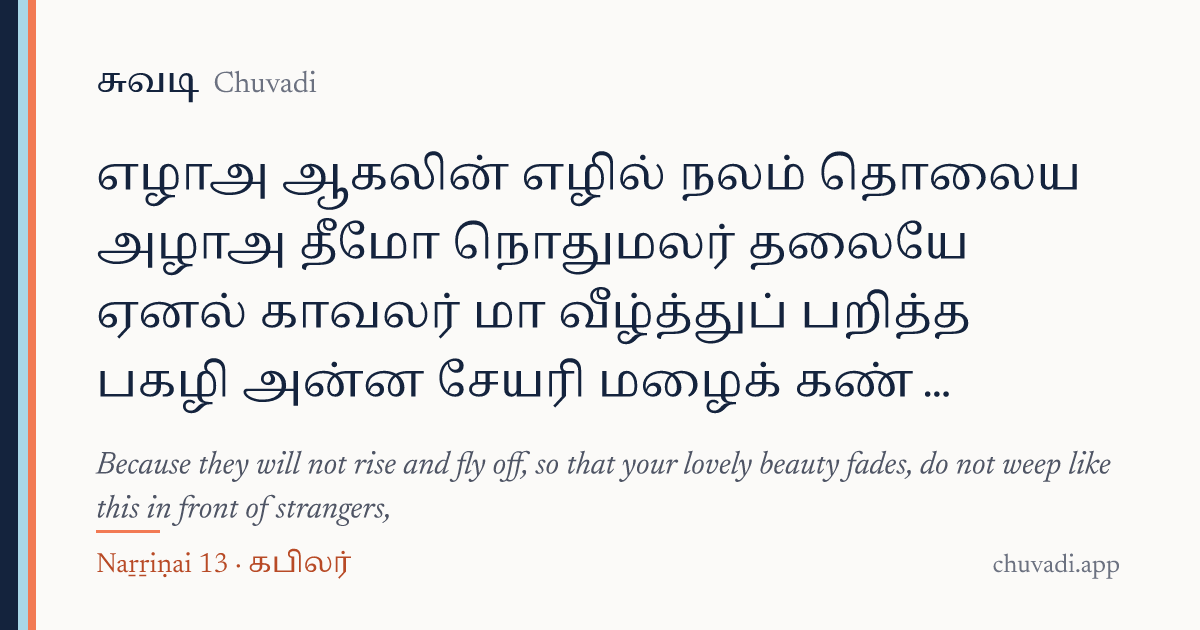
- Because they will not rise and fly off, so that your lovely beauty fades,
- do not weep like this in front of strangers,
- you whose eyes, like the arrow that millet-watchers pull out
- after felling a beast, are streaked with red and cool as rain,
- you with fine broad shoulders! Like the bits
- of gold struck off by the smith, small and many, scattered,
- vēṅkai blossoms drop in the peacocks' haunt on the high mountain;
- the peacocks there know, and yet seem not to know,
- the green-backed parrots that carry off the thick-clustered grain.
What the poem says
The day after the lovers' first union, the friend notices a change in the heroine: she is tearful and her looks have altered. The colophon says the friend speaks this to help her hide the cause (kuṟiñci, poem by Kapilar).
The friend gives the tears an innocent explanation in front of others: the heroine is weeping because the parrots will not fly off the millet field she is supposed to guard. Do not weep over that in front of strangers, she says, as if that were all. Her eyes are compared to an arrow pulled out of a slain animal by the millet-watchers: red-streaked and wet.
The closing picture is less innocent. On the high hill the vēṅkai drops its golden blossoms like sparks from a goldsmith's anvil, and the peacocks there 'know without knowing' that the parrots are stealing the grain. Read as hidden meaning (uḷḷuṟai), the friend may be saying that she, like the peacocks, sees what has happened and chooses to say nothing. That reading is attractive but not certain; the line 'know and yet do not know' (aṟipu aṟiyā) is itself unusual.