



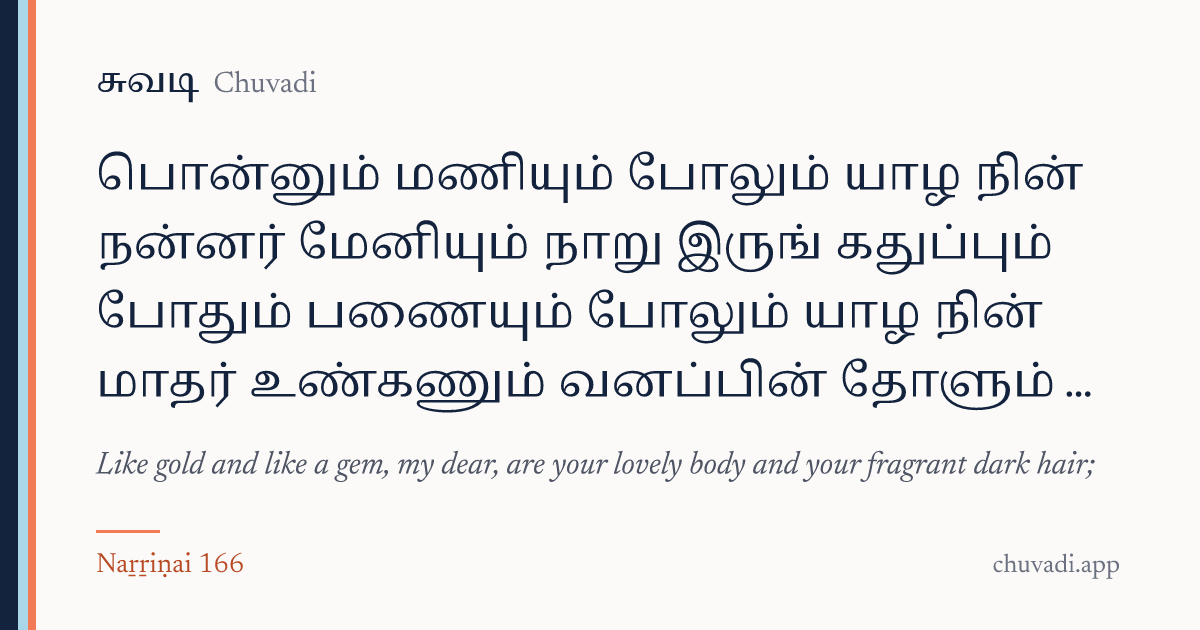

நற்றிணை 166
பாடல் · The poem
Tap a word to see where else it occurs.
பொருள் · Meaning in TamilAI
பொன்னைப் போன்றது உன் அழகிய மேனி; நீலமணியைப் போன்றது உன் மணம் கமழும் கரிய கூந்தல். மலர்மொட்டைப் போன்றவை உன் அழகிய மையுண்ட கண்கள்; மூங்கிலைப் போன்றவை உன் அழகிய தோள்கள். இவற்றைக் காணும்போதெல்லாம் என் உள்ளம் நிறைந்து மகிழ்கிறது; அறவழியில் நிலைபெற்று வாழ்பவர்களைப் போல நானும் மனநிறைவுடன் இருக்கிறேன். அதற்கு மேலும், பொன் வளையல் அணிந்த நம் மகனும் விளையாடக் கற்றுக்கொண்டான். வேற்று நாட்டில் செய்ய வேண்டிய வேலை எதுவும் எனக்கு இல்லை. எண்ணிப் பார்த்தால், இளம்பெண்ணே, எதற்காக நான் உன்னைப் பிரிவேன்? நம் காதலோ கடலைவிடப் பெரியது.
பாலைத் திணை; தலைவன் பிரியப்போகிறான் என்னும் குறிப்பை உணர்ந்து வேறுபட்ட தலைவிக்குத் தலைவன் சொல்லியது. அவள் அழகு, அறவாழ்வு, மகன், பணியின்மை என ஒவ்வொன்றாகச் சொல்லிப் பிரிவுக்குக் காரணம் இல்லை என்று ஆற்றுவிக்கிறான். பிரிவு மறுக்கப்படும் பாடலாயினும் பிரிவு பற்றிய அச்சமே இதன் கரு.
ஆங்கிலம் · English translationAI
Translation
- Like gold and like a gem, my dear, are your
- lovely body and your fragrant dark hair;
- like flower buds and like bamboo, my dear, are your
- charming kohl-lined eyes and your beautiful arms.
- Each time I see these my heart overflows, and I
- am like those who stand firm in virtue; and besides,
- our son with his golden bangles has learned to play;
- nor have I any work in a distant land. When you think of it,
- for what reason would I leave you, young woman?
- And love itself is greater than the sea.
What the poem says
The heroine has read signs that her husband means to go away, and has grown pale and changed; he reassures her (pālai, the tiṇai of separation, though here the separation is denied).
He praises her in paired comparisons: her body like gold and her dark hair like a gem (probably sapphire), her eyes like flower buds and her arms like bamboo, the standard figure for a woman's smooth, rounded arms. Seeing her, he says, he feels as content as those who live by dharma. Their son has learned to play, and he has no work in another country.
The argument is gentle and complete: beauty, virtue, a child and no duty abroad. What could take him away? The last line clinches it, love is greater than the sea. Whether his reassurance is true the poem leaves to the listener; the colophon only says she had noticed signs of departure.