




நற்றிணை 167
பாடல் · The poem
Tap a word to see where else it occurs.
பொருள் · Meaning in TamilAI
கரிய அடிமரத்தை உடைய புன்னையின் மேற்குப் பக்கமாக வளைந்த பெரிய கிளையில், புதிதாக வந்த வெண்ணிறக் கொக்குகள் ஆரவாரிக்கும் ஒலி, மிகுந்த களிப்புடைய வள்ளல் ஆய் தன் பகல் அவையில் பரிசிலாக வழங்கிய, நன்கு அமைக்கப்பட்ட உயர்ந்த தேர்களின் தாள ஒலியைப் போல ஒலிக்கும். அத்தகைய குளிர்ந்த கடற்றுறைத் தலைவனின் தூதோடு வந்தவனே, பயன் அறிந்த பாடல்களைப் பாடித் துன்பம் தீர்க்கும் பாணனே! பலவகை அழகிய புதிய ஞாழல் மலர்களோடு புன்னைப்பூக்களும் பரவிக்கிடக்கும் மணம் கமழும் கடற்கரைச் சோலையில், தன் சிறந்த அழகை இழந்தவள் இவள்; அழகிய முன்கையில் ஒளிரும் வளையல் அணிந்த இந்த இளம்பெண்ணின் பிறைநிலவு போன்ற அழகிய நெற்றியில் படர்ந்த பசலையை, உன் வாயிலிருந்து வரும் பணிவான சொற்கள் நீக்கமாட்டா.
நெய்தல் திணை; தலைவனின் தூதோடு வந்த பாணனுக்குத் தோழி வாயில் மறுத்தது. ஆய் என்பவன் பொதியில் மலைக்குரிய புகழ்பெற்ற வள்ளல். கொக்குகளின் வெற்று ஆரவாரம் பாணனின் பயனற்ற சொற்களைக் குறிப்பாக உணர்த்தலாம்; தலைவனின் வருகையே அவள் பசலையைத் தீர்க்கும் என்பது கருத்து.
ஆங்கிலம் · English translationAI
Translation
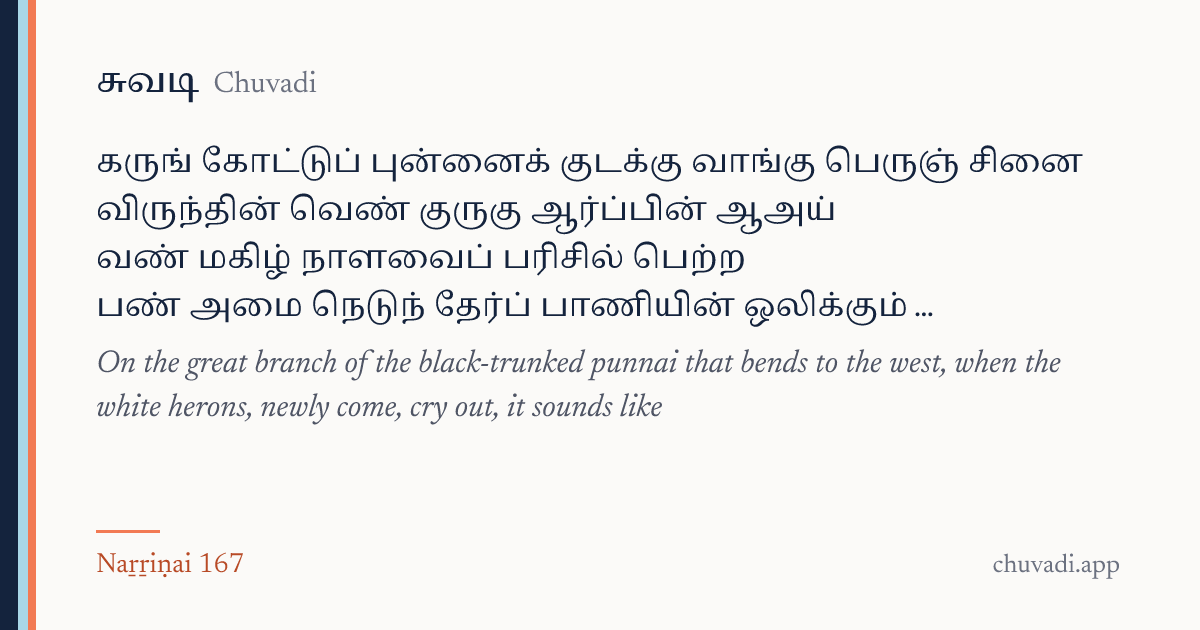
- On the great branch of the black-trunked punnai that bends to the west,
- when the white herons, newly come, cry out, it sounds like
- the gifts received at the day-court of Āy, generous in his revels,
- tall, well-made chariots, clattering in rhythm:
- the lord of that cool shore — you who came with his message,
- bard of songs that know their purpose, who clear away grief,
- the humble words of your mouth cannot remove
- — where the punnai spreads its blossoms with the fine fresh flowers of the ñāḻal
- in the fragrant seashore grove — from the girl who has lost her fine beauty,
- the young one with bright bangles on her lovely wrists,
- the pallor that has spread over her fair brow, lovely as the crescent moon.
What the poem says
The heroine's friend turns away the hero's bard, who has come with a message to plead his case (neytal). The colophon gives this as a refusal of entry, or simply as her words to a bard who came as messenger.
She begins with the hero's shore: white herons on the punnai branch make a clamour like the chariots that the chieftain Āy, famed for his generosity, gave away as gifts in his court. Āy was a chieftain of the Potiyil hills celebrated in Sangam poetry for giving. The comparison praises the place but also suggests noise without substance, which is how she treats the bard's words.
The bard's songs may 'clear away grief', she says, but his soft, submissive words cannot remove the pallor that has spread over the girl's crescent-shaped brow. That pallor (pacappu) is the sign of love-sickness; only the hero's own coming, or marriage, can cure it.