




நற்றிணை 169
பாடல் · The poem
Tap a word to see where else it occurs.
பொருள் · Meaning in TamilAI
நாம் நினைத்துச் சென்ற செயலை முடித்தவுடன் வருவோம் என்று நல்ல நெற்றியை உடைய என் தலைவியிடம் சொல்லி வந்தோம். அச்சொல்லால் அவளுக்கு உண்டான துன்பம் தீரும்படி, நீண்ட சுவரில் வாழும் பல்லி ஒலிக்குமோ? அது வாழ்க! பரற்கற்களின் மேல் வளர்ந்த, மீன்கொத்தியின் தலையைப் போன்ற நுனிகளை உடைய கள்ளிச்செடியின் உச்சியில் நறுமணமுள்ள முல்லை செழித்துப் படர்ந்திருக்கிறது. தலையசைத்து வரும் ஆட்டு மந்தையைத் திருப்பி ஓட்டும் வலிய கையுடைய இடையன், இரவு தொடங்கும் வேளையில் அம்முல்லைப் பூக்களைப் பறித்து, வெண்ணிறப் பனையோலை நாரில் கட்டிய அசையும் மாலை தெருவெல்லாம் மணம் வீசும் மாலைப்பொழுதில், சிறிய குடியிருப்பில் உள்ள நம் பெரிய வீட்டில் அது ஒலிக்குமோ?
முல்லைத் திணை; வினைமுடித்துத் திரும்பும் தலைவன் தன் நெஞ்சுக்குச் சொல்லியது. பல்லி ஒலிப்பது நல்ல நிமித்தம் என்பது பழைய நம்பிக்கை; அது தன் வருகையை அவளுக்கு அறிவிக்கட்டும் என்று விழைகிறான். மாலைப்பொழுதும் முல்லைப்பூவும் இடையனும் காத்திருக்கும் தலைவியின் ஏக்கத்தைக் குறிக்கும் முல்லை நிலக் கருப்பொருள்கள். கள்ளிச்செடியின் வருணனை அமைந்த அடியின் பொருள் முழுதும் தெளிவாக இல்லை.
ஆங்கிலம் · English translationAI
Translation
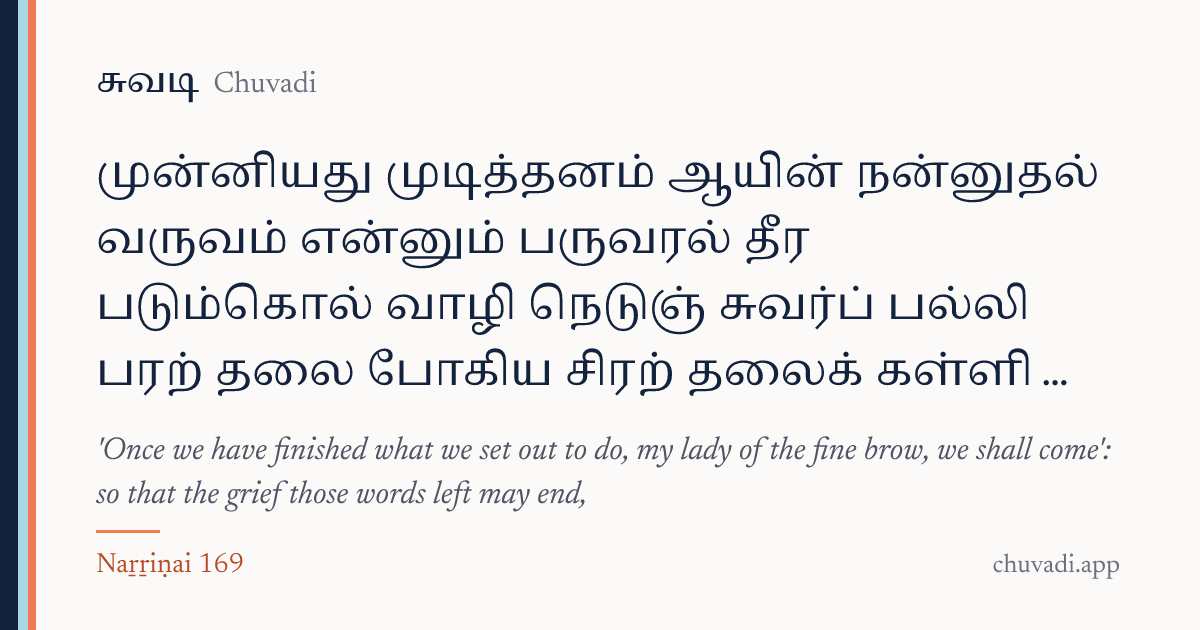
- 'Once we have finished what we set out to do, my lady of the fine brow,
- we shall come': so that the grief those words left may end,
- will it chirp, I wonder — long may it live! — the lizard on the tall wall,
- where the spurge, grown up over the gravel, its tips like a kingfisher's head,
- has fragrant-flowered mullai flourishing on its very top,
- and the hard-handed herdsman, who turns back the flock of head-tossing sheep,
- plucks the blossoms at nightfall
- and weaves them with white strips of palm leaf into a swaying garland
- whose scent fills the whole street at evening,
- in our great house in the little hamlet?
What the poem says
The colophon has the hero speaking to his own heart as he returns, his task complete (mullai, the tiṇai of waiting and return).
When he left, he promised his wife he would come back once his work was done. He hopes those parting words still trouble her, and that a house-lizard on the tall wall of their home will chirp now. A lizard's call was taken as an omen, and a good one would tell her he is near and end her sorrow.
The rest of the poem pictures the evening at home, in the herders' hamlet. Mullai jasmine has climbed to the top of a spurge bush growing over the stones; a herdsman, bringing in his sheep, picks the flowers at dusk and strings them on white palm-leaf strips, and the scent fills the street. Evening, jasmine and the herdsman's return are the stock signs of mullai, the hour when a waiting wife longs most for her husband.
The description of the spurge (line 4) is hard to construe exactly.