




நற்றிணை 170
பாடல் · The poem
Tap a word to see where else it occurs.
பொருள் · Meaning in TamilAI
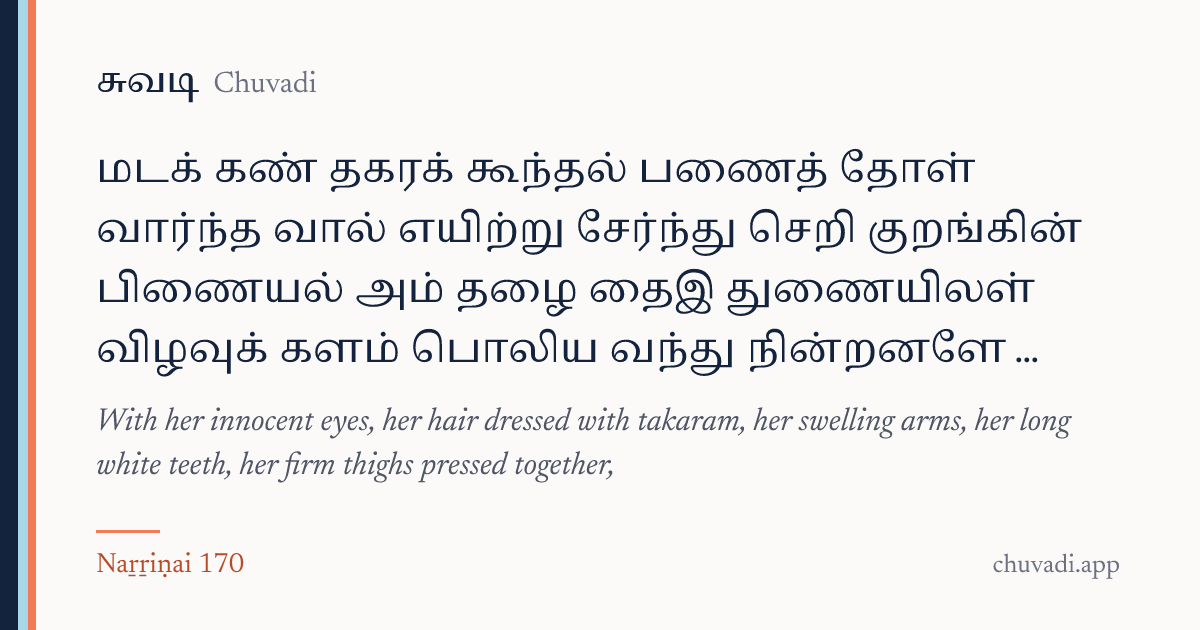
மருண்ட கண்களும், தகரம் என்னும் நறுமணம் பூசிய கூந்தலும், பருத்த தோள்களும், நீண்ட வெண்மையான பற்களும், ஒன்றோடொன்று நெருங்கிய திரண்ட தொடைகளும் உடைய அவள், அழகிய தழைகளைப் பின்னிச் செய்த ஆடையை அணிந்து, துணை எவருமின்றித் தனியாக வந்து, திருவிழாக் களமே பொலிவு பெறும்படி நின்றாள். எழுங்கள், எழுங்கள், நம் கணவனைக் காப்பதற்கு! ஆரியர் திரண்டிருந்த பெரும் புகழுடைய முள்ளூரில், பலரையும் ஒருசேரத் துரத்திய ஒளிவீசும் வாளையுடைய மலையனின் ஒரு வேலுக்கு அஞ்சி அவர்கள் ஓடியதைப் போல, அவளுடைய வலிமை நம்மை எதிர்த்து வந்தால், நாம் பலராக இருப்பதால் என்ன பயன்?
மருதத் திணை; தலைவனுக்காகத் தூது வந்த விறலிக்குத் தோழி வாயில் மறுத்தது. பரத்தையின் அழகைப் புகழ்வது போலவும், கணவனைக் காக்க அழைப்பது போலவும் கேலியாகப் பேசுகிறாள். மலையன் என்பவன் முள்ளூர் மலைக்குரிய குறுநில மன்னன்; திருமுடிக்காரி எனப் பொதுவாகக் கொள்ளப்படுகிறான். நம் கொழுநன் என்பது எள்ளலுடன் சொல்லப்பட்டது.
ஆங்கிலம் · English translationAI
Translation
- With her innocent eyes, her hair dressed with takaram, her swelling arms,
- her long white teeth, her firm thighs pressed together,
- wearing a lovely skirt of woven sprays of leaves, with no companion,
- she came and stood there, making the festival ground shine.
- Rise up, rise up, all of you, to guard our husband!
- As at Muḷḷūr of great renown, where the Āriyar had massed,
- before Malaiyaṉ of the bright sword, who drove many out together,
- they fled from his single spear, so we
- in our numbers — what use are we, if her strength comes at us?
What the poem says
The heroine's friend refuses the viṟali, a woman singer sent by the husband to win back his wife's favour (marutam, the tiṇai of the husband's infidelity and the wife's sulking). Her answer is a mocking speech about the courtesan.
She describes the rival at the festival: soft eyes, hair perfumed with takaram (a fragrant paste), white teeth, a leaf-skirt, alone and splendid. Then she calls on the women of the house in mock alarm to rise and guard 'our husband'. Against such a woman, she says, all of us together are as helpless as the Āriyar army at Muḷḷūr, which fled before the single spear of Malaiyaṉ.
Malaiyaṉ is the chieftain of Muḷḷūr, usually identified with Malaiyamāṉ Tirumuṭik Kāri, praised elsewhere for routing an Āriya force. The comparison is heroic and absurd at once, which sharpens the sarcasm: the husband is apparently not worth guarding, or past guarding. 'Our husband' (em koḻunaṉ) is said with irony.