




நற்றிணை 179
பாடல் · The poem
Tap a word to see where else it occurs.
பொருள் · Meaning in TamilAI
வீட்டருகே படர்ந்து வளர்ந்த வயலைக் கொடியைக் கன்று ஈன்ற பசு தின்றுவிட்டது என்று, தன் பந்தைத் தரையில் எறிந்து, பாவையைத் தள்ளிவிட்டு, தன் அழகிய வயிற்றில் அடித்துக்கொண்டு அழுதவள் என் உழைப்பால் வளர்ந்த இந்தச் சிறுமி. மருண்ட மானின் பார்வை போன்ற கலங்கிய பார்வையோடு, நானும் அவள் தாயும் ஊட்ட முயன்றபோதும் தேனோடு கலந்த இனிய பாலை உண்ணாமல், விம்மி விம்மி அழுது முகம் வீங்கினாள். நேற்றுவரை அப்படிப்பட்டவளாக இருந்தாள். இன்றோ, கரிய தாடியையுடைய காளை போன்ற இளைஞனின் பொய்யான சொற்களையே அடைக்கலமாக நம்பி, மயிலிறகின் அடிக்குருத்தைப் போன்ற வெண்மையான பற்கள் தெரிய அரும்பு போன்ற புன்னகையோடு அரிய பாலை வழியைக் கடந்து சென்றாள் என்கிறார்கள்.
பாலைத் திணை; மனை மருட்சி, அதாவது உடன்போக்கில் மகள் சென்ற பின் வீட்டில் இருப்பவள் கலங்கிச் சொல்லியது. நானும் தாயும் என்று சொல்வதால் சொல்பவள் செவிலியாக இருக்கலாம். நேற்றுவரை சிறு காரணத்துக்கும் அழுத சிறுமி இன்று சிரித்தபடி காதலனோடு சென்றாள் என்னும் மாறுபாடே பாடலின் உயிர்.
ஆங்கிலம் · English translationAI
Translation
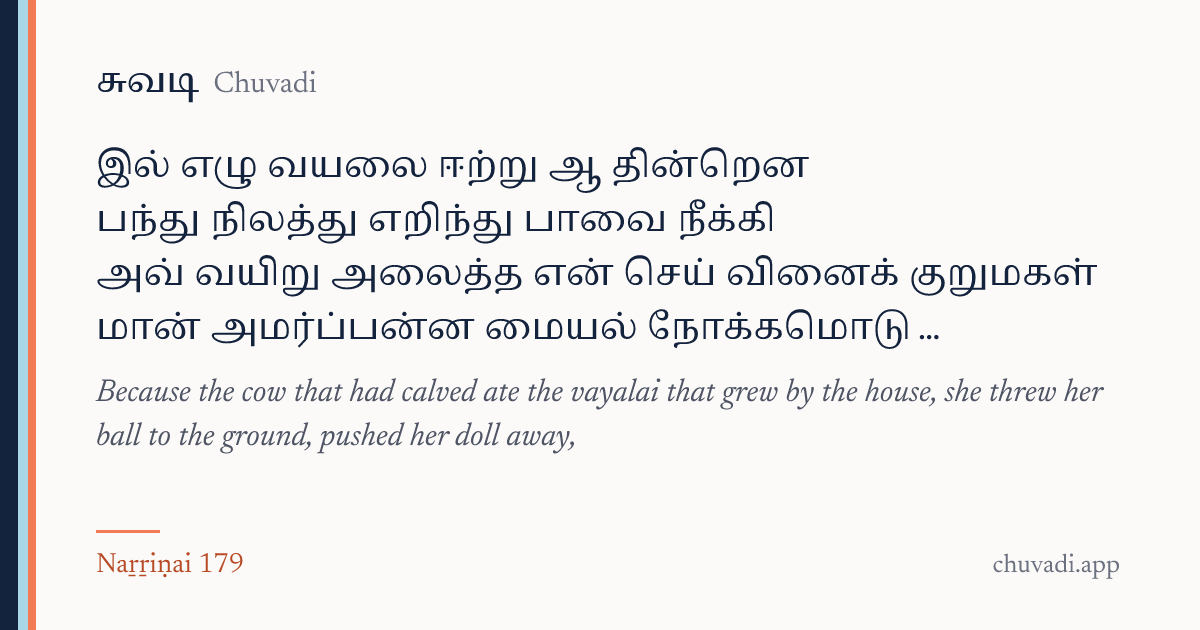
- Because the cow that had calved ate the vayalai that grew by the house,
- she threw her ball to the ground, pushed her doll away,
- and beat her lovely belly, my little girl, my life's work;
- with a dazed look like a startled deer's,
- when I and her mother urged it on her, honey and
- sweet milk she would not drink; she swelled up sobbing.
- Only yesterday she was like that; and today
- taking the lies of a youth with a dark beard for her shelter,
- she has crossed the hard wasteland, they say, opening
- her budding smile of white teeth, lovely as the base of a quill.
What the poem says
A mother's bewilderment in the empty house after her daughter has eloped (maṉai maruṭci, pālai). The words 'I and her mother' in line 5 suggest the speaker is the foster-mother (cevili), though the colophon does not name her.
She remembers the girl as a child only yesterday: when a cow that had just calved ate the vayalai creeper growing by the house, the girl flung down her ball, threw away her doll and beat her stomach in a tantrum. She would not take honey or milk however they coaxed her, and sobbed until she swelled.
Today that same child has trusted the 'lies' of a young man with a dark beard and gone with him across the wasteland, smiling as she went. The contrast between the sulking little girl and the smiling runaway is the whole poem. Muruntu in line 10 is the white base of a peacock's quill, a usual comparison for white teeth.