



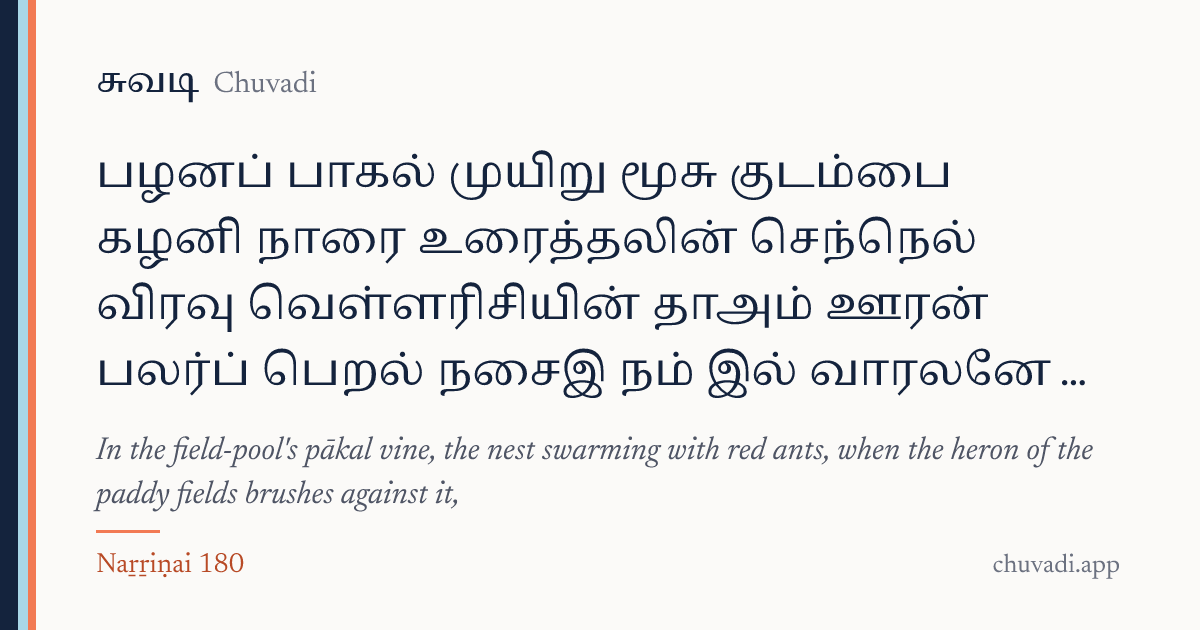

நற்றிணை 180
பாடல் · The poem
Tap a word to see where else it occurs.
பொருள் · Meaning in TamilAI
வயல்குளத்தில் படர்ந்த பாகல் கொடியில், சிவந்த எறும்புகள் மொய்க்கும் கூட்டை வயல்வெளி நாரை உரசிச் செல்வதால், அவ்வெறும்புகள் செந்நெல் கலந்த வெள்ளரிசி போலச் சிதறிப் பரவும். அத்தகைய ஊரனாகிய தலைவன், பல பெண்களைப் பெற விரும்பி நம் வீட்டுக்கு வருவதில்லை. மாமை நிறம் உடைய இவளோ, தன் அழகை நம்பி அவனை விட்டுக்கொடுக்க மறுக்கிறாள். அன்னி பெரியவன்; அவனைவிடச் சிறந்த இரு பெரு வேந்தர்கள் போர்செய்த களத்தில் அழிக்கப்பட்ட புன்னை மரத்தால் உண்டான துயரத்தைப் போல, இவ்விருவருக்கும் இடையிலான பகைமை என்னை அழித்தே முடியும்.
மருதத் திணை; தலைவனுக்கு வாயில் நேர்ந்த தோழி, தலைவியின் பொறாமையைக் கண்டு சொல்லியது. நாரை உரசிச் சிதறும் எறும்புக்கூடு, பரத்தமையால் குலையும் இல்லறத்தைக் குறிக்கலாம். மாயோள் என்பது தலைவியா பரத்தையா என்பதும், அன்னியும் இரு வேந்தரும் புன்னையும் தொடர்பான பழங்கதையின் விவரமும், இவ்விருவர் யார் என்பதும் பாடலிலிருந்து உறுதியாக அறிய முடியவில்லை.
ஆங்கிலம் · English translationAI
Translation
- In the field-pool's pākal vine, the nest swarming with red ants,
- when the heron of the paddy fields brushes against it,
- spills them out like red paddy mixed with white rice: the man of that town,
- longing to have many women, does not come to our house;
- and she, the dark one, trusting her beauty, will not let him go.
- Aṉṉi is great; and greater than he
- the two great kings — on the field where they fought they destroyed it —
- like the grief over that punnai,
- with me will end the quarrel of these two.
What the poem says
The friend has agreed to admit the unfaithful husband to the house, but she sees the heroine's jealous anger, and speaks (marutam).
The opening: a heron brushing past a pākal vine knocks a nest of red ants out of it, and they scatter like red paddy mixed with white rice. The image of something broken open and scattered by a careless passer-by may hint at the household upset by the husband's wandering. He 'longs to have many', so he does not come home; and 'the dark one' will not let him go, which most likely means the heroine holding firm in her anger, though it could also refer to the courtesan.
The last lines are the hardest. They allude to a story the poem assumes the listener knows: a punnai tree destroyed in a war, with Aṉṉi and 'two great kings' involved, and the grief it caused. The friend seems to say that, like that tree, she will be the one destroyed by the quarrel between these two. The details of the allusion, and who 'these two' are, cannot be fixed from the text.