



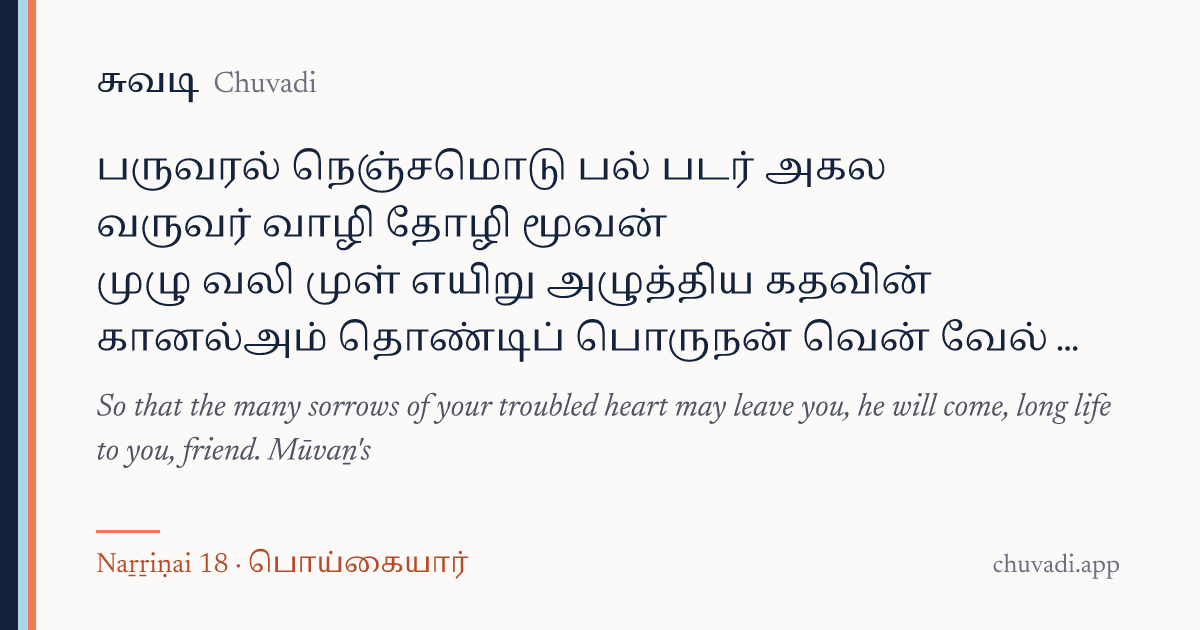

நற்றிணை 18
பாடல் · The poem
Tap a word to see where else it occurs.
பொருள் · Meaning in TamilAI
துன்பம் நிறைந்த நெஞ்சத்தோடு நீ படும் பல துயரங்களும் நீங்கும்படி அவர் வருவார், தோழி, நீ வாழ்க. முழு வலிமை கொண்ட மூவனின் கூரிய பற்களைப் பிடுங்கிப் பதித்த கதவையுடைய, கடற்கரைச் சோலை சூழ்ந்த தொண்டி நகரத்தின் தலைவன், வெற்றி வேலையும் எதிர்க்க முடியாத படையையும் உடைய பொறையன். அவனுடைய பாசறையில், கண்டவர் நெஞ்சம் நடுங்கும்படி உறங்காமல் இருந்த வீரர்கள், அலை ஓய்ந்த கடலைப் போல இனிதாகக் கண்ணுறங்குகிறார்கள்; அங்கே மதநீர் கழுவப்பட்டுச் சினம் அடங்கிய யானை வளைந்த ஒற்றைக் கொம்போடு நிற்கிறது. அந்த ஒற்றைக் கொம்பைப் போல ஓர் அருவி ஒளிரும் குன்றுகளைக் கடந்து சென்றவர் அவர்.
பாலைத் திணை; பிரிவைப் பொறுக்க முடியாத தலைவியைத் தோழி உறுதியாகத் தேற்றியது. பொறையன் சேர மன்னன்; தோற்ற மூவனின் பற்களைத் தன் கோட்டைக் கதவில் பதித்தான் என்பது இப்பாடலிலேயே சொல்லப்படுகிறது. போர் முடிந்து வீரர்கள் ஓய்வெடுக்கும் காட்சி, தலைவன் திரும்பும் காலம் வந்துவிட்டது என்பதைக் குறிக்கிறது. 'தடாஅ நிலை' என்பதன் பொருள் உறுதியாகத் தெரியவில்லை.
ஆங்கிலம் · English translationAI
Translation
- So that the many sorrows of your troubled heart may leave you,
- he will come, long life to you, friend. Mūvaṉ's
- sharp teeth, for all his strength, are pressed into the gate
- of the lord of Toṇṭi with its lovely seaside grove; with his conquering spear,
- in the war camp of Poṟaiyaṉ, whose army none can resist,
- where sleepless warriors who make hearts quake
- close their eyes sweetly, like a sea whose waves have died,
- an elephant, its musth washed away and its fury calmed,
- stands with its one great curving tusk; like that,
- a single shining waterfall marks the hills he has crossed.
What the poem says
The hero is away, and the heroine cannot bear the separation; her friend reassures her firmly that he will come back (pālai, poem by Poykaiyār).
Most of the poem is a long simile built around the Cēra king Poṟaiyaṉ, lord of the port of Toṇṭi. The gate of his fortress has the teeth of a defeated enemy, Mūvaṉ, set into it as a trophy; this grim detail is told in the poem itself and nothing more is known of Mūvaṉ. In his war camp, after victory, the warriors who never slept now sleep as peacefully as a sea without waves, and an elephant whose musth has been washed off stands calm with a single tusk.
That one white tusk is compared to a single waterfall shining on the hills the hero has crossed. The purpose is partly to locate his journey in Cēra country, and partly to pass on the mood of the camp: the fighting is over, the warriors rest, and the time for return has come.
The meaning of taṭāa nilai in line 9 (perhaps 'curved' or 'standing wide') is not certain.