



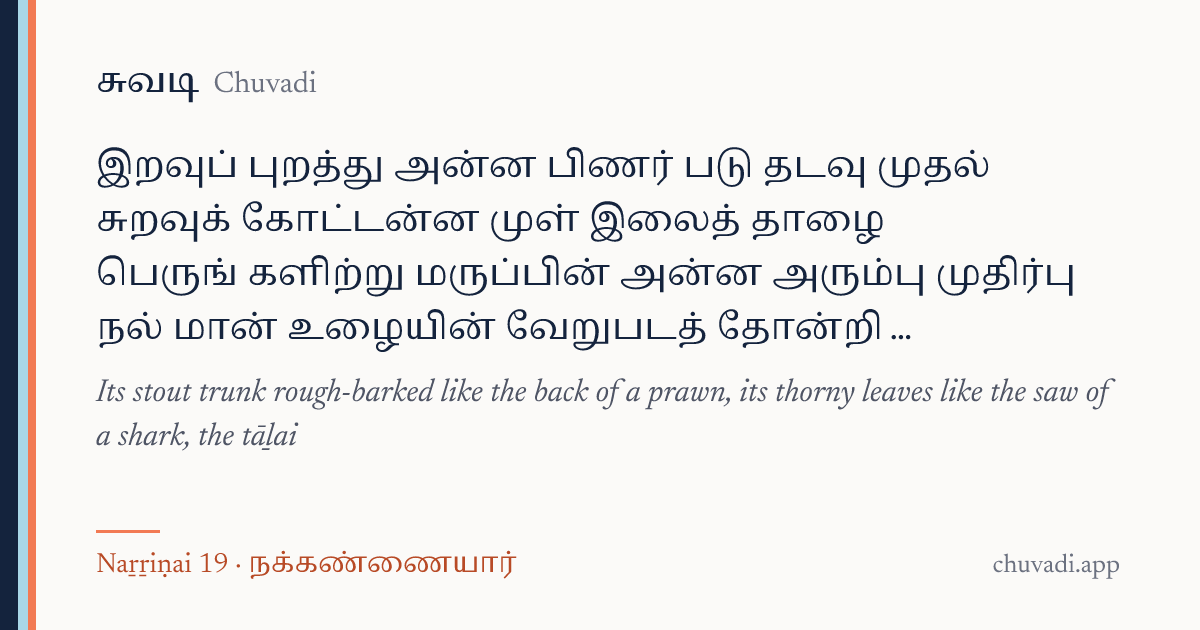

நற்றிணை 19
பாடல் · The poem
Tap a word to see where else it occurs.
பொருள் · Meaning in TamilAI
இறாலின் முதுகைப் போன்ற சொரசொரப்பான பருத்த அடிமரத்தையும், சுறாமீனின் கொம்பைப் போன்ற முள்ளுடைய இலைகளையும் உடைய தாழை, பெரிய களிற்று யானையின் தந்தத்தைப் போன்ற அரும்புகள் முதிர்ந்து, நல்ல மான் கூட்டத்திலிருந்து உழை மான் தனித்துத் தெரிவது போல வேறுபட்டுத் தோன்றி, விழா நடக்கும் களம் முழுதும் மணக்கும் வலிய கடலின் கரைக்குத் தலைவனே! வரிசையாக மணிகள் கட்டிய நீண்ட தேரைப் பாகன் செலுத்த நீ செல்லத்தான் போகிறாய் என்றால், செல். ஆனால், நீ திரும்பி வரும் அந்தச் சில நாள்களும் இவள் உயிர் வாழ மாட்டாள் என்பதை நன்கு அறிந்துகொண்டு செல்.
நெய்தல் திணை; கூடிப் பிரிந்து செல்லும் தலைவனிடம் தோழி மணம் செய்யத் தூண்டியது. வெளியே முள்ளும் சொரசொரப்பும், உள்ளே நறுமணமும் உடைய தாழை தலைவனைக் குறிப்பதாகக் கொள்ளலாம்; பாடல் இதை வெளிப்படையாகச் சொல்லவில்லை. 'நல் மான் உழையின் வேறுபடத் தோன்றி' என்ற உவமையின் சரியான பொருள் உறுதியாகத் தெரியவில்லை.
ஆங்கிலம் · English translationAI
Translation
- Its stout trunk rough-barked like the back of a prawn,
- its thorny leaves like the saw of a shark, the tāḻai
- ripens buds like the tusks of a great bull elephant,
- and showing apart, as a fine deer stands out from the herd,
- fills the festival ground with fragrance: lord of the shore of the mighty sea,
- if, with your charioteer driving the tall chariot with its rows of bells,
- you are set on going, then go: but know well
- that in the few days until you come back
- she will not live.
What the poem says
The hero has met the heroine and is leaving again; the friend presses him to marry (neytal, poem by Nakkaṇṇaiyār).
The first five lines describe the tāḻai (screw pine) of his shore, built up from images of the sea and the forest: a trunk ridged like the back of a prawn, spiny leaves like a shark's saw, long white buds like an elephant's tusks. When it opens it stands out from all around it and its scent fills the festival ground. The tāḻai is rough and thorny outside but fragrant within; the poem may intend a comparison with the hero, though it does not say so.
The friend's message is short and stark. If he must go, let him go, but he should know that the heroine will not survive even the few days he means to be away. This is the conventional threat of the friend: the girl's life depends on his quick return and marriage.
In line 4, uḻai is a kind of deer; how exactly the comparison works ('standing out from the herd' is one reading) is uncertain.