



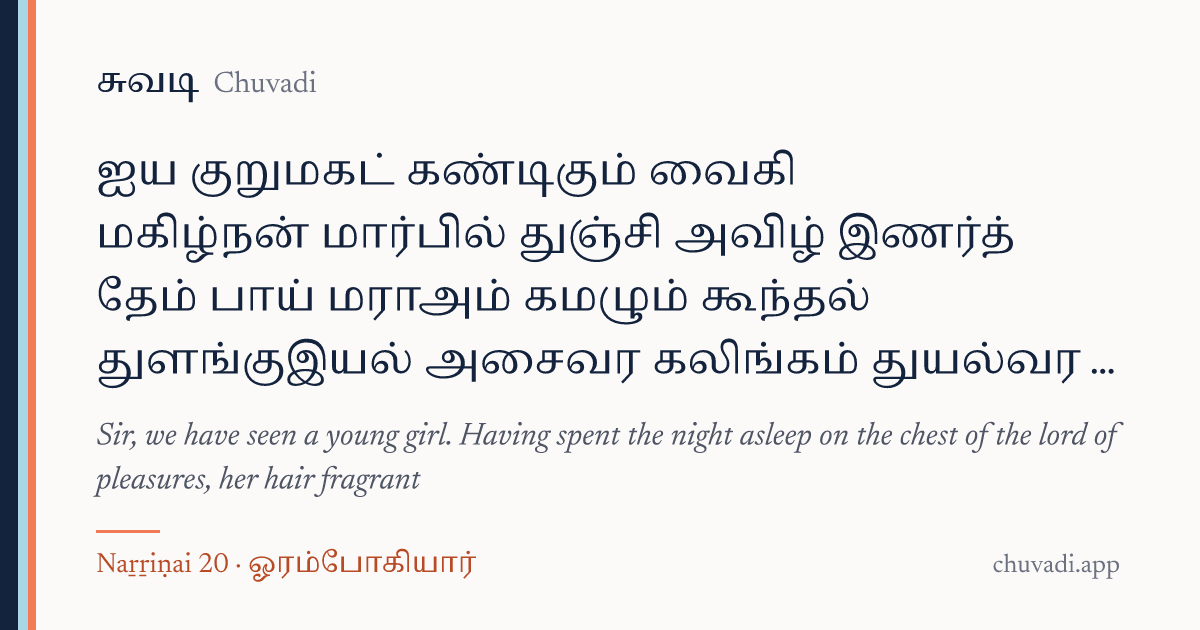

நற்றிணை 20
பாடல் · The poem
Tap a word to see where else it occurs.
பொருள் · Meaning in TamilAI
ஐயா, ஓர் இளம்பெண்ணைக் கண்டோம். இரவு முழுதும் தங்கி, மகிழ்நனின் மார்பில் உறங்கிவிட்டு, மலர்ந்த கொத்துகளில் தேன் பாயும் மராமலர் மணக்கும் கூந்தலோடு, அசைந்தாடும் நடை அசைய, ஆடை துவள, நெருக்கமாக அணிந்த வளையல்கள் ஒலிக்கக் கைகளை வீசிக்கொண்டு, தெருவில் பூப் போன்ற மையுண்ட கண்களைச் சுழற்றிப் பார்த்துக்கொண்டு சென்றாள். அந்தப் பெண் வாழ்க! நுண்ணிய பல தேமல்கள் அழகு செய்யும், ஒளிரும் அணிகலன்களை அணிந்த அவள், மார்போடு மார்பு தழுவிய அணைப்பில் நசுங்கித் தொங்கும் காதணியையும், பழைய வேட்கை தங்கிய இரு தோள்களையும், கசங்கிய மாலையையும் உடையவளாய், கொடியைப் போல அவனைத் தழுவியிருந்தாள்!
மருதத் திணை; பரத்தையிடம் சென்று வந்த தலைவன் 'நான் யாரையும் அறியேன்' என்று சொன்னபோது தலைவி சொல்லியது; வாயிலாக வந்த தோழி தலைவியிடம் சொல்லியது என்றும் கொள்ளலாம். 'மகிழ்நன்' என்பது மருதத் திணையில் தலைவனையே குறிக்கும் சொல். பரத்தையை வாழ்த்துவது போலச் சொல்வது கடுமையான எள்ளல்; ஒவ்வொரு விவரமும் அவன் பொய்யை வெளிப்படுத்துகிறது. 'பழம் பிணி' என்பதன் பொருள் உறுதியாகத் தெரியவில்லை.
ஆங்கிலம் · English translationAI
Translation
- Sir, we have seen a young girl. Having spent the night
- asleep on the chest of the lord of pleasures, her hair fragrant
- with the honey-soaked marā of opening clusters,
- her swaying walk swaying, her robe fluttering,
- her close-set bangles jingling as she swung her arms, in the street,
- turning her flowerlike, kohl-dark eyes, glancing about,
- she went her way. Long live that girl! With fine, many
- spots of sunaṅku adorning her, with shining jewels,
- her drooping earrings pressed flat in the embrace against his chest,
- her pair of shoulders where the old ache has lingered,
- with her crushed garland, she clung to him like a creeper!
What the poem says
The hero has come home from a courtesan and claims he knows no woman but his wife. The colophon gives two settings: either the heroine answers him, or the friend, entering as go-between, says it to the heroine (marutam, poem by Ōrampōkiyār).
The reply is a piece of exact, merciless description. 'We saw a girl,' the speaker begins politely ('Sir'). She had spent the night sleeping on the chest of the makiḻnaṉ, the 'man of pleasures', a usual marutam name for the hero himself. In the morning she walked down the street swaying, her clothes fluttering, bangles jingling, glancing about with kohl-darkened eyes. Her hair still smelled of marā blossoms; her earrings were flattened, her garland crushed from the embrace.
'Long live that girl!' is pure sarcasm. Every detail is evidence against his denial. The poem never accuses him in so many words; it simply describes the courtesan until the lie collapses.
The phrase 'old ache' (paḻam piṇi) on her shoulders is not fully clear; it may mean the marks of long love-making or of a longing now satisfied.