




நற்றிணை 21
பாடல் · The poem
Tap a word to see where else it occurs.
பொருள் · Meaning in TamilAI
விரைந்து ஓடும் குதிரைகளோடு ஓடி வருந்திய, மிகுதியாக நடந்த இளைய வீரர்கள், இடுப்பில் இறுக்கிக் கட்டிய கச்சையை அவிழ்த்து ஓய்வெடுத்து, தாம் விரும்பிய நடையில் மெல்ல மெல்ல வரட்டும். தொடவே தேவையில்லாத கூரிய தாற்றுக்கோலால் குதிரைகளைத் தொட்டு, நாம் விரைந்து செல்லும்படி, பாகனே, தேரைச் செலுத்து! அதோ பார்: உருக்கிய நறுமணமுள்ள நெய்யின் மேல் பாலைத் தெளித்தது போன்ற அழகிய நுண்ணிய பல புள்ளிகளையும், அரித்து ஒலிக்கும் குரலுடைய கழுத்தையும், விரும்பத்தக்க அழகையும் உடைய காட்டுக்கோழி, மழைநீர் வடிந்த அகன்ற நீண்ட முல்லைக்காட்டில், காயாத ஈர மணல் சிதறும்படி கிளறி, அன்றைய இரையைப் பிடித்துக்கொண்டு, தன் பெடையை நோக்கி நிற்கும் பெருமை மிக்க நிலையை!
முல்லைத் திணை; மேற்கொண்ட வினையை முடித்துத் திரும்பும் தலைவன் தேர்ப்பாகனுக்குச் சொல்லியது. இரை தேடிப் பிடித்துத் தன் பெடையை நோக்கும் காட்டுக்கோழி, தன் மனைவியைக் காண விரையும் தலைவனின் உள்ளத்தைக் காட்டும் இறைச்சி. 'மாட்டி' என்பதற்கு இரையைப் பிடித்து என்றும், பெடைக்குக் கொடுத்து என்றும் பொருள் கொள்ள இடம் உண்டு.
ஆங்கிலம் · English translationAI
Translation
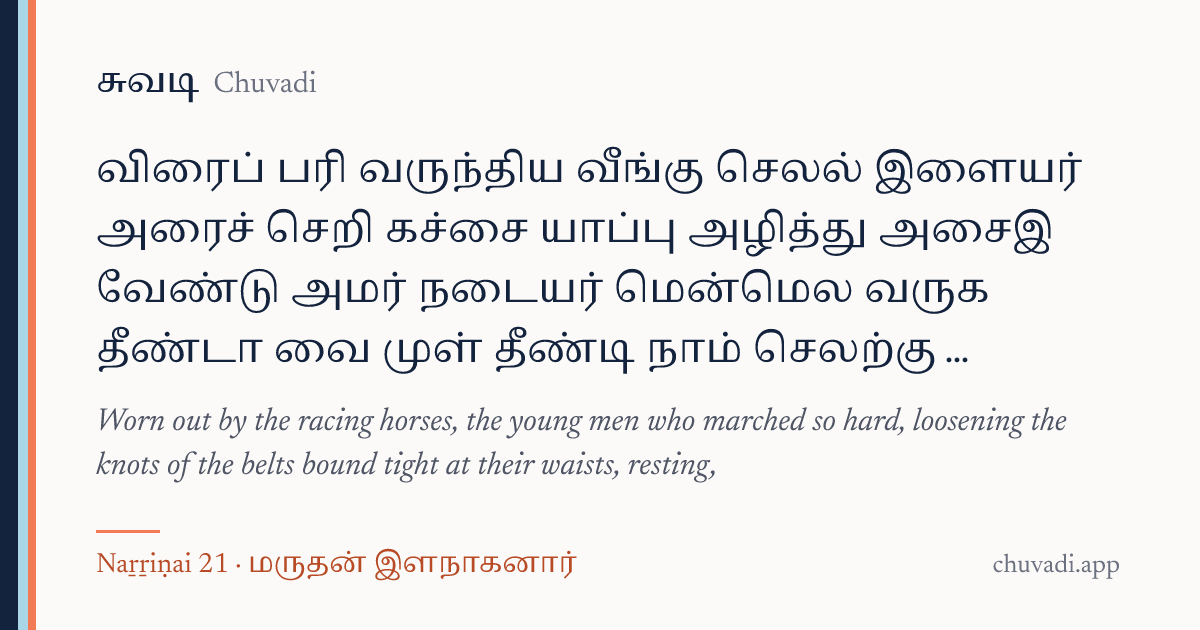
- Worn out by the racing horses, the young men who marched so hard,
- loosening the knots of the belts bound tight at their waists, resting,
- walking at whatever pace they like, let them come slowly, slowly.
- Touching the horses with the sharp goad they never need, so we may go on,
- drive the chariot, charioteer! Look, there:
- as if milk were sprinkled over melted, fragrant ghee,
- with a trilling call in its throat and many fine, lovely spots,
- with a grace that rouses desire, the forest cock,
- in the wide, long woodland where the rain water has drained away,
- scratching up the undried wet sand till it scatters,
- has caught its morning food; and now, see how nobly
- it stands, looking toward its hen!
What the poem says
The hero has finished the task that took him away and is returning home; he speaks to his charioteer (mullai, poem by Marutaṉ Iḷanākaṉār).
He is impatient. The foot-soldiers who have marched hard beside the horses can loosen their belts and come at their own pace; the chariot should go ahead, quickly, with a touch of the goad that the horses hardly need.
Then he points out a scene by the road in the rain-washed mullai woodland. A jungle cock, its plumage speckled like drops of milk on golden ghee, scratches in the wet sand, finds food, and stands looking at its hen. This is iṟaicci, meaning carried by the landscape: the cock with its mate shows what the hero longs for. It is the rainy season, the time of mullai, when the waiting wife expects her husband's return.
The image of milk on ghee for the bird's spotted feathers is precise and homely, typical of this landscape of herders. Māṭṭi in line 11 probably means 'having caught'; another reading would have the cock giving the food to its hen.