



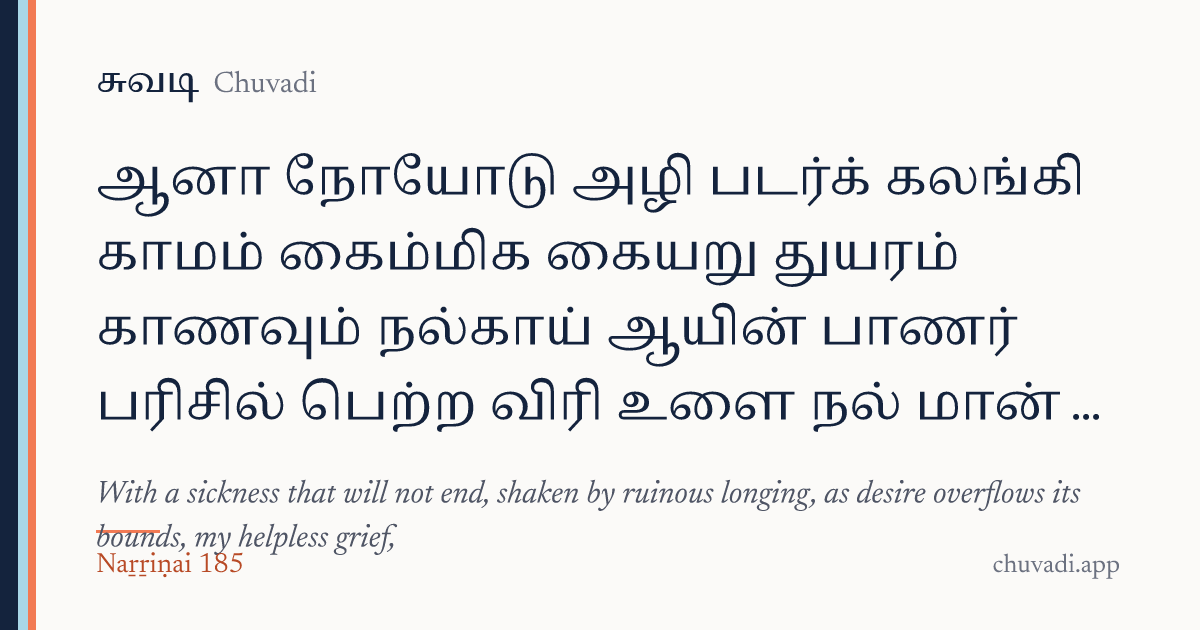

நற்றிணை 185
பாடல் · The poem
Tap a word to see where else it occurs.
பொருள் · Meaning in TamilAI
தீராத காதல்நோயோடு, அழிவு தரும் ஏக்கத்தால் கலங்கி, காமம் எல்லை மீறியதால் செயலற்று நிற்கும் என் துயரத்தை நீ அன்போடு பார்க்கக்கூட மனமில்லாதவனானால் நான் என்ன செய்வேன்? பாணர்கள் பரிசாகப் பெற்ற விரிந்த பிடரிமயிருடைய நல்ல குதிரைகளின் வளைந்த குளம்புகள் மோதித் தேய்த்த பாறைமேல் உள்ள குறுகிய வழியில், இரவலர்கள் சோர்வின்றி ஏறிச் செல்லும் மலை பொறையனுடையது. புகழ்மிக்க அந்த உயர்ந்த கொல்லி மலையின் மேற்குப் பக்கத்தில், அகன்ற இலைகளையுடைய காந்தளின் அசையும் கொத்துகளில் அமர்ந்து வண்டுகள் கட்டிய பல அறைகளையுடைய தேன்கூடுகள் நிறைந்த நீண்ட மலையில், தெய்வம் வடித்த சிறந்த வேலைப்பாடுடைய பாவை இருக்கிறது. அப்பாவையைப் போன்ற அவள் என்னைக் கொல்லத் துணிந்துவிட்டாள்; இதற்கு நான் வருந்துவதன்றி என்ன செய்ய முடியும்?
குறிஞ்சித் திணை; பாங்கனிடம் தலைவன் சொல்லியது; தன்னைத் தட்டிக்கழிக்கும் தோழியிடம் சொல்லியது என்றும் கொள்வர். பொறையன் என்பது சேர மன்னரின் பெயர்; கொல்லிப்பாவை தெய்வத்தால் செய்யப்பட்டது என்று சங்கப் பாடல்கள் போற்றுகின்றன. அதைப் போன்ற அழகுடையவள் கொடுமை செய்கிறாள் என்பது முரணாக அமைகிறது. நோகோ யானே என்பதற்கு யாரை நோவேன் என்றும் பொருள் கொள்ளலாம்.
ஆங்கிலம் · English translationAI
Translation
- With a sickness that will not end, shaken by ruinous longing,
- as desire overflows its bounds, my helpless grief,
- if you will not even look on it with kindness — where the bards
- received as gifts fine horses with spreading manes,
- whose curved hooves struck the narrow path over the rocks,
- which suppliants climb without growing faint, of Poṟaiyaṉ,
- on the west side of renowned, high Kolli,
- where, alighting on the swaying clusters of broad-leaved kāntaḷ,
- the winged ones built a many-celled honeycomb,
- on that tall mountain of honey stands the image the god fashioned,
- the finely wrought statue: she who is like it
- has set her mind on killing me; should I grieve for it?
What the poem says
The hero speaks to his companion (pāṅkaṉ), or, by the alternative colophon, to the heroine's friend, who keeps putting him off (kuṟiñci).
He is sick with a longing that does not end, and if the listener will not even look kindly on his grief, he has no help. The girl he loves is like the famous image on Kolli mountain, the 'pāvai' said in Sangam poetry to have been made by a god; and this lovely figure is bent on his death.
The long description in between belongs to Kolli itself: the hill of Poṟaiyaṉ, a Cēra title, whose paths are worn by the hooves of horses given to bards, and which needy suppliants climb without tiring, sure of a welcome; bees build their combs among the kāntaḷ on its slopes. The generosity of the king and the sweetness of the hill set off the cruelty of the girl who resembles its image. The final question, nōkō yāṉē, may also be read 'whom should I blame?'