



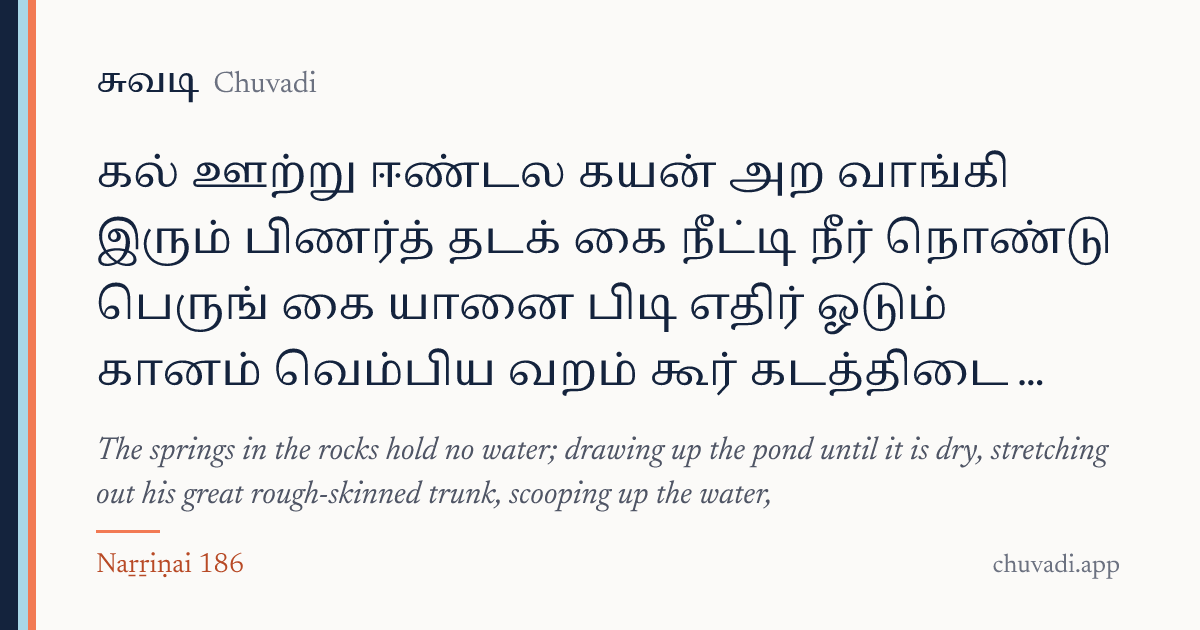

நற்றிணை 186
பாடல் · The poem
Tap a word to see where else it occurs.
பொருள் · Meaning in TamilAI
பாறைகளில் உள்ள ஊற்றுகளில் நீர் ஊறவில்லை. ஆதலால் பெரிய துதிக்கையுடைய ஆண்யானை, குளத்தின் நீர் முழுதும் வற்றும்படி உறிஞ்சி, கரிய சொரசொரப்பான பெரிய துதிக்கையை நீட்டி நீரை முகந்துகொண்டு, தன் பெண்யானையை நோக்கி ஓடும். காடு வெந்துபோன வறட்சி மிகுந்த அவ்வழியில், வேனில் வெப்பத்தால் நிறம் மாறிய முதிய ஆண் ஓந்தி, பாணனின் யாழின் வளைந்த முனையைப் போல உடலை வளைத்து, அருகில் உள்ள உயர்ந்த யா மரத்தில் ஏறும். இத்தகைய நிகழ்ச்சிகள் நிறைந்தது, பிறருக்காக முயலும் பேரருள் கொண்ட நெஞ்சோடு, விருப்பம் தரும் பொருள் என்னும் நோயால் உந்தப்பட்டு, நம்மீது ஆர்வக் காதல் கொண்ட தலைவர் சென்ற வழி.
பாலைத் திணை; பிரிவுக்காலத்தில் மெலிந்த தோழிக்குத் தலைவி சொல்லியது. பெண்யானைக்கு நீர் கொண்டு ஓடும் ஆண்யானையைக் காணும் தலைவன் தன்னை நினைப்பான் என்னும் நம்பிக்கை இதில் உள்ளது. பாண் யாழ் கடைய வாங்கி என்னும் அடியின் பொருள் இவ்வாறு கொள்ளப்பட்டது; இது உறுதியானதன்று.
ஆங்கிலம் · English translationAI
Translation
- The springs in the rocks hold no water; drawing up the pond until it is dry,
- stretching out his great rough-skinned trunk, scooping up the water,
- the big-trunked elephant runs to meet his mate;
- in the dry, parched pass where the forest is burnt up,
- the old male garden lizard, its colour changed in the summer,
- arching like the curved end of a bard's yāḻ, nearby
- climbs a tall-standing yā tree: such things happen
- on the road that, with a heart of great kindness striving for others,
- driven by the lovely affliction of wealth,
- our ardent lover took.
What the poem says
The colophon has the heroine speaking to her friend, who has grown thin with grief during the hero's absence (pālai). The heroine, unusually, is the one who steadies her friend.
She describes the road he took. In the drought the rock-springs are empty; an elephant drains a pool with his trunk and runs to bring the water to his mate. A garden lizard, its colour changed by the heat, arches like the curved neck of a bard's yāḻ and climbs a yā tree. The tender elephant is the key image: on that harsh road even a beast cares for its mate, and the hero, seeing it, will think of her.
She also names his motive with respect. He went out of a 'great kindness that strives for others', the duty of earning wealth to give, though she calls that desire for wealth an affliction (piṇi). The reading of line 6 ('like the curved end of a bard's yāḻ') is probable but not certain.