




நற்றிணை 205
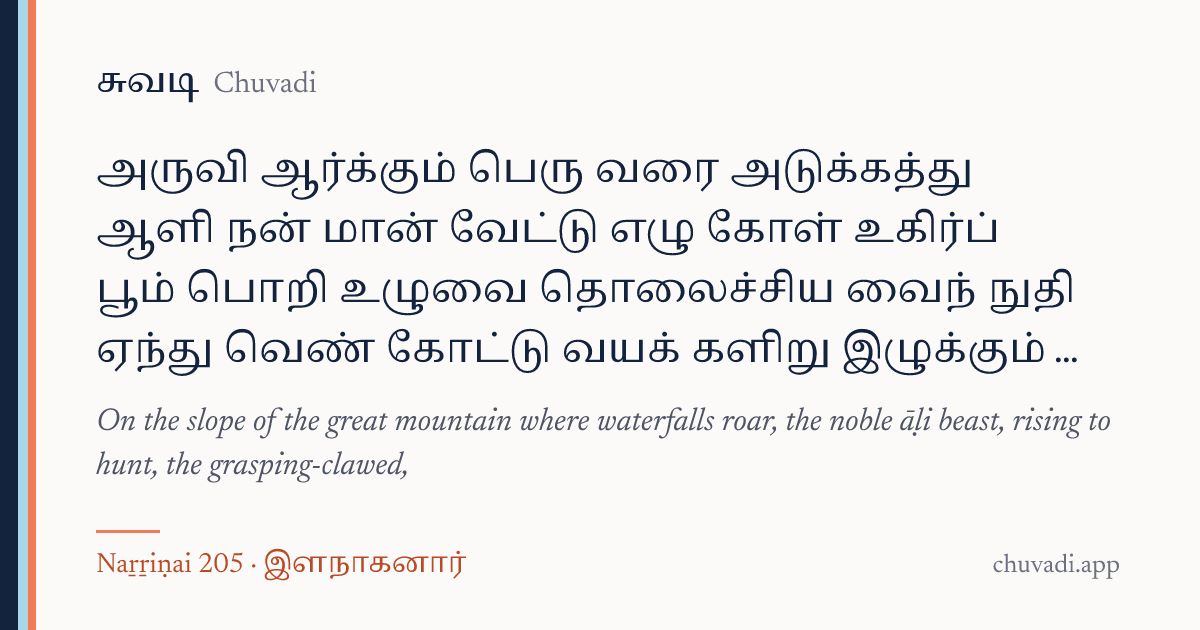
பாடல் · The poem
Tap a word to see where else it occurs.
பொருள் · Meaning in TamilAI
அருவிகள் ஆரவாரிக்கும் பெரிய மலைச்சரிவில், பற்றும் நகங்களும் பூப்போன்ற புள்ளிகளும் உடைய புலியைத் தன் கூர்மையான நுனியுடைய உயர்ந்த வெண்கொம்பால் கொன்ற வலிய ஆண்யானையை, இரை தேடி எழும் ஆளி என்னும் சிறந்த விலங்கு இழுத்துச் செல்லும். அப்படிப்பட்ட, நெருங்குவதற்கே அரிய காடு அது என்று நீ எண்ணவில்லை. குவளை மலர் போன்ற மையுண்ட கண்களை உடைய இவள் இங்கே தனித்திருக்க, பொருள் தேடும் முயற்சிக்காக நீ பிரிந்து சென்றால், தோட்டத்தில் வளைந்த முள்ளுடைய ஈங்கைச் செடியின் நீண்ட கரிய அழகிய தளிர், நீர் நிறைந்த கடும் மழையில் நனைந்து காட்டும் அழகிய நிறத்தைப் போன்ற இவளுடைய மாமை நிற அழகு இன்றோடு அழிந்து போய்விடும் அல்லவா?
பாலைத் திணை; பொருள் தேடப் பிரிய எண்ணிய தலைவன் தன் நெஞ்சுக்குச் சொல்லிப் பயணத்தைக் கைவிட்டது என்றும், தோழி தலைவனைப் போகாமல் தடுக்கச் சொன்னது என்றும் கொளு இரு சூழல்களைத் தருகிறது. புலியைக் கொன்ற களிற்றையும் ஆளி இழுத்துச் செல்லும் காடு, வழியின் கொடுமையைக் காட்டுகிறது; பிரிவால் தலைவியின் மாமை நிறம் கெடும் என்பது மறுபக்கம். ஆளி என்பது சிங்கம் போன்ற வலிய விலங்காகப் பாடல்களில் வருவது; அது எந்த விலங்கு என்று உறுதியாகச் சொல்ல இயலாது.
ஆங்கிலம் · English translationAI
Translation
- On the slope of the great mountain where waterfalls roar,
- the noble āḷi beast, rising to hunt, the grasping-clawed,
- flower-spotted tiger having been slain by the sharp point
- of the raised white tusk of the mighty bull, drags that bull away:
- a forest hard to pass, and you do not think of it, you!
- Leaving her here, she of the kohl-dark eyes like kuvaḷai,
- if you go away for the work of wealth, then, with today,
- will it be gone for good, like, in the garden,
- the long dark lovely shoots of the hook-thorned īṅkai
- drenched by the swift rain heavy with water,
- whose fine colour it matches, her dusky beauty?
What the poem says
The colophon gives two settings: the hero speaks to his own heart and gives up a journey for wealth, or the friend speaks to dissuade him (pālai, Iḷanākaṉār). The "you" of line 5 fits either: the hero's heart, or the hero himself.
The opening shows a chain of violence on the road ahead. A bull elephant kills a tiger with its tusk, and is then itself dragged off by the āḷi, a fierce lion-like beast of Sangam poetry whose real identity is uncertain. If even the victor is a victim, what hope has a traveller? That is the danger to the one who goes.
The second half turns to the one who stays. The heroine's māmai, the dusky, glowing complexion poets praise, is like the dark young shoots of the īṅkai bush washed by heavy rain. Separation in akam convention drains that colour into pallor (pacalai). The rhetorical question, "will it be gone from today?", is the argument that holds him back.