




நற்றிணை 206
பாடல் · The poem
Tap a word to see where else it occurs.
பொருள் · Meaning in TamilAI
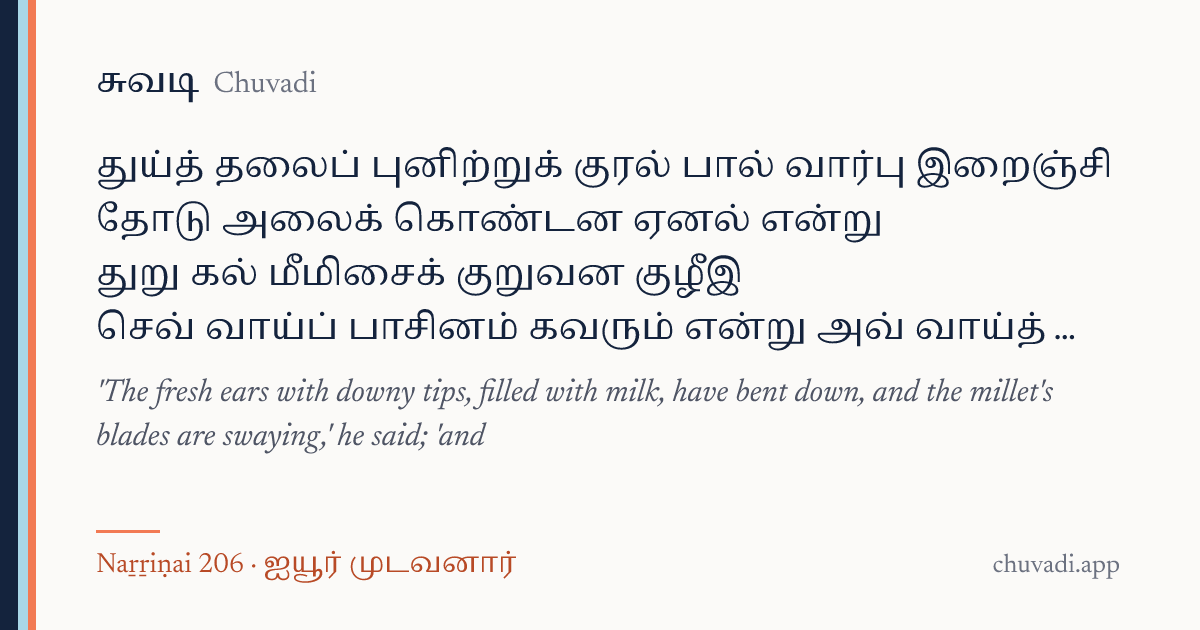
‘நுனியில் மென்மயிர் உடைய புதிய தினைக்கதிர்கள் பால் பிடித்துத் தலை சாய்ந்துவிட்டன; தினைத்தாள்களின் தோகைகள் அசைகின்றன. நெருங்கிய பாறைகளின் மேல் கூட்டமாகத் திரண்டு, சிவந்த அலகுடைய பச்சைக் கிளிகள் கதிர்களைக் கவர்ந்துவிடும்; ஆகவே தட்டையைத் தட்டி ஒலி எழுப்பு, கவணிலும் கல் வைத்து எறி’ என்று என் தந்தை வந்து சொன்னார். அன்னையோ, ‘இனி நல்ல நாளைக் காட்டும் வேங்கையும் மலரட்டும்’ என்று சொல்லி என் முகத்தை உற்றுப் பார்த்தாள். தோழி, அது ஏன்? நான் புனம் காக்கப் போவேன் என்றா, என்னை வீட்டிலேயே அடைத்து வைப்பேன் என்றா? பாறைகள் நிறைந்த நாட்டை உடைய தலைவனோடு எனக்குள்ள நட்பை அவள் அறிந்துவிட்டாளா? அதை நான் அறியேன்.
குறிஞ்சித் திணை; தலைவன் வேலிப்புறத்தில் நிற்கும்போது சொல்லப்பட்டது. கொளு இதைத் தோழி கூற்று என்றாலும், சொற்கள் தலைவியே தோழியிடம் பேசுவது போல அமைந்துள்ளன. தினை முற்றுவதும் வேங்கை மலர்வதும் புனக்காவல் முடிந்து தலைவி வீட்டில் அடைக்கப்படும் காலம் நெருங்குவதைக் காட்டுகின்றன; ஆகவே தலைவன் விரைந்து மணம் பேச வர வேண்டும் என்பது குறிப்பு.
ஆங்கிலம் · English translationAI
Translation
- 'The fresh ears with downy tips, filled with milk, have bent down,
- and the millet's blades are swaying,' he said; 'and
- gathering in crowds on top of the heaped rocks,
- the red-beaked green flocks will raid it; so with those
- beat your clappers, and fit stones to your slings':
- so father came and said. And mother too,
- saying, 'Now let the vēṅkai of the good day blossom,'
- looked into my face. What can it mean, friend?
- That I shall go to the field? Or that she will shut me in?
- Of the man of the rocky country, our friendship,
- has she come to know it? That I cannot know.
What the poem says
The colophon assigns this to the friend, spoken while the hero waits unseen by the fence (kuṟiñci, Aiyūr Muṭavaṉār). The words read naturally as the heroine's own, addressed to her friend ("What can it mean, friend?"); either way the real listener is the hero.
The millet is ripening and the parrots will come, so the father sends the daughter out to guard the field with clapper and sling. That is the familiar setting of kuṟiñci courtship: the field-watch gives the lovers their chance to meet. But the mother's remark about the vēṅkai is ominous. The vēṅkai's blossoming marks the harvest, when the field-watch ends, and its season was also taken as auspicious for weddings. Her searching look suggests she suspects something.
The anxious questions, whether the girl will be sent out or kept indoors, and whether her mother knows of the affair, tell the listening hero that time is running out and that he should come to ask for her hand.