




நற்றிணை 207
பாடல் · The poem
Tap a word to see where else it occurs.
பொருள் · Meaning in TamilAI
கண்டல் மரங்கள் வேலியாக நிற்கும், கழிகள் சூழ்ந்த தோட்டத்தில், முண்டகத்தால் வேய்ந்த தாழ்ந்த கூரையுடைய குடிசைகள் உள்ள, கொழுத்த மீன் பிடிப்பவர்களின் பாக்கம் ஆரவாரிக்கும்படி, அணிசெய்த நெடுந்தேர் வருவது ஓயவில்லை. மலை போலக் குவிந்த மணல்மேடுகளைக் கடந்து வந்தவர்கள் இப்போது திரும்பிப் போவார்களோ? நேற்று இரவு இளையவரும் முதியவரும் சுற்றத்தாரோடு கூடிப் பேசினர். ஆனால் கொடிய சுறாக்களை எறிந்து எறிந்து நரம்புகள் சுருங்கிய, தலை நரைத்த பரதவர்களின் மென்மொழி பேசும் இளமகள், வலையும் தூண்டிலும் பிடித்துக்கொண்டு பெருங்காற்றால் அலை எழும் கடலை நோக்கிச் சென்ற, கொல்லும் வீரம் உடைய அந்த இளைஞனுக்கே ஏற்கெனவே உரியவள் ஆகிவிட்டாள்.
நெய்தல் திணை; அயலார் மணம் பேச வந்தபோது, தலைவியின் காதலைச் செவிலித்தாய்க்குத் தோழி வெளிப்படுத்தும் அறத்தொடு நிற்றல். தேரில் வந்தவர்கள் மணம் பேச வந்த அயலார் என்றும், அவர்கள் வெறுங்கையோடு திரும்ப வேண்டியதுதான் என்றும் பொருள் கொள்ளலாம்; பாடல் இவர்களைப் பெயர் சொல்லிக் குறிக்கவில்லை. ‘சிறாஅர்’ என்ற பன்மை தலைவனை மதிப்போடு குறிப்பதாகத் தோன்றுகிறது.
ஆங்கிலம் · English translationAI
Translation
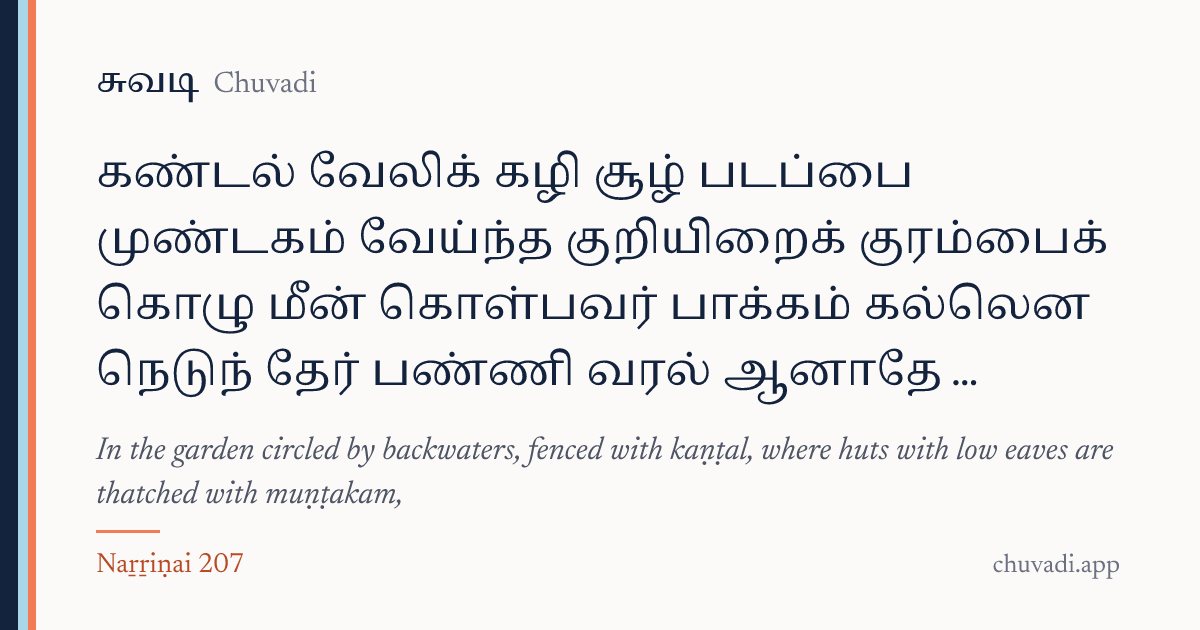
- In the garden circled by backwaters, fenced with kaṇṭal,
- where huts with low eaves are thatched with muṇṭakam,
- the hamlet of those who catch fat fish is loud
- with a tall chariot, harnessed, coming again and again.
- Crossing sand heaped up like hills,
- they came: will they now go back? Last night
- young and old gathered together with their kin;
- but of the fishers whose sinews have shrunk from spearing fierce sharks,
- old white-headed men, the soft-spoken young girl,
- to the one who, gripping net and hook, made for the sea
- where great winds lift the waves,
- that fierce young man of the kill, already belongs.
What the poem says
This is aṟattoṭu niṟṟal, the friend's disclosure of the heroine's secret love, made to the foster-mother because strangers (notumalar) have come to ask for the girl in marriage (neytal; the poet's name is lost).
The first half describes the suitors' arrival: a tall chariot keeps rattling into the fishing hamlet with its kaṇṭal hedges and muṇṭakam-thatched huts, and the families have met in council. "Will they go back?" is a pointed question: they will have to, because the girl is already promised in heart to someone else. The second half says so, through a vivid portrait of the community: the old fishermen, white-haired, their sinews shrunk from years of spearing sharks, and their daughter, who belongs to a fierce young fisherman who goes out with net and hook into the windy sea.
The poem does not name either party, so the reading of the chariot as the suitors' and the "fierce young man" (the plural ciṟāar, apparently used out of respect) as the hero is an interpretation, though the colophon's setting supports it.