



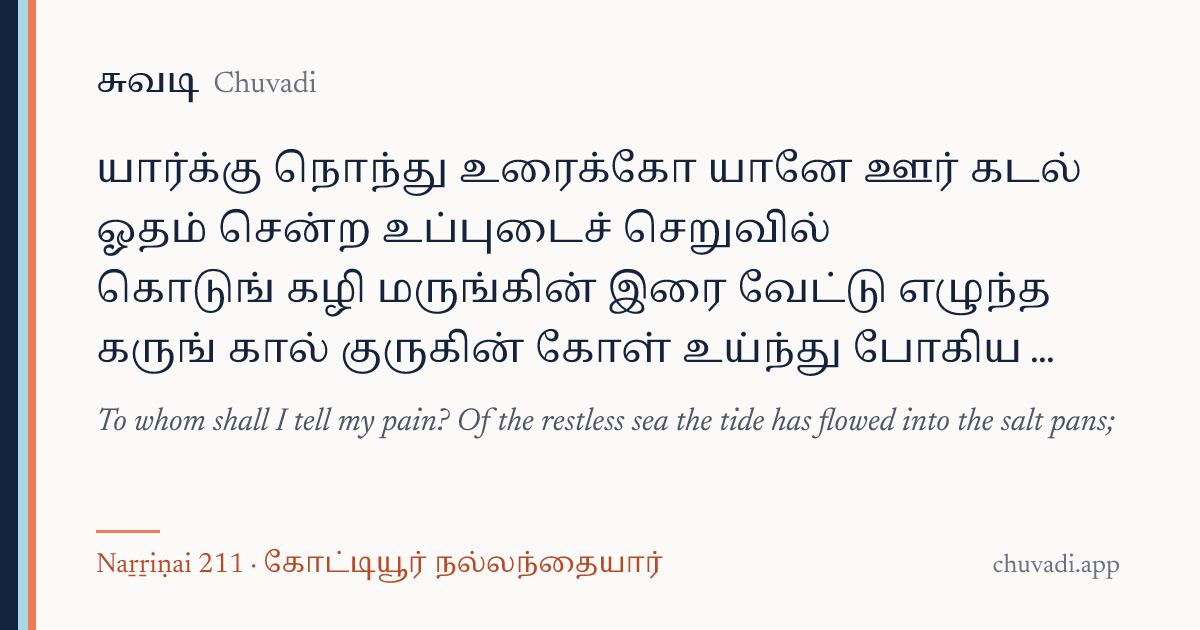

நற்றிணை 211
பாடல் · The poem
Tap a word to see where else it occurs.
பொருள் · Meaning in TamilAI
என் துயரத்தை நொந்து யாரிடம் சொல்வேன்? அலை புரளும் கடலின் ஓதநீர் உப்பளங்களுக்குள் புகுந்திருக்கிறது. வளைந்த கழியின் அருகே இரை தேடி எழுந்த கரிய கால்களை உடைய நாரையின் பிடியிலிருந்து தப்பிய, வளைந்த முதுகும் நீண்ட மூக்கும் உடைய ஆண் இறால், மோதும் அலைகள் குவித்த மணல்மேட்டின் நீண்ட முகட்டில், நெருங்கிய கடலின் கரையில் நிற்கும், மடல்களால் சுற்றப்பட்ட தாழையின் வண்டுகள் மொய்க்கும் வெள்ளை அரும்பைக் கண்டு அஞ்சுகிறது. அப்படிப்பட்ட துறையை உடைய தலைவன் இவளைக் கைவிட்டுவிட்டான் என்பதை யாரிடம் சொல்வேன்?
நெய்தல் திணை; மணம் நீண்டுகொண்டே போனதால் தலைவி தாங்க மாட்டாள் என்று அஞ்சிய தோழி, தலைவன் மறைவில் கேட்டுக்கொண்டிருப்பதை அறிந்து தனக்குத்தானே சொல்வதுபோலச் சொன்னது. நாரையிடமிருந்து தப்பிய இறால், நாரை போலத் தோன்றும் தாழை அரும்பைக் கண்டும் அஞ்சுவது, அஞ்சத் தேவையில்லாதவற்றுக்கும் அஞ்சும் தலைவியின் நிலையைக் குறிப்பாகக் காட்டலாம்; இந்த உள்ளுறையின் சரியான பொருள் உறுதியாகத் தெரியவில்லை.
ஆங்கிலம் · English translationAI
Translation
- To whom shall I tell my pain? Of the restless sea
- the tide has flowed into the salt pans;
- beside the curving backwater, risen in search of prey,
- the black-legged heron: escaping its grip,
- the bent-backed prawn, the male with jutting snout,
- on the long ridge of the dune that the dashing waves heaped,
- of the tāḻai at the edge of the crowded sea, its sheaths wrapped round,
- the white bud where bees settle, it is frightened of:
- to whom shall I tell that the lord of that shore has forsaken her?
What the poem says
Marriage has been put off so long that the friend fears the heroine will not bear it. She speaks as if to herself, knowing the hero is outside and can hear (neytal, Kōṭṭiyūr Nallantaiyār).
The poem is framed by her helpless question, "To whom shall I tell?", and its answer, that the man of the shore has forsaken the heroine. Between them lies a small scene of the salt flats. A prawn escapes the beak of a hunting heron, only to take fright at a white tāḻai bud, which looks like a heron. The image is typical of neytal's shore life, and its suggestion (uḷḷuṟai) seems to be that the heroine, having once been rescued from fear by the hero's love, now starts at every shadow because he holds back; or that she is frightened even by harmless things, such as the town's talk. The exact application is not certain.
Saying "he has forsaken her" in his hearing is meant to sting the hero into setting a wedding date.