



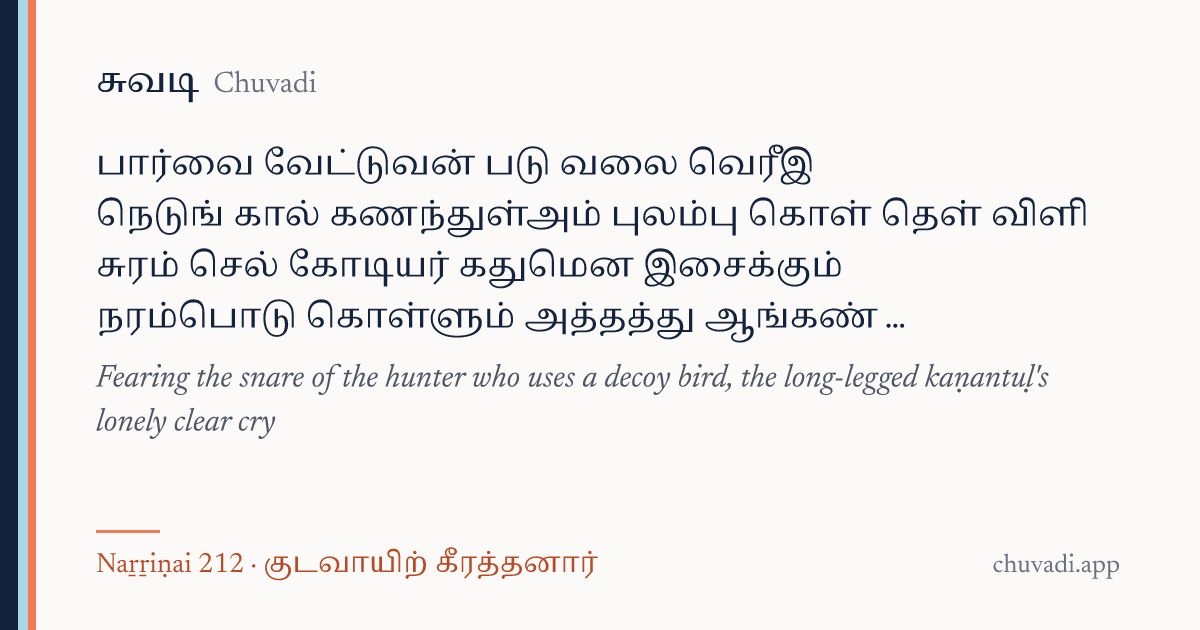

நற்றிணை 212
பாடல் · The poem
Tap a word to see where else it occurs.
பொருள் · Meaning in TamilAI
பார்வைப் பறவையை வைத்து வேட்டையாடுபவன் விரித்த வலைக்கு அஞ்சி, நீண்ட கால்களை உடைய கணந்துள் பறவை தனிமையில் எழுப்பும் தெளிந்த குரல், பாலை வழியில் செல்லும் கூத்தர்கள் திடீரென மீட்டும் யாழ் நரம்பின் ஒலியோடு ஒத்திருக்கும் பாலைவழி அது. அங்கே, கடுமையாக ஒலிக்கும் பம்பைப் பறையும் சினமுள்ள நாய்களும் உடைய வடுகர்களின் நீண்ட பெரிய மலைகளைக் கடந்து, தோழி, அவர் நம்மிடம் வந்துவிட்டார், நீ வாழ்க! என் கையில் கழன்று நிற்கும் செம்பொன் வளையலைப் பார்த்து, நம் சிறிய மகன் தன்னைத் தூக்கிக்கொள்ளச் சொல்லி இனிய குரலில் அழைக்கும்போதெல்லாம், ஏக்கம் நிறைந்த மனத்தோடு இருந்தோமே, அந்த நம்மிடம் அவர் வந்துவிட்டார்.
பாலைத் திணை; பொருள் தேடிப் பிரிந்த தலைவன் திரும்புவதை முன்வந்த ஏவலர்கள் சொல்லக் கேட்ட தோழி தலைவிக்குச் சொன்னது. கொடிய வழியின் விளக்கம் அவன் வருகையின் மகிழ்ச்சியைப் பெருக்குகிறது; மகனின் குரல் தந்தையில்லாத ஏக்கத்தைக் காட்டுகிறது. ஏழு முதல் ஒன்பது வரையிலான அடிகள் சுருக்கமானவை; வளையல் யார் கையில் உள்ளது, மகன் ஏன் அதைப் பார்க்கிறான் என்பது முழுமையாகத் தெளிவில்லை.
ஆங்கிலம் · English translationAI
Translation
- Fearing the snare of the hunter who uses a decoy bird,
- the long-legged kaṇantuḷ's lonely clear cry
- matches the strings that minstrels going through the wastes
- suddenly strike, on the desert path; there,
- through the land of the Vaṭukar with loud drums and fierce dogs,
- crossing the long, great hills, to us
- he has come, long may you live, friend! At the bangle on my hand,
- the loose bangle of red gold, looking, our little son
- in his sweet voice asked to be held; each time we heard it
- we grew heavy with longing: to us, who were so, he has come.
What the poem says
The hero went away to earn wealth. Now his attendants have arrived ahead of him with news of his return, and the friend passes it on to the heroine (pālai, Kuṭavāyil Kīrattaṉār).
The first six lines describe the road he has travelled. A kaṇantuḷ, a bird of the dry country, cries out in fear of a fowler's net, and its thin clear call is so like a string instrument that it blends with the music of the wandering minstrels (kōṭiyar). Then there are the Vaṭukar, a people the poems place on the hill routes to the north, with their loud drums and savage dogs. The danger of the road makes the return more welcome.
The ending is unusually domestic. The couple have a small son. While the father was away, whenever the child, looking at his mother's red-gold bangle (loose on her thinned arm), called sweetly to be picked up, the women felt the father's absence. The syntax of lines 7 to 9 is compressed and could be read differently: whose hand bears the bangle, and why the child looks at it, is not quite certain.