



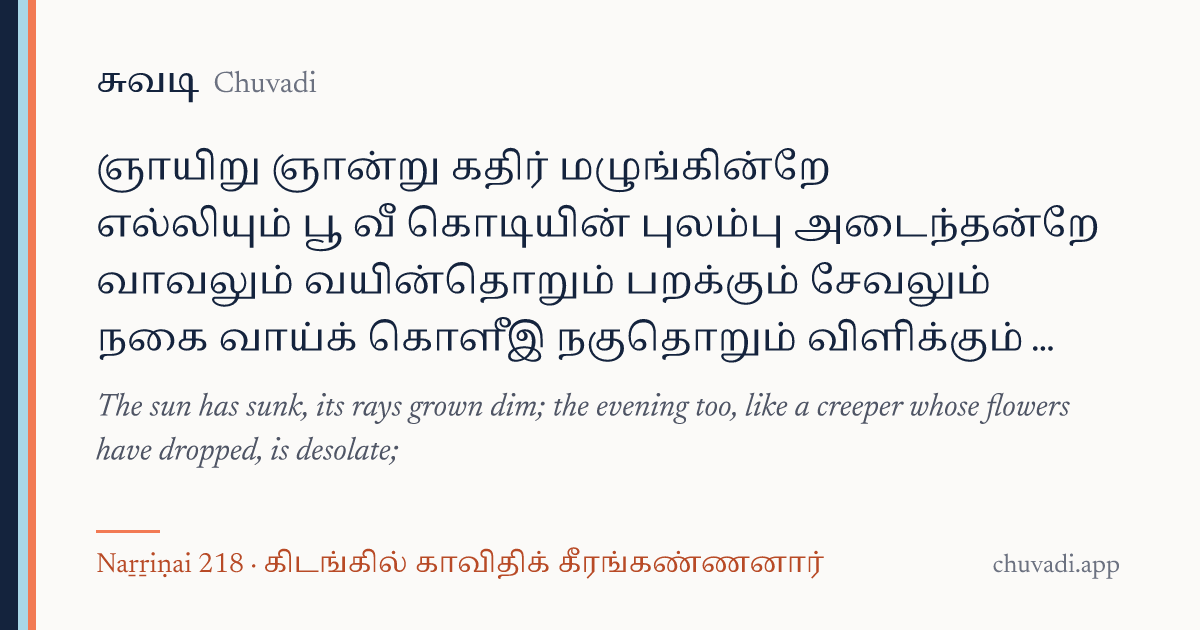

நற்றிணை 218
பாடல் · The poem
Tap a word to see where else it occurs.
பொருள் · Meaning in TamilAI
கதிரவன் சாய்ந்து அதன் கதிர்கள் ஒளி மங்கிவிட்டன. மாலைப்பொழுதும் பூ உதிர்ந்த கொடி போலப் பொலிவிழந்து தனிமையடைந்துவிட்டது. வௌவால்களும் இடம்தோறும் பறக்கின்றன. ஆண் பறவையும் சிரிப்புப் போன்ற ஒலியை வாயில் கொண்டு, ஒவ்வொரு முறை சிரிக்கும்போதும் அழைக்கிறது. குறையாத காதலோடு வழியில் எனக்கு உறுதி சொன்னவர் குறித்த பருவமும் கடந்துவிட்டது. பருத்த அடியுடைய பெரிய வேப்பமரத்தின் கிளையில் இருக்கும் குராஅல் கூகையும் இரவெல்லாம் அலறுகிறது. ஓயாத காமநோய் வருத்த வருந்தி, பருத்த அடியுடைய பனைமரத்தில் இருக்கும் அன்றில் பறவையின் குரலை இன்னும் நான் தனியே கேட்டுக்கொண்டிருப்பேனோ?
நெய்தல் திணை; மணம் தள்ளிப்போனதால் மெலிந்த தலைவி, ஆறுதல் சொன்ன தோழிக்கு அளித்த மறுமொழி. துணையைப் பிரியாத பறவையாகச் சொல்லப்படும் அன்றிலின் இரவுக் குரல் தனித்திருப்பவர்க்குப் பெருந்துன்பம் தரும் என்பது மரபு. மூன்றாம் நான்காம் அடிகளில் வரும் ஆண் பறவை எது, அதன் ‘நகை’ என்ன என்பது தெளிவாகத் தெரியவில்லை.
ஆங்கிலம் · English translationAI
Translation
- The sun has sunk, its rays grown dim;
- the evening too, like a creeper whose flowers have dropped, is desolate;
- the bats fly about in every place; and the male bird,
- catching up the laughing cry, calls back each time it laughs;
- he who gave me his word with unwavering love, there on the path,
- the season he named has passed. On the branch
- of the stout, thick-based neem tree, perched,
- the kurāal owl too hoots through the night;
- crushed by unending sickness, aching, must I still,
- alone, I wonder, go on hearing it,
- the cry of the aṉṟil in the thick-trunked palmyra?
What the poem says
The wedding has been put off and the heroine is wasting away. Her friend has tried to reassure her, and this is her reply (neytal, Kiṭaṅkil Kāviti Kīraṅkaṇṇaṉār).
She answers with the sounds and signs of nightfall rather than argument. The sun dims; evening is as forlorn as a creeper stripped of flowers; bats dart out; the owl hoots from the neem; a male bird answers its mate's call. Every creature has its companion or its voice, and the season he swore by has already gone. Lines 3 and 4 are not entirely clear: the bird may be an owl, whose call was heard as a laugh, answering its mate.
The final sound is the worst. The aṉṟil, a bird that poets describe as never parted from its mate, calls from the palmyra in the night, and to the lonely heroine its cry is unbearable. Her question, "must I still hear it alone?", is her answer to all the friend's comfort.