




நற்றிணை 217
பாடல் · The poem
Tap a word to see where else it occurs.
பொருள் · Meaning in TamilAI
புகழோடு வாழ்பவர்களின் செல்வம் போலக் காணும்தோறும் பொலிவு பெறும், சினம் மிக்க வாயுடைய யானை, கரிய நிறமுடைய வலிய புலிக்கு அஞ்சி, அருகில் நிற்கும் கரிய அடிமரமுடைய வேங்கை மரத்தைப் புலி என்று எண்ணிக் காயப்படும்படி தாக்கி, தன் பெருஞ்சினம் தணியும். அத்தகைய மலைநாட்டை உடைய தலைவன் எனக்கு மிகவும் இனியவனே; ஆனாலும் தோழி, மனவருத்தம் மேலிட நான் அவனோடு ஊடுவேன். நீண்ட தனிமைத் துயரை வெகு தொலைவுக்கு அகற்ற, என் சினத்தை அவனுக்கு உணர்த்துவதே என் வலிமை.
குறிஞ்சித் திணை; தலைவனை ஏற்க மறுக்கும் தலைவி தோழியிடம் சொன்னது. வாயில் மறுத்தலும் ஊடலும் பொதுவாக மருதத்துக்கு உரியவை; ஆகவே குறிஞ்சி என்ற திணைக்குறிப்பு இச்சூழலுக்குச் சற்றுப் பொருந்தாததாகத் தோன்றுகிறது. ‘வேங்கை’ என்பது மரத்தையும் புலியையும் குறிக்கும்; புலிக்கு அஞ்சிய யானை மரத்தைத் தாக்கிச் சினம் தணிவது, தன் சினமும் வெளிப்பட்டபின் தணியும் என்பதைக் குறிப்பாகக் காட்டலாம். கடைசி மூன்று அடிகளின் அமைப்புச் சுருக்கமானது; இது ஒரு பொருத்தமான பொருள் மட்டுமே.
ஆங்கிலம் · English translationAI
Translation
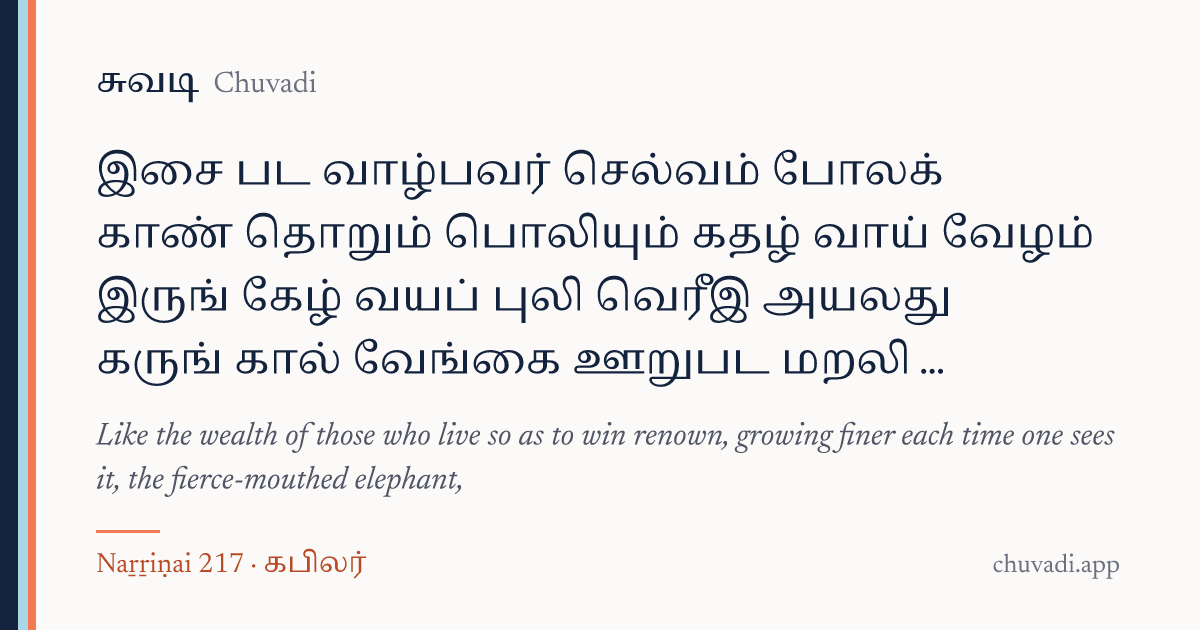
- Like the wealth of those who live so as to win renown,
- growing finer each time one sees it, the fierce-mouthed elephant,
- fearing the dark-hued, mighty tiger, close by
- attacks the black-trunked vēṅkai till it is wounded,
- and its great rage subsides: the man of the hill country,
- though he is exceedingly sweet, steeped in resentment
- I shall sulk, friend; for, driving the long
- loneliness far away,
- to make him feel my anger is my strength.
What the poem says
The colophon says the heroine is refusing to let the hero in (vāyil maṟuttal) (kuṟiñci, Kapilar). Refusal of entry and the wife's sulking (ūṭal) are usually the matter of marutam, so the kuṟiñci label sits a little oddly with the situation, though the landscape is plainly the hills.
The opening image turns on a pun that Sangam poets love: vēṅkai is both the name of a tree with tawny, spotted blossoms and a word for the tiger. An elephant, afraid of a tiger, mistakes the flowering vēṅkai for its enemy, gores it, and then its rage cools. The comparison at the very start, the elephant growing more splendid like the wealth of the honourable, adds to its grandeur.
How the image applies is open. It may say that her own anger, like the elephant's, must be spent before it subsides; or that the hero, like the elephant, takes out his feelings on the wrong target. Her own words are clear: he is very dear, but she will sulk, because making him feel her displeasure is the one power she has against long loneliness. The syntax of lines 7 to 9 is compressed, and this rendering is one reasonable reading.