




நற்றிணை 226
பாடல் · The poem
Tap a word to see where else it occurs.
பொருள் · Meaning in TamilAI
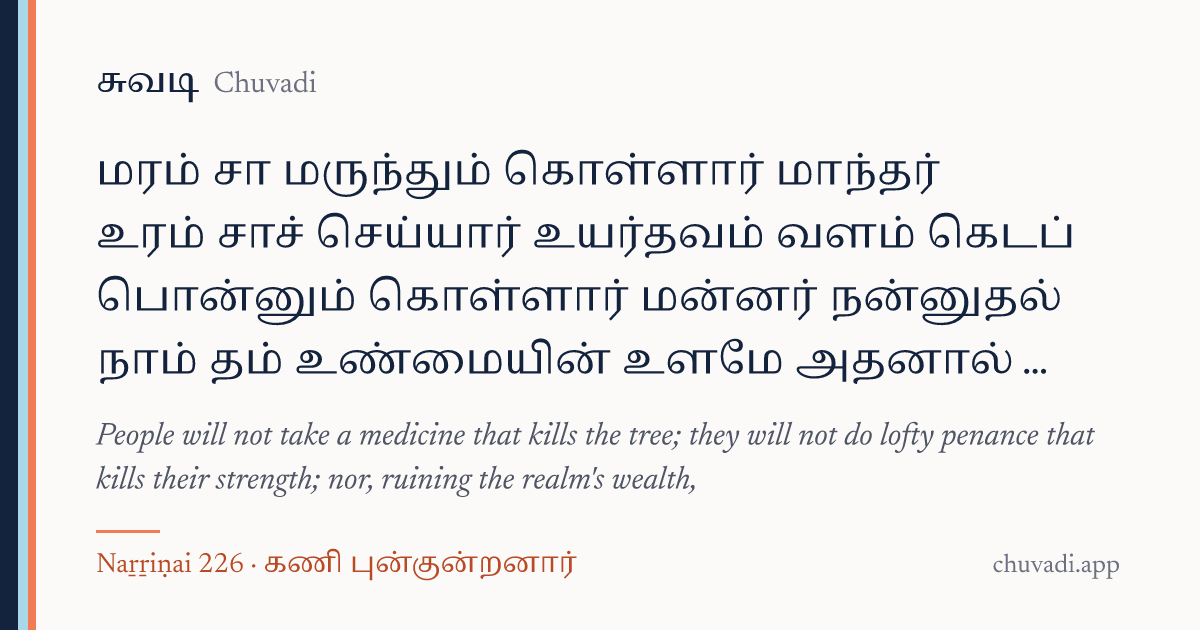
மருந்துக்காக மரத்திலிருந்து எடுப்பவர்கள் மரம் சாகும்படி எடுக்க மாட்டார்கள். உயர்ந்த தவம் செய்பவர்கள் தம் உடல் வலிமை அழியும்படி செய்ய மாட்டார்கள். நல்ல மன்னர்கள் நாட்டின் வளம் கெடும்படி பொன்னை வரியாகக் கொள்ள மாட்டார்கள். அழகிய நெற்றியை உடையவளே, அவர் இருப்பதால்தான் நாம் இருக்கிறோம், நாம் அவர் உள்ளத்தில் இருக்கிறோம். ஆனாலும் தாம் தேடும் பொருளுக்கு ஓர் அளவு உண்டு என்பதை அவர் அறியவில்லை. தாமே வியர்த்து வருந்தி, கோடை வெயில் தலைக்கு மேல் நிற்க, நீண்ட வழியில் நம்மை விட்டுப் பிரிந்து சென்றுவிட்டார் நம் காதலர். என்றுமே இது இப்படித்தான் இருக்கும் என்பார்கள்; இந்த உலகில் இதை எல்லோரும் அறிவார்கள்.
பாலைத் திணை; பிரிவில் மெலிந்த தலைவி, ஆறுதல் சொன்ன தோழிக்குச் சொன்ன மறுமொழி. அளவறிந்து எடுக்கும் அறிவுடையோரின் மூன்று எடுத்துக்காட்டுகளைச் சொல்லி, பொருள் தேடுவதில் அளவறியாத தலைவனோடு ஒப்பிடுகிறாள். நான்காம் அடியின் பொருள் உறுதியாகத் தெரியவில்லை; அவனாலேயே தான் வாழ்வதால் அவன் தன்னை வருத்திக்கொள்வது தன்னையும் வருத்துகிறது என்பதாகக் கொள்ளலாம்.
ஆங்கிலம் · English translationAI
Translation
- People will not take a medicine that kills the tree;
- they will not do lofty penance that kills their strength; nor, ruining the realm's wealth,
- will kings take gold. Girl of the fine brow,
- since we exist only through him, we dwell in his heart; and yet
- he knows no measure in the wealth he makes; sweating himself,
- as the blazing sun stands overhead, across the long way, leaving us,
- he has surely gone, our lover. Always
- it is like this, they say;
- everyone knows it, in this world.
What the poem says
The heroine is wasting in her lover's absence, and when her friend tries to reassure her she answers with an argument from wisdom (pālai, Kaṇi Puṉkuṉṟaṉār).
She begins with three maxims about moderation. Those who take medicine from a tree do not strip it so that it dies; those who do penance do not destroy their own strength; good kings do not tax so heavily that the land is ruined. Wise people take only what can be spared. Her lover, by contrast, does not know when he has enough: he goes on seeking wealth, sweating under the summer sun on the long roads, while she wastes away at home.
Line 4 is hard. It seems to say that she exists through him and is in his heart, which is why his lack of measure is so painful: in harming himself and staying away, he harms her too. The final lines are flat and bitter: this is how it always is, as everyone knows. The poet's name, Kaṇi ("astrologer"), is possibly a title; nothing further about him is known from this poem.