




நற்றிணை 225
பாடல் · The poem
Tap a word to see where else it occurs.
பொருள் · Meaning in TamilAI
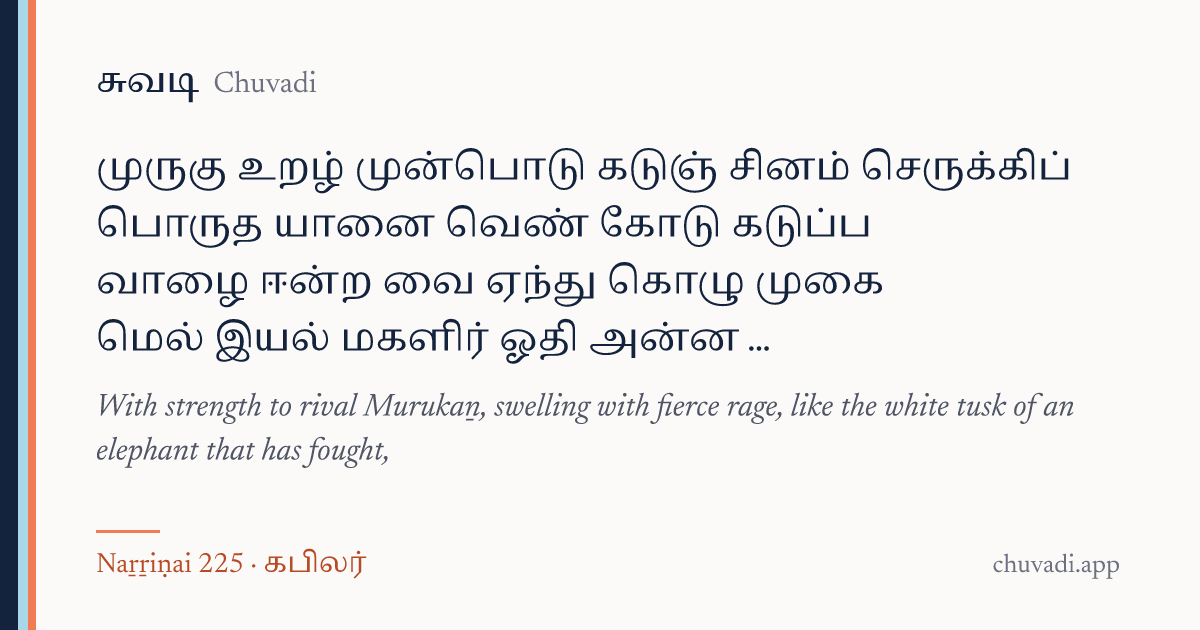
முருகனுக்கு நிகரான வலிமையோடு கடுஞ்சினம் கொண்டு செருக்கிப் போரிட்ட யானையின் வெள்ளைக் கொம்பைப் போல, வாழை ஈன்ற கூர்மையான நுனியுடைய, உயர்ந்து நிற்கும் கொழுத்த மொட்டு, மென்மையான இயல்புடைய பெண்களின் கூந்தல் போன்ற பூக்களோடு அசையும் பெரிய மலைகளை உடைய நாடன் அவன். தோழி, அவனிடம் யாராவது சென்று இரந்து வேண்டினார்களா? நன்கு செய்த அணிகளும் தொய்யில் எழுதிய அழகிய முலைகளும் வரியழகை இழக்கும்படி, பசலையால் எழுந்த இந்தத் துன்பம் தீர, தன்னை விரும்பியவளுக்கு உதவாத அன்பில்லாத மார்பு அவனுடையது.
குறிஞ்சித் திணை; தலைவன் விரைவில் மணப்பான் என்று தோழி வலியுறுத்தியபோது அதைத் தாங்காது தலைவி சொன்னது. பரத்தை தலைவியின் பக்கத்தார் கேட்கச் சொன்னதாகவும் கொள்ளலாம் என்று கொளு கூறுகிறது; அது மருதத்துக்கே பொருந்துவது, பாடலில் அதற்குச் சான்று குறைவு. யாரும் வேண்டாமலே தானே வந்து கூடிய தலைவன் இப்போது உதவவில்லை என்பதே அவள் குறை; ‘நார்’ என்பது அன்பு.
ஆங்கிலம் · English translationAI
Translation
- With strength to rival Murukaṉ, swelling with fierce rage,
- like the white tusk of an elephant that has fought,
- the sharp, upraised, plump bud the banana has borne,
- like the tresses of soft-natured women,
- sways with its flowers: the man of those great mountains,
- did anyone go and beg him, friend? Of my finely jewelled,
- toyyil-painted lovely breasts, the beauty of the lines is lost;
- so that this sickness born of pallor might end,
- it gives no help to the one who loves it, his chest without kindness.
What the poem says
The colophon's main setting: the friend has reassured the heroine that the hero will soon marry her, and the heroine breaks down in reply (kuṟiñci, Kapilar). It adds that the poem could also be spoken by a courtesan within hearing of the heroine's attendants; that alternative fits a marutam poem better than a kuṟiñci one, and little in the text supports it.
The opening is a careful picture of the hill-country banana. Its bud, pointed and lifted, is like the white tusk of a raging elephant, and its hanging flowers sway like a woman's hair. The double comparison, of fierce male and soft female, may glance at the lovers themselves, but the poem does not spell out a hidden meaning.
Her question, "Did anyone beg him?", means that nobody pleaded with him to love her: he came of his own accord. Now that she has lost her beauty and the toyyil designs painted on her breasts are spoiled, his chest, which once gave her comfort, gives none. Nār, "fibre, affection", lacking in his chest, is the word for the loyalty she expected.