



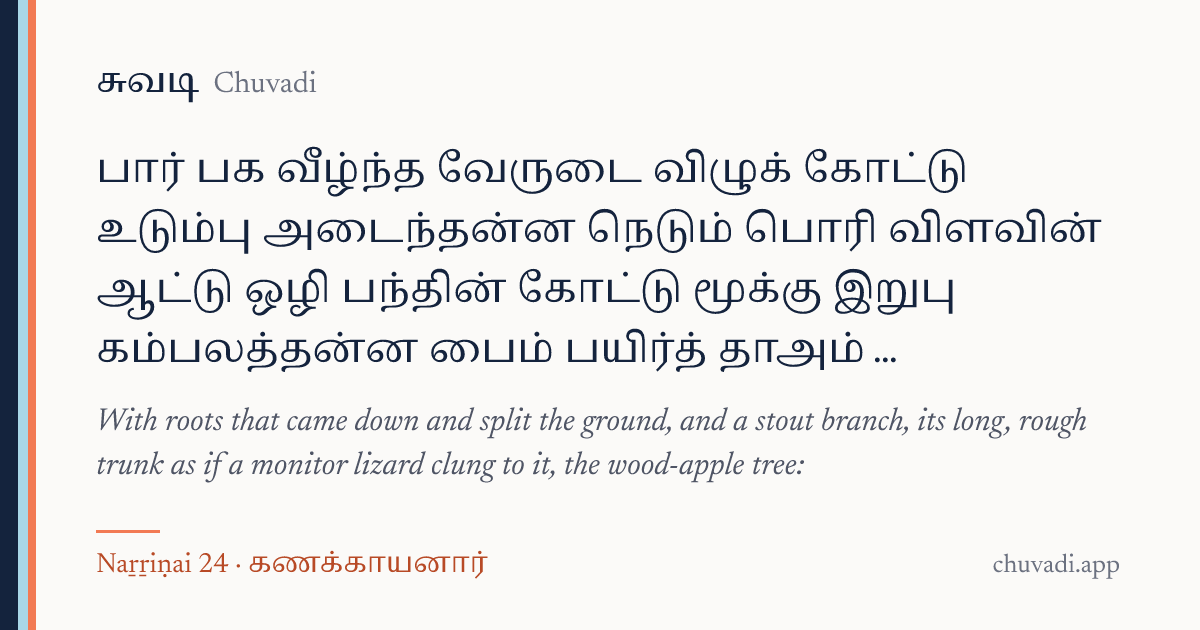

நற்றிணை 24
பாடல் · The poem
Tap a word to see where else it occurs.
பொருள் · Meaning in TamilAI
நிலம் பிளக்கும்படி இறங்கிய வேர்களையும் பெரிய கிளைகளையும், உடும்பு பற்றிக் கிடப்பது போன்ற நீண்ட சொரசொரப்பான அடிமரத்தையும் உடைய விளா மரத்தின் காய்கள், காம்பு முறிந்து, விளையாடி விட்டுச் சென்ற பந்துகளைப் போல, கம்பளம் விரித்தது போன்ற பசும்புல்லின் மேல் சிதறிக் கிடக்கும். 'அந்த விளாங்காயையே உணவாகக் கொண்டு, வேற்று நாட்டின் அரிய வழியில் நாம் செல்வோம்' என்று அவர் சொன்னபோது, சிவந்த அணிகலன்களை அணிந்தவளே, நீ 'நல்லது' என்று உடன்பட்டாய்; மிக நல்லது செய்தாய்! செயலில் ஈடுபடும் மனம் கொண்ட ஆண்கள் ஈட்டும் பொருளுக்காகப் பிரிந்து செல்வார்கள்; அது அவர்களுடைய இயல்பு.
பாலைத் திணை; தலைவன் பொருள் தேடிப் பிரிவதற்கு உடன்பட்ட தோழியிடம் தலைவி சொல்லியது. கொளு 'உவந்து கூறியது' என்றாலும், 'நன்று செய்தனையே' என்பது புகழ்வது போன்ற பழிப்பாகவே தோன்றுகிறது. இறுதி அடிகளில் ஆண்களின் இயல்பைச் சொல்லித் தன்னைத் தேற்றிக்கொள்கிறாளா, கசப்போடு சொல்கிறாளா என்பது பாடலில் திறந்தே விடப்பட்டுள்ளது.
ஆங்கிலம் · English translationAI
Translation
- With roots that came down and split the ground, and a stout branch,
- its long, rough trunk as if a monitor lizard clung to it, the wood-apple tree:
- like a ball abandoned after play, its fruit, the stalk-end snapped,
- lies scattered on the green growth spread like a blanket;
- 'with wood-apples for food, through the hard road of a foreign country
- we shall go,' he said, and you, with your red jewels,
- agreed, saying 'Good': you have done a good thing indeed!
- Men whose minds are set on action, for wealth to be won,
- go far away; that is just their nature.
What the poem says
The colophon says the heroine speaks 'with pleasure' to her friend, who has agreed to the hero's leaving to earn wealth (pālai, poem by Kaṇakkāyaṉār). The pleasure is almost certainly ironic.
The first five lines give the hero's own description of where he will go: a foreign country reached by a hard road, where the wood-apple (viḷā) tree, its rough trunk looking as if a monitor lizard clings to it, drops its round fruit like balls left behind after a game, and travellers live on that fruit. He said 'we shall go', and the friend, without asking the heroine, answered 'Good'.
'You have done a good thing indeed!' is a reproach in the form of praise. The last two lines sound like resignation: men who are set on doing things leave home for wealth; it is simply what men are like. Whether she says this bitterly or in a moment of acceptance is left open; the colophon's word 'with pleasure' may have been meant to point to the irony.