



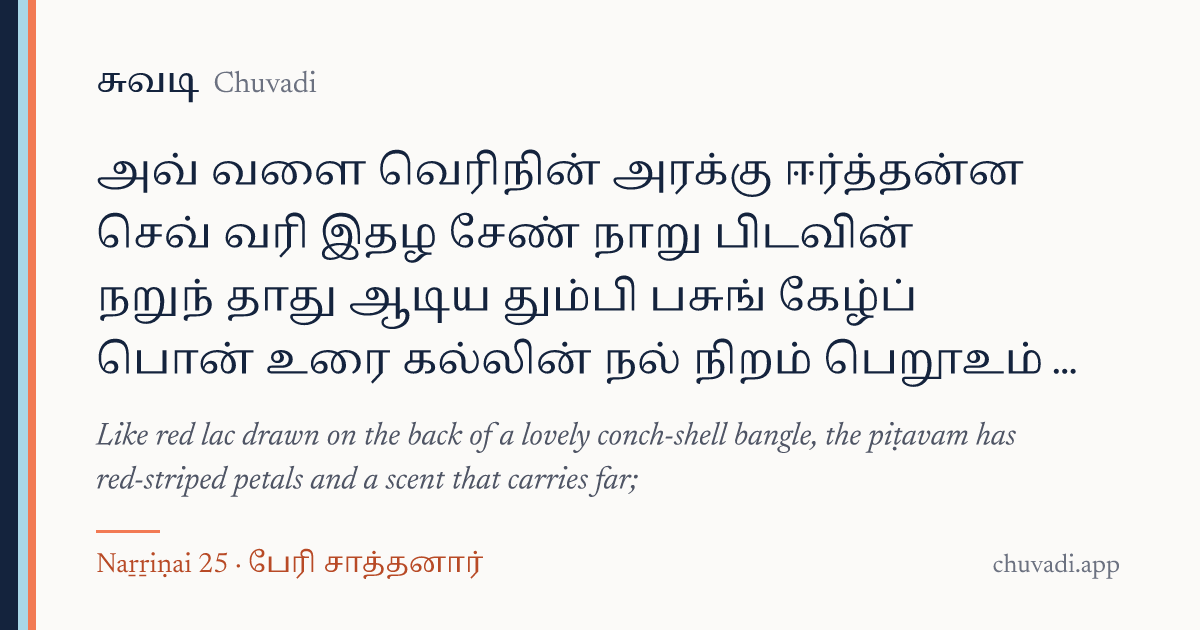

நற்றிணை 25
பாடல் · The poem
Tap a word to see where else it occurs.
பொருள் · Meaning in TamilAI
அழகிய சங்கு வளையலின் முதுகில் அரக்கு இழுத்தது போன்ற சிவந்த வரிகளையுடைய இதழ்களையும், நெடுந்தூரம் மணக்கும் மணத்தையும் உடைய பிடவ மலரின் நறுமணமுள்ள தாதில் ஆடிய தும்பி, பசுமையான கட்டளைக் கல்லில் உரைத்த பொன்னின் அழகிய நிறத்தைப் பெறும். அத்தகைய வளமான மலைநாட்டின் தலைவன் நேற்று நம்மோடு இருந்து, பல கிளைகளையுடைய சிறுதினைப் புனத்தில் கிளிகளை ஓட்டி, தங்கியிருந்து, சொல்ல வந்ததைச் சொல்ல வாய்ப்புக் கிடைக்காமல் திரும்பிச் சென்றான். அவன் திரும்பிச் சென்றது வெறும் துன்பம் அன்று; அது காதல், அழகிய தோழி! மகரந்தத்தை உண்ணும் விருப்பத்தால் மொட்டைச் சுற்றிச் சுற்றி வந்தும் ஊத முடியாத வண்டைப் போன்ற அவனுடைய ஓயாத பார்வையைக் கண்டும், கழலும் வளையலையுடைய நான் உறுதியாக மறுத்த என் பண்பற்ற செயல் இப்போது நினைவுக்கு வந்து வருத்துகிறது.
குறிஞ்சித் திணை; தலைவனின் வேண்டுகோளை ஏற்கும்படி தோழி தலைவியிடம் சொல்லியது. பொன்னிறம் பெறும் தும்பி, தலைவியைச் சேர்ந்தால் தலைவனும் பொலிவு பெறுவான் என்பதைக் குறிக்கும் இறைச்சியாகக் கொள்ளலாம். 'போது தெரிந்து ஊதா' என்ற தொடரின் சரியான பொருள் உறுதியாகத் தெரியவில்லை.
ஆங்கிலம் · English translationAI
Translation
- Like red lac drawn on the back of a lovely conch-shell bangle,
- the piṭavam has red-striped petals and a scent that carries far;
- the bee that has bathed in its fragrant pollen takes on the fine tint
- of gold rubbed on a green touchstone:
- the man of that rich mountain country, yesterday, with us,
- drove the parrots from the small millet with its many stalks, and lingered,
- and finding no chance to speak, went away. His going away
- was not distress; it was love, my lovely friend.
- Like a bee that, craving pollen, hovers at a bud it cannot
- yet sip, his unwearying gaze:
- though I saw it, I held firm, I with my loose bangles,
- and now my graceless act keeps coming back to me.
What the poem says
The friend speaks to the heroine on the hero's behalf, asking her to look kindly on his suit (kuṟiñci, poem by Pēri Cāttaṉār).
She describes yesterday's visit. The hero came, stayed with the girls in the millet field, even helped them scare off the parrots, but never found a moment to say what he had come to say, and left. The friend insists that this was not mere trouble on his part; it was love. She compares his steady gaze to a bee hovering at an unopened bud, longing for its pollen. She herself was hard with him, and now regrets her unkindness.
The opening image is precise. The piṭavam flower's petals have red lines like lac painted on a conch-shell bangle, and the bee that rolls in its pollen turns the colour of a gold streak on a touchstone. Read as iṟaicci, it may suggest that the hero, too, will be transformed by contact with the heroine.
The bee simile in lines 9 and 10 is not entirely clear: pōtu terintu ūtā may mean 'not sipping, though it singles out the bud', or something close to that.