




நற்றிணை 26
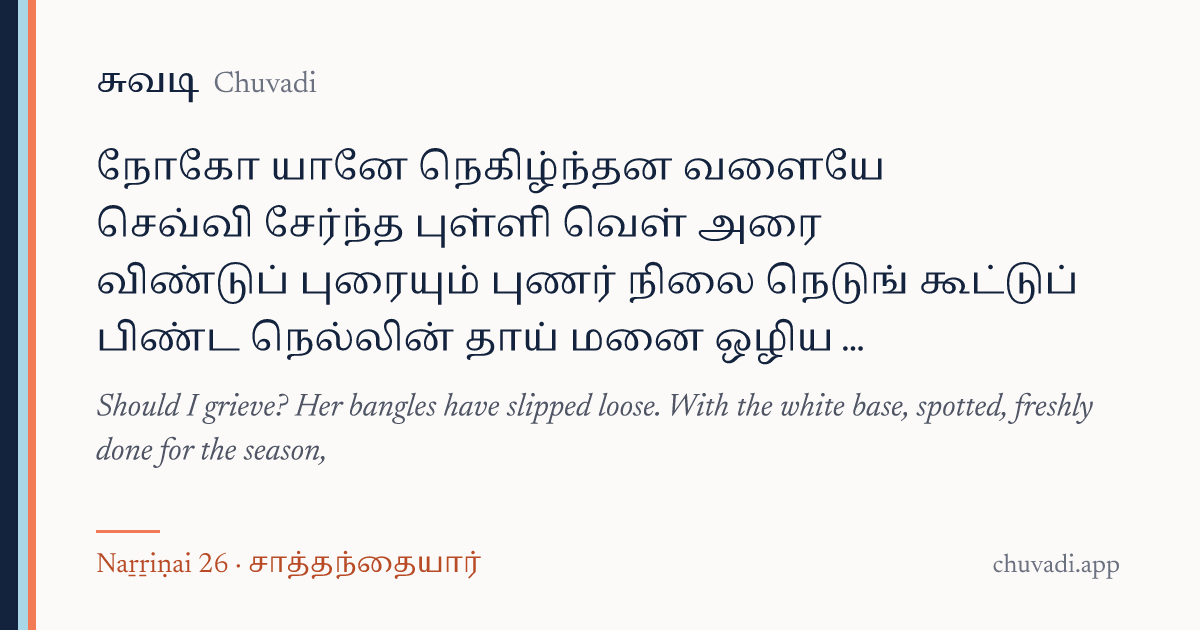
பாடல் · The poem
Tap a word to see where else it occurs.
பொருள் · Meaning in TamilAI
நான் வருந்துவேனோ? அவள் வளையல்கள் கழன்றுவிட்டன. பருவத்துக்கேற்பப் புதுப்பிக்கப்பட்ட, புள்ளிகளையுடைய வெண்மையான அடிப்பகுதியைக் கொண்ட, மலையைப் போன்ற, ஒன்றோடொன்று சேர்ந்த நீண்ட குதிர்களில் குவியல் குவியலாக நெல் நிறைந்த தாயின் வீட்டை விட்டுவிட்டு, கதிரவன் எங்கும் சுட்டெரிப்பதால் வளமான காய்கள் வாடி, வளைந்து முதிர்ந்த பலா மரங்கள் நிற்கும் பாலைவழியில், உங்களோடு துன்பத்திலும் துணையாக வருவது தவறாகுமோ? கூரிய பற்களையும், பொன்னைப் பூசியது போன்ற தேமலையும், கரிய சுருண்ட கூந்தலையும், பெரிய தோள்களையும் உடைய இவளுக்கு அது தவறோ?
பாலைத் திணை; பிரிவைப் பற்றி அறிந்து வேறுபட்ட தலைவியின் நிலையைச் சொல்லித் தோழி தலைவனின் பயணத்தைத் தடுத்தது. செல்வம் நிறைந்த தாய்வீட்டையும் கொடிய பாலைவழியையும் ஒப்பிட்டு, அவளை அழைத்துச் செல், இல்லையேல் செல்லாதே என்று மறைமுகமாகச் சொல்கிறாள். 'செவ்வி சேர்ந்த', 'விண்டுப் புரையும்', 'கெடு துணை' ஆகிய தொடர்களின் பொருள் முழுமையாக உறுதியில்லை.
ஆங்கிலம் · English translationAI
Translation
- Should I grieve? Her bangles have slipped loose.
- With the white base, spotted, freshly done for the season,
- like a mountain, the long granaries joined together,
- full of paddy in heaps: leaving that mother's house,
- where the sun blazes over everything and withers the rich fruit
- of the jack trees, crooked and overripe, on that wasteland road, with you,
- to become your companion in hardship, would that be wrong? For her of the sharp teeth,
- with sunaṅku spots like gold laid on her,
- with thick, curled hair, with broad shoulders.
What the poem says
The heroine has learned that the hero is going to leave her, and she has visibly changed; the colophon says the friend tells him so and makes him give up the journey (pālai, poem by Cāttantaiyār).
The friend begins abruptly: 'Should I grieve? Her bangles have slipped' (a sign that her arms have already thinned). Then she puts a pointed question. The heroine's mother's house is rich, with tall granaries full of paddy standing like a hill. Would it really be wrong for her to leave all that and go with him as his companion, even through a wasteland where the sun shrivels the jackfruit on the trees?
The question is a challenge. Either take her with you, or do not go; she cannot bear to stay behind. The description of the comfortable home and the cruel road shows how much she is willing to give up.
Some details of lines 2 and 3 are uncertain: cevvi cērnta ('come into its season') may mean the granaries have been freshly plastered, and the comparison to a mountain (viṇṭu) is not fully clear. Keṭu tuṇai in line 7, 'companion in ruin or hardship', is also open to more than one reading.