



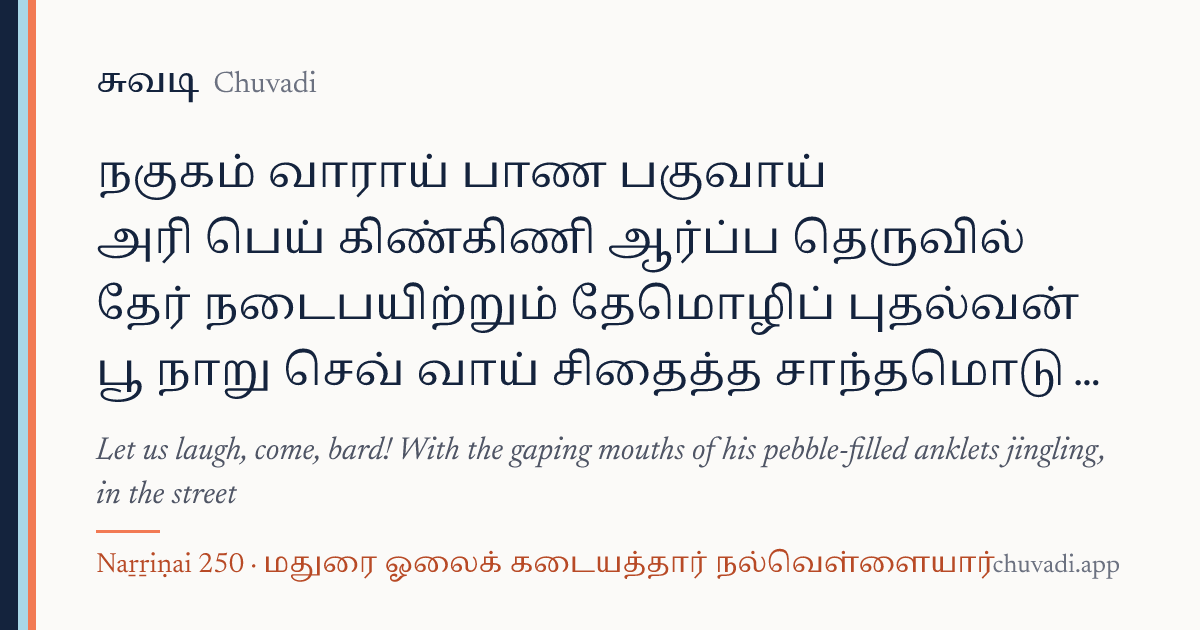

நற்றிணை 250
பாடல் · The poem
Tap a word to see where else it occurs.
பொருள் · Meaning in TamilAI
பாணனே, வா; நாம் சிரிப்போம். பிளந்த வாயையுடைய, பரல்கள் இட்ட கிண்கிணிகள் ஒலிக்க, தெருவில் சிறுதேரை உருட்டிக்கொண்டு நடை பழகும் தேன் போன்ற மழலைச் சொல்லையுடைய எம் மகன், பூமணம் கமழும் தன் சிவந்த வாயால் என் மார்பில் பூசிய சந்தனத்தைச் சிதைத்துவிட்டான். அந்தச் சந்தனத்தோடு, ஆசை நிறைந்த நெஞ்சம் தூண்ட, அவளைத் தழுவும் விருப்பத்தோடு நான் அவள் அருகில் சென்றேன். பிறைநிலவின் அழகு கொண்ட குற்றமற்ற அழகிய நெற்றியும், மணமுள்ள கரிய கூந்தலும் உடைய என் காதலி, அதை வேறு விதமாக எண்ணிக்கொண்டு, அஞ்சும் பெண்மானைப் போல விலகி, 'நீ யார்?' என்று கேட்டுத் தள்ளி நின்றாள்.
மருதத் திணை; தலைவன் கூற்று. பரத்தையிடம் சென்று வந்ததால் ஊடியிருக்கும் தலைவியிடம், மகனைத் தூக்கிக்கொண்டு வீட்டுக்குள் புகுந்த தலைவன், அவள் ஊடல் தீராததால் பாணனிடம் சொல்லியது. மகன் சிதைத்த சந்தனத்தை வேறொரு பெண்ணின் தழுவலால் ஏற்பட்டது என்று தலைவி நினைத்தாள். நகுகம் என்பதில் தலைவனின் வருத்தம் கலந்த நகைப்பு தெரிகிறது; அவன் பெயர் அப்படி ஆகிவிட்டது என்பதும் உள்ளே இருக்கிறது.
ஆங்கிலம் · English translationAI
Translation
- Let us laugh, come, bard! With the gaping mouths
- of his pebble-filled anklets jingling, in the street
- our son of honeyed speech, learning to walk behind his little cart,
- smeared the sandal paste on me with his red mouth that smells of flowers,
- and, as a heart full of desire urged me on, I, longing
- for her embrace, came close to her;
- but she, with her flawless lovely brow fair as the crescent moon,
- with her fragrant dark hair, my beloved, took it for something else,
- and, shying away like a startled doe,
- said, 'Who are you?' and stood off from me.
What the poem says
A comic marutam scene. The hero has been away with other women, and his wife is sulking. He finds his way back into the house by carrying in their small son, and then, unable to cope with what happened, he tells it to his bard (colophon).
The boy is at the age of toddling behind a toy cart in the street, with his tinkling anklets. When the father picked him up, the child pressed his mouth against the sandal paste on his chest and smudged it. With the boy as his excuse, the hero came close to his wife, hoping she would let him embrace her. But she saw the smudged paste and "understood something else": to her it looked like the marks of another woman. She drew back like a frightened doe and asked, "Who are you?", as if he were a stranger.
"Let us laugh" is the hero's rueful invitation to the bard, who, in marutam convention, often carries messages between the hero and his wife or the courtesans. The joke is partly on the hero: his reputation is now such that even an innocent smear is read as evidence.