



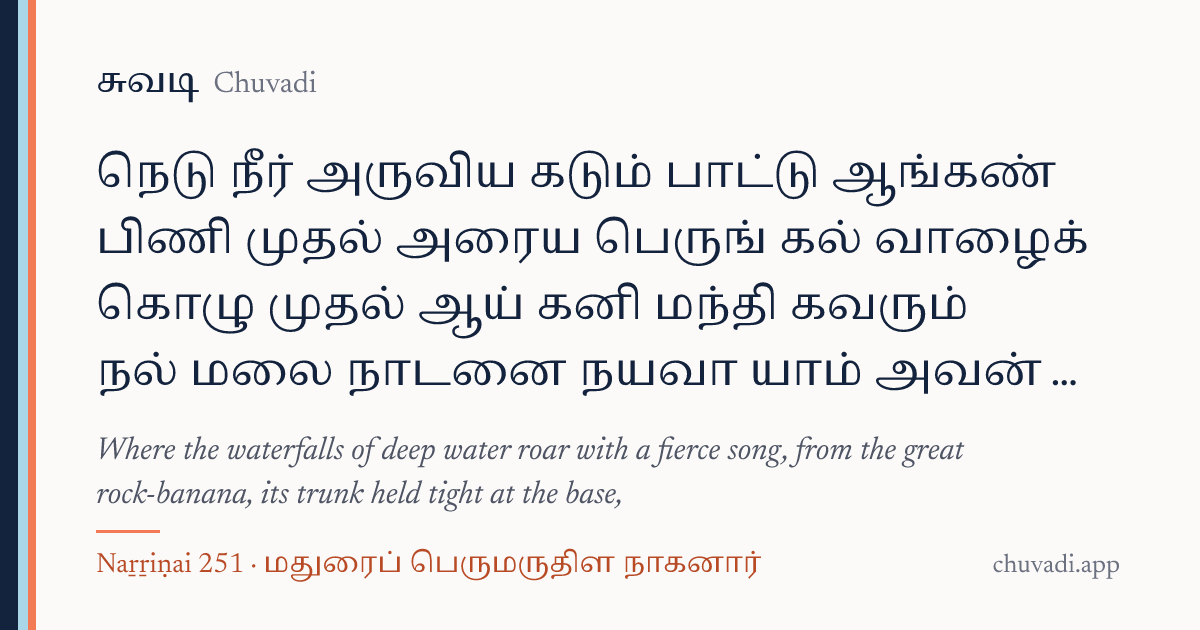

நற்றிணை 251
பாடல் · The poem
Tap a word to see where else it occurs.
பொருள் · Meaning in TamilAI
நீண்ட நீர் வீழும் அருவிகள் பெரும் ஒலியோடு முழங்கும் இடத்தில், அடிப்பகுதி இறுகப் பிணைந்த பெரிய மலைவாழையின் கொழுத்த தண்டிலிருந்து சிறந்த கனிகளைப் பெண்குரங்கு பறித்துக்கொள்கிறது. அத்தகைய நல்ல மலைநாட்டுத் தலைவனை விரும்பி, அவன் மேல் கொண்ட மிகப் பெரிய அன்பினால், உன் கதிர்களிலிருந்து பறவைகளை ஓட்டி, உன்னைச் சுற்றிலும் காத்து வந்ததை நீயே கண்டிருக்கிறாய். தினையே, தளிர் போன்ற என் மேனியின் பழைய அழகு அழிந்தாலும், பலி பெறும் தெய்வத்தைப் போல உன்னைப் போற்றி வளர்த்தோம். மகிழ்ந்து செழித்து, அசைந்து வரும் பறவைகள் ஒன்றுகூடி இளங்கதிர்களைக் கவரும் இடத்தில் உன் தோகைகளை விலக்கிக் கொடுக்காமல், ஓங்கி வளர்ந்து மெதுவாக நீண்ட காலம் கழித்து விளைவாயாக; நீ வாழ்க!
குறிஞ்சித் திணை; தோழி கூற்று. வேலிக்கு அப்பால் தலைவன் நிற்கும்போது, தலைவி வீட்டில் அடைக்கப்படப் போகிறாள் என்பதை அவனுக்கு உணர்த்தத் தினையை நோக்கிச் சொல்லியது. தினை விளைந்து அறுவடை முடிந்தால் தினைப்புனம் காக்கும் வேலை முடிந்து சந்திப்பும் நின்றுவிடும்; ஆகவே விரைந்து மணம் செய்ய வேண்டும் என்பது குறிப்பு. ஏழு முதல் பத்தாம் அடிவரையுள்ள பகுதியின் பொருள் உறுதியாகத் தெரியவில்லை; என் மேனி என்பது தலைவியின் கூற்றுக்கே பொருந்துகிறது.
ஆங்கிலம் · English translationAI
Translation
- Where the waterfalls of deep water roar with a fierce song,
- from the great rock-banana, its trunk held tight at the base,
- the female monkey snatches the choice fruit from the thick stalk:
- longing for the man of that good mountain country, we, for him,
- with our very great love, chased the birds from your ears of grain
- and guarded you on every side, as you have seen; and you, though my
- sprout-fair body may lose its old beauty,
- we tended you like a god who receives offerings; thriving in joy,
- where the swaying birds come together to snatch the young ears,
- do not bend your leaves aside; rise up
- and ripen slowly, long life to you, O millet!
What the poem says
The colophon says that the friend speaks while the hero is just outside the fence, and that her purpose is to let him know the heroine is about to be confined at home. She addresses not him but the millet crop the girls have been guarding.
Guarding the millet field against parrots and other birds is the classic pretext for the girl's meetings with her lover in kuṟiñci poetry. When the grain is ripe and harvested, the girls go back indoors and the meetings stop. So the speaker begs the millet to ripen slowly, and reminds it how lovingly they protected it. The overheard message to the hero is: the harvest is near, after that you will not see her, so act now.
The opening picture of the hero's mountain, where a female monkey snatches the ripe fruit from a wild banana, may hint at what could happen to an unguarded treasure. Lines 7 to 10 are difficult. The speaker refers to "my" body, which suits the heroine better than the friend, and the sense of tending the millet "like a god who receives offerings", and of the leaves that should not bend aside, is not certain; the translation gives one reasonable reading.