




நற்றிணை 252
பாடல் · The poem
Tap a word to see where else it occurs.
பொருள் · Meaning in TamilAI
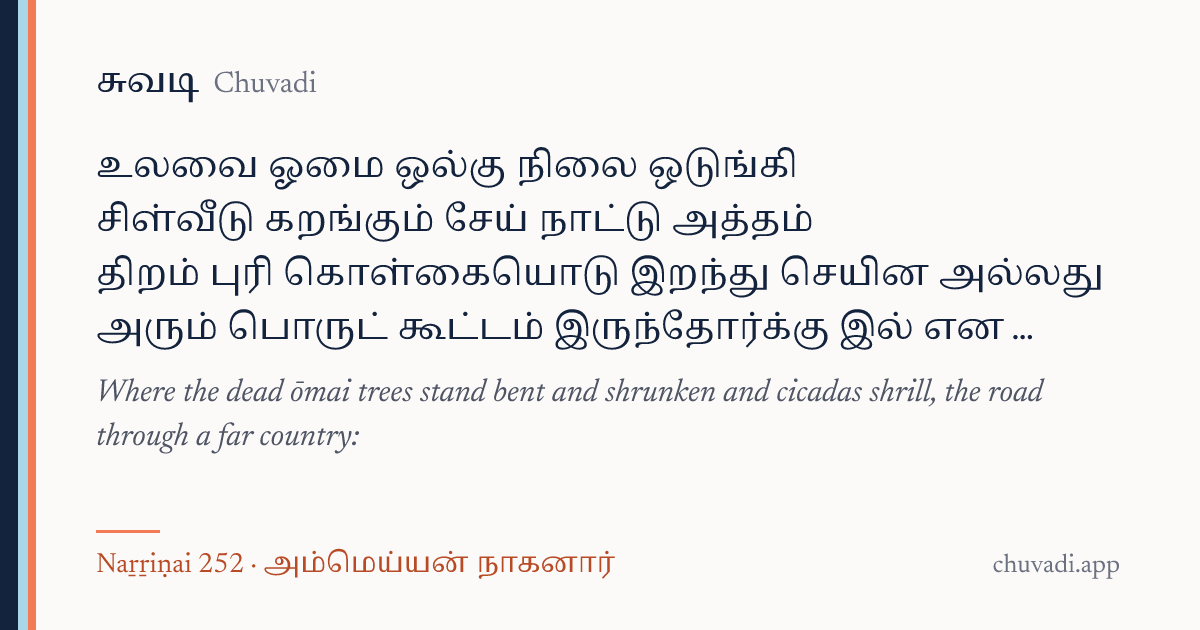
காய்ந்த ஓமை மரங்கள் வளைந்து சுருங்கி நிற்க, சிள்வண்டுகள் இடைவிடாமல் ஒலிக்கும் தொலைதூர நாட்டு வழி அது. 'உறுதியான கொள்கையோடு அவ்வழியைக் கடந்து சென்று செயல்பட்டால் அல்லாமல், வீட்டிலேயே இருப்பவர்களுக்கு அரிய பொருள் சேராது' என்று எண்ணி, உறுதியில்லாத அவர் நெஞ்சம் உறுதி பெற, அவர் திட்டமிட்ட செயல் இடையிலேயே தடைபட்டு நிற்பது போலத் தோன்றுகிறது. அதைத் தடுப்பவை இவைதாம்: அழகுசெய்த சுவரில் வரைந்த பாவையைப் போன்ற குற்றமற்ற உன் தோற்றம்; நுண்மையும் பொருத்தமும் கொண்ட அகன்ற அல்குல்; மை நிறைந்து, மலர்களைச் சேர்த்துக் கட்டியது போன்ற பெரிய இமைகளையுடைய குளிர்ந்த கண்கள்; முயலை வேட்டையாடப் பாய்ந்த விரைந்த சினமுள்ள நாயின் நல்ல நாக்கைப் போன்ற சிறிய பாதங்கள்; அடர்ந்த கூந்தல். அணிகலன் அணிந்தவளே, இவையே உன் குணங்கள்.
பாலைத் திணை; தோழி கூற்று. தலைவன் பொருள் தேடப் பிரியப் போகிறான் என்று கவலைப்பட்ட தலைவியைத் தோழி தேற்றியது. பாலை வழியின் கொடுமையைச் சொல்லி, தலைவன் தன் நெஞ்சைத் தேற்றிக்கொண்டாலும், தலைவியின் அழகே அவன் பயணத்தைத் தடுக்கும் என்கிறாள். சிறிய பாதங்களுக்கு வேட்டைநாயின் நாக்கை உவமையாகக் கூறுவது அவற்றின் மென்மையும் செம்மையும் கருதியதாக இருக்கலாம்.
ஆங்கிலம் · English translationAI
Translation
- Where the dead ōmai trees stand bent and shrunken
- and cicadas shrill, the road through a far country:
- 'Unless one crosses it with a mind set on strength and works,
- there is no gaining hard-won wealth for those who stay at home'; so
- his unresolved heart grew resolved, and the venture he planned
- seems to be stopped midway by these: like a figure on a painted wall,
- your flawless looks,
- your wide hips, fine and fitting; thick with kohl,
- like flowers bound together, your large-lidded cool eyes;
- like the fine tongue of the fierce hound, swift and fast,
- that has sprung up to hunt the hare, your small feet;
- your thick hair, you with fine ornaments: these qualities of yours.
What the poem says
The heroine is anxious because she has heard her husband means to leave in search of wealth. Her friend reassures her (colophon) with a speech that is half argument and half praise.
The hero has indeed talked himself into going. The road is terrible, a far country of dead ōmai trees and shrilling cicadas, but he has told himself that wealth comes only to those who set out and work, never to those who sit at home, and his wavering heart has hardened. Yet, says the friend, the plan seems to be stopped halfway, and what stops it is the heroine herself.
Then comes the catalogue: her face flawless as a painting on a decorated wall, her hips, her kohl-dark eyes like flowers bound in a garland, her hair and ornaments. The most surprising simile is for her small feet, which are compared to the tongue of a hunting dog that has leapt up after a hare, presumably for their slender shape and soft pinkness. The friend's point is that no man could leave such beauty for long; whether he goes or not, she has a hold on him.