




நற்றிணை 253
பாடல் · The poem
Tap a word to see where else it occurs.
பொருள் · Meaning in TamilAI
பறவைகள் தம் கூடுகளுக்குத் திரும்பும் மாலையிலும், இணைந்திருக்கும் காதலர்களைக் காணும்போதும், கட்டப்பட்ட யானையைப் போல நீ சூடான பெருமூச்சு விடுகிறாய். அளவுகடந்து வருத்திய துயரத்தால் மிகவும் தளர்ந்து போயிருக்கிறாய். நான் சொல்வதை நீ கேட்பதில்லை; அவளையே மிகுதியாக நினைத்துக்கொண்டிருக்கிறாய். நினைத்தாலே உன்னை நடுங்கச் செய்யும் ஒளிரும் அணிகளையுடைய அந்த இளம்பெண், பேரொலியுடைய இடியோடு மழை நிறைவாகப் பெய்யும், பல கிண்ணங்களில் கள் தந்து மகிழ்விக்கும் வள்ளல் பாரியின், பலா மரங்கள் நிறைந்த மலையைப் போல, பேரழகு பெற்றவளாகவும், நெருங்க முடியாதபடி கடுமையான காவலில் இருப்பவளாகவும் இருக்கிறாள்.
குறிஞ்சித் திணை; தோழி கூற்று. தலைவி வீட்டில் அடைக்கப்பட்டதைத் தலைவனுக்கு அறிவித்து, விரைவில் மணம் செய்யுமாறு வற்புறுத்தியது. பாரி கபிலரைப் போற்றிய பறம்பு மலைத் தலைவன். வளமும் காவலும் நிறைந்த அவன் மலை, அழகு நிறைந்து காவலில் இருக்கும் தலைவிக்கு உவமை. பெருமூச்சு விடுவதால் பயனில்லை, மணமே அவளை அடையும் வழி என்பது குறிப்பு.
ஆங்கிலம் · English translationAI
Translation
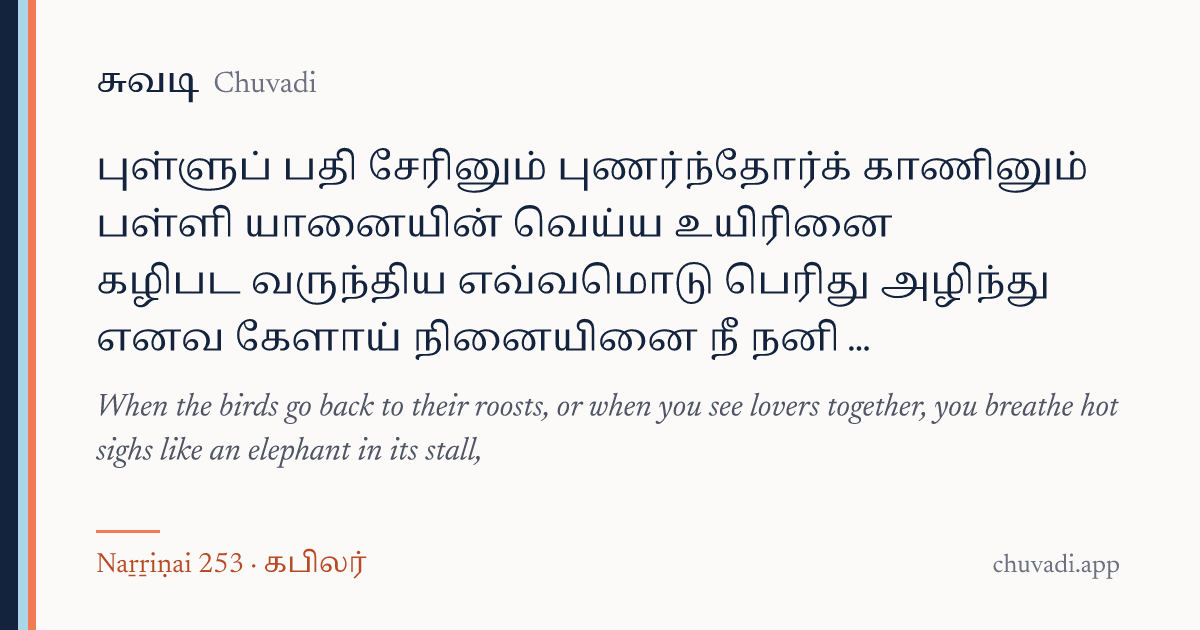
- When the birds go back to their roosts, or when you see lovers together,
- you breathe hot sighs like an elephant in its stall,
- broken down by a grief that has made you suffer past all measure;
- you will not listen to what I say; you think of her and only her,
- the girl with shining jewels whom it makes you shiver even to remember.
- Where rains brought to fullness with thunder of great sound
- fall on the hill of Pāri, lavish in joy with toddy from many leaf-cups,
- the hill crowded with jackfruit trees: like it,
- she has grown into great beauty, and she is hard to reach, so closely is she guarded.
What the poem says
Kapilar's friend speaks to the hero. According to the colophon, she is telling him that the heroine is now confined at home and pressing him to marry her.
She begins by describing his own condition, perhaps with a little mockery. At dusk, when birds go home to their nests, or when he sees couples together, he sighs like a tethered elephant; he ignores whatever she says and thinks only of the girl, who is now so far out of reach that the very thought of her makes him tremble.
The closing simile names Pāri, the generous chieftain of the Paṟampu hill and Kapilar's own patron, here pictured among his toddy cups. His hill, rich with rain and jackfruit trees, stands for the heroine: like it she has come into full beauty, and like it she is strongly guarded. The comparison flatters her and warns him at once. A hill of plenty under heavy guard is not won by sighing; the only way in is by a proper marriage.