




நற்றிணை 254
பாடல் · The poem
Tap a word to see where else it occurs.
பொருள் · Meaning in TamilAI
மணல் வீடு கட்டியும், வரும் அலைகளை உதைத்தும், குன்றுபோல் உயர்ந்த வெண்மணலில் படர்ந்திருக்கும் அடும்புக் கொடியின் மலர்களைக் கொய்தும், சினம் இல்லாத நல்ல சொற்களை இனிமையாகப் பேசியும், மறுமொழி பெறாமல் சோர்ந்து, மெதுவாகப் புறப்பட்டுச் செல்லும் ஒலிக்கும் பெருங்கடல் நாட்டுத் தலைவனே! உப்பு வணிகர் உப்புக்கு மாற்றாகத் தந்த நெல்லின் சோற்றை இன்று எங்களோடு உண்ணுவாயாக. நீல மலர்க்கொத்துகள் மணக்கும் பெரிய மாலை புரளும் மார்பை உடையவனே, உனக்குத் துணை இல்லை; நீ தனியாக இருக்கிறாய்; இன்றிரவு இங்கே தங்கமாட்டாயா? நேராக வகுத்த சிறிய பாத்திகளில் நீரைப் பாய்ச்சி மாற்றி, மழையை வேண்டாத உழவு செய்யும் எங்கள் கடற்கரைச் சோலையில் உள்ள சிறிய ஊரில் தங்கிவிட்டுப் பிறகு செல்வாயாக.
நெய்தல் திணை; தோழி கூற்று. தலைவனைத் தலைவியோடு சேர்க்கும் நோக்கத்தோடு, விருந்தோம்பல் போல ஒரு சூழலைத் தோழி படைத்துச் சொல்லியது. மழை வேண்டாத உழவு என்பது உப்பளத் தொழில். எளிய உணவுக்கும் இரவுத் தங்கலுக்கும் அழைப்பது போலத் தோன்றினாலும், அவனைத் தலைவியின் அருகில் தங்க வைப்பதே அவள் நோக்கம். ஆறு முதல் பன்னிரண்டாம் அடிவரையுள்ள வாக்கிய அமைப்பை வேறு விதமாகவும் பிரித்துப் பொருள் கொள்ளலாம்.
ஆங்கிலம் · English translationAI
Translation
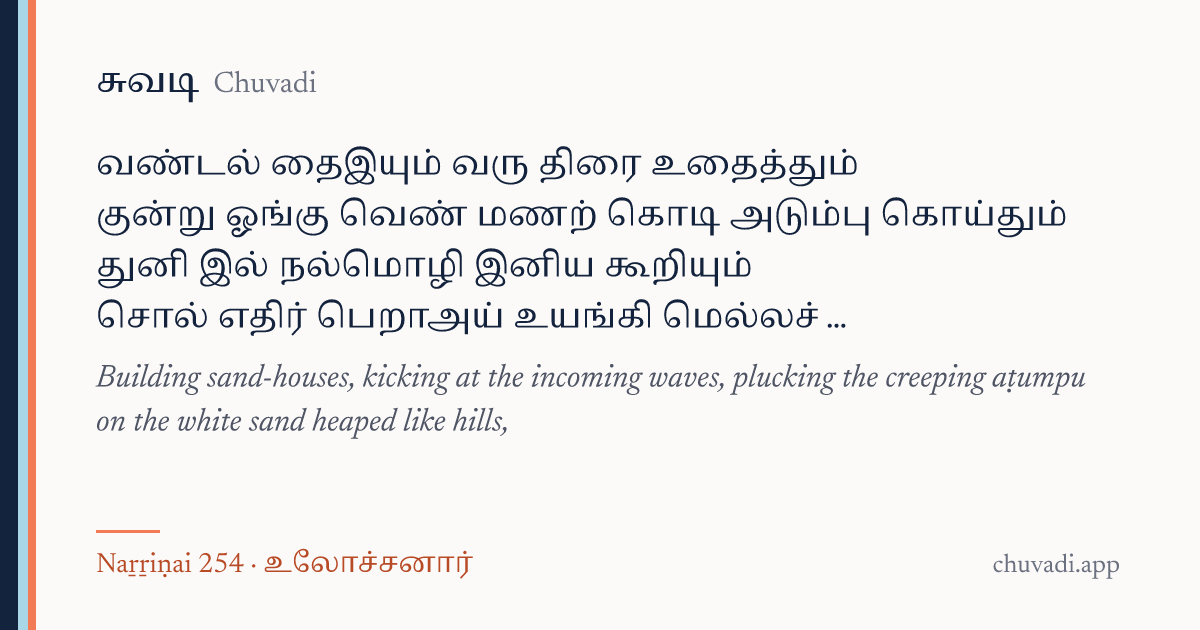
- Building sand-houses, kicking at the incoming waves,
- plucking the creeping aṭumpu on the white sand heaped like hills,
- saying sweet good words with no trace of anger,
- and getting no word in reply, you grow weary, and slowly
- you go, meaning to leave, lord of the wide, dark, roaring sea!
- The rice the salt-traders gave us in barter for salt,
- eat it with us as our meal today; with the great garland, smelling of
- clustered blue lilies, tumbling over your chest,
- you have no companion, you are alone: will you not stay the night?
- where small plots, cut straight, are fed by channels of water,
- a tillage that needs no rain, our
- little hamlet in the lovely seaside grove: rest there, and then go.
What the poem says
The colophon calls this a speech the friend "made up", that is, an invented occasion: she pretends to offer simple hospitality to the hero in order to bring him close to the heroine.
Lines 1 to 5 describe how he has spent the day on the beach, joining in the girls' games, building toy sand-houses, kicking at the waves, gathering aṭumpu flowers and speaking gently, and how the heroine, out of shyness or reserve, has not answered him. Weary and disappointed, he is now slowly leaving.
The friend calls him back. He is alone, without a companion; let him eat a meal of rice with them today and stay the night in their small village before going. The rice comes from salt-traders, who take salt inland and bring grain back in exchange, and the village lives by salt-making: small, evenly divided pans filled with sea water, a kind of farming that needs no rain. These details make the invitation sound humble and practical, but its real purpose is to keep him there. The punctuation and syntax of lines 6 to 12 can be arranged in more than one way.