




நற்றிணை 264
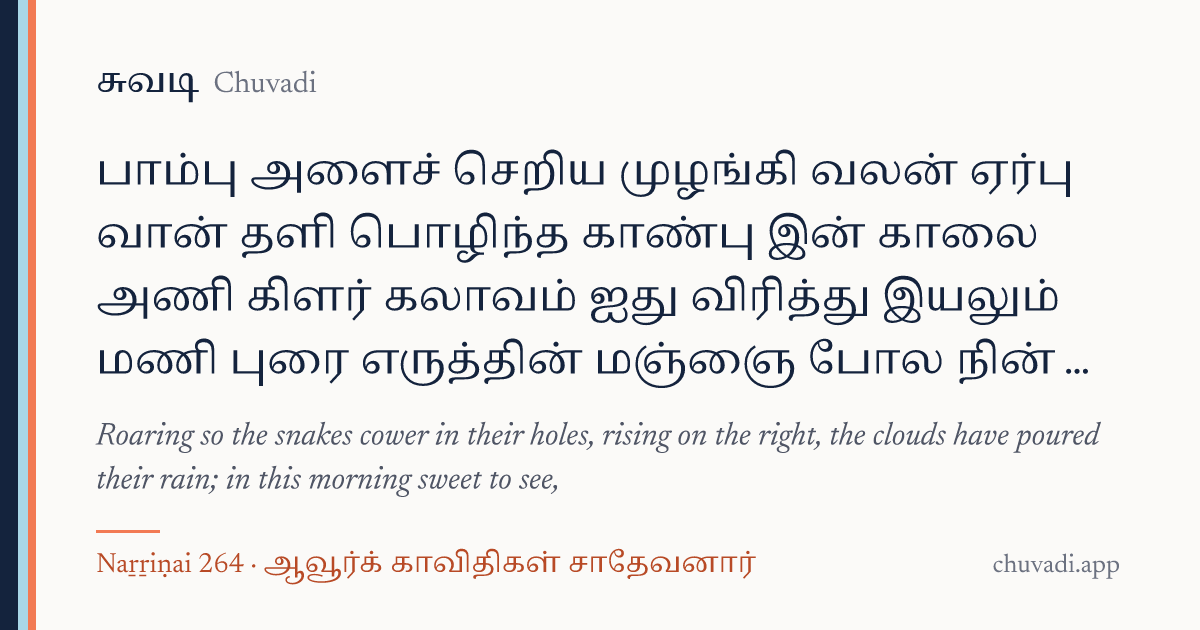
பாடல் · The poem
Tap a word to see where else it occurs.
பொருள் · Meaning in TamilAI
பாம்புகள் தம் புற்றுகளுக்குள் ஒடுங்கும்படி முழங்கி, வலப்பக்கமாக எழுந்து, மேகங்கள் மழையைப் பொழிந்துவிட்டன. காண்பதற்கு இனிய இந்தக் காலைப் பொழுதில், அழகு மிகுந்த தோகையை மெல்ல விரித்துக்கொண்டு நடக்கும் நீலமணி போன்ற கழுத்தையுடைய மயிலைப் போல, பூக்கள் சூடிய உன் கூந்தல் வீசும் காற்றில் அசைய, இளம்பெண்ணே, நீ நடந்து வா; பொழுது ஒளி குன்றிவிட்டது. மூங்கில் நெருங்கி வளர்ந்த புதர்க்காட்டில், இடையர்கள் பசுக்களுக்குக் கட்டிய தெளிந்த ஓசையுடைய மணிகள் ஒலிக்கின்றன. இதோ பார், எங்கள் சிறிய நல்ல ஊர் தோன்றுகிறது.
பாலைத் திணை; தலைவன் கூற்று. தலைவியை உடன் அழைத்துச் செல்லும் தலைவன் வழியில் அவளுக்கு ஊக்கம் தந்தது என்றும், உடன்போக்கிற்குப் பின் திரும்பி வரும்போது ஊரைக் காட்டித் தேற்றியது என்றும் இருவிதமாகக் கொள்ளப்படுகிறது. மழைக்குப் பின் தோகை விரிக்கும் மயில் தலைவியின் அழகுக்கு உவமை. காலை என்றும் பொழுது ஒளி குன்றியது என்றும் வருவதன் இயைபு தெளிவாக இல்லை; மேகத்தால் ஒளி மங்கியதைக் குறிக்கலாம்.
ஆங்கிலம் · English translationAI
Translation
- Roaring so the snakes cower in their holes, rising on the right,
- the clouds have poured their rain; in this morning sweet to see,
- like a peacock that moves, spreading lightly its lovely shining tail,
- its neck like sapphire, with your
- flower-filled hair stirred by the blowing wind,
- walk on, young girl: the daylight is fading.
- In the thicket thick with bamboo, the clear bells the cowherds have tied
- on their cattle are ringing:
- look, here it is in sight, our small good village.
What the poem says
The hero speaks to the heroine as they travel together. The colophon gives two settings: either they are eloping and he is encouraging her on the way, or they eloped earlier and he is now bringing her back, pointing out the village as it comes into view.
The weather is kind. The rain has come with thunder that sends snakes into their holes, and the clouds have risen "on the right", which is probably an auspicious sign. In the fresh morning after the rain she walks with her flower-decked hair blowing in the wind, and he compares her to a peacock spreading its tail, a stock image for a graceful woman in the rainy season.
The urgency of line 6, "the daylight is fading", sits oddly with the "morning" of line 2; the journey may have lasted all day, or "fading" may refer to the dimming of the light under rain clouds. The end is reassuring: the sound of cattle bells from the bamboo thickets where cowherds are camped shows that people are near, and there, at last, is "our small good village". Pālai poems of elopement often end, as this one does, with the hard road behind them and a settled place in sight.