




நற்றிணை 265
பாடல் · The poem
Tap a word to see where else it occurs.
பொருள் · Meaning in TamilAI
முதிர்ந்து இறுகிய தினைப்புனத்தை மேய்ந்த, கிளைத்த கொம்புகளையுடைய முற்றிய கலைமான், சேற்றில் புரண்ட புள்ளிகளும் வரிகளும் உடைய அம்மான், சீழ்க்கை ஒலிக்கும் அம்புகளையுடைய வில்வீரர்களுக்கு இரையாகிறது; அவர்களுடைய பெருந்தலைவனும், பூமாலை சூடிய தோள்களும் வலிய உடலும் உடையவனுமான மிஞிலி காக்கும் பாரம் என்ற ஊரைப் போல, மாலை அணிந்த மார்பையுடைய, தலையில் சிறிய கூர்களையுடைய நல்ல காளையைப் போன்ற, மழையைப் போல வழங்கி மகிழும் வள்ளல் ஓரியின் கொல்லி மலையில் களித்து ஆடும் மயிலின் தோகையைப் போன்றது இவளுடைய தழைத்த மென்மையான கூந்தல். அது நம் அருகிலேயே இருக்கிறது.
குறிஞ்சித் திணை; தலைவன் கூற்று. தலைவியை அடைய விடாது முயலும் தலைவன் தன் நெஞ்சுக்குச் சொல்லியது. மிஞிலி, ஓரி ஆகிய இரு தலைவர்களின் பெயர்கள் வருகின்றன; ஓரியின் கொல்லி மலை மயிலின் தோகை தலைவியின் கூந்தலுக்கு உவமை. முதல் ஆறு அடிகளின் தொடர்பும் பொருளும் உறுதியாகத் தெரியவில்லை; பாடம் சிதைந்திருக்கலாம். இறுதி அடியின் பொருளும் ஐயத்திற்குரியது.
ஆங்கிலம் · English translationAI
Translation
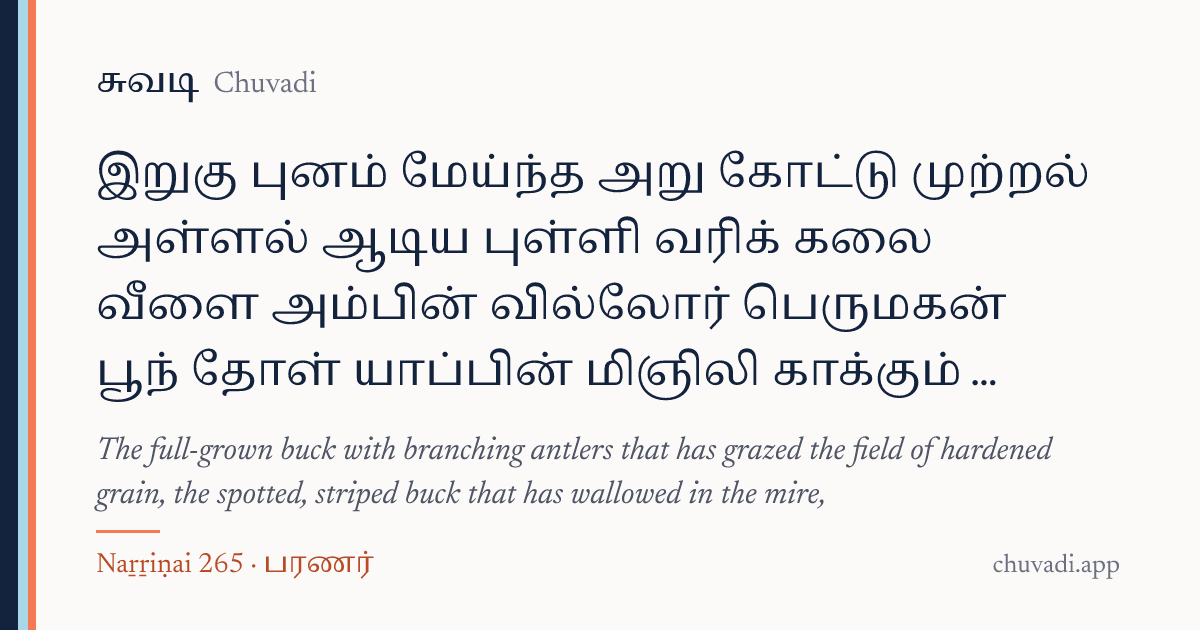
- The full-grown buck with branching antlers that has grazed the field of hardened grain,
- the spotted, striped buck that has wallowed in the mire,
- is quarry for the bowmen with whistling arrows; their great lord,
- Miñili, with flower-decked shoulders and sturdy frame, guards
- Pāram; like it, with a chest hung with garlands,
- like a fine bull with short points on its head,
- Ōri, lavish as the rain in his joy, holds Kolli;
- like the plumage of the exultant peacocks there, her
- thick, soft hair: it is there, within our reach.
What the poem says
The hero, who has been pleading persistently for the heroine, speaks to his own heart (colophon). The poem is almost entirely a chain of comparisons drawn from two named chieftains, and it ends with a single statement about the girl's hair.
Miñili, lord of bowmen, guards the town of Pāram; Ōri, famous for his generosity, holds the Kolli hills, where peacocks dance. The heroine's thick, soft hair is like the spread tail of Kolli's peacocks. Both chieftains appear in other Sangam poems, but nothing beyond what these lines say about them is assumed here.
The first six lines are very hard. The buck that grazed in the ripened field and rolled in the mud seems to be the prey of Miñili's bowmen, and lines 5 and 6, with their garlanded chest and a bull "with short points on its head", may describe Miñili, or Pāram, or something else; the text may well be damaged, and the translation is tentative throughout this stretch. The last line, nam vayiṉāṉē, is also uncertain: it may mean that her hair is "towards us", within the hero's reach, encouraging his heart to persist, or that it is what holds him captive.