




நற்றிணை 269
பாடல் · The poem
Tap a word to see where else it occurs.
பொருள் · Meaning in TamilAI
குரும்பை வடிவான மணிகளைக் கோத்த அணியையும், பெரிய சிவந்த கிண்கிணியையும் அணிந்த, பால் நிறைந்த பவழம் போன்ற வாயையுடைய, பொன்னணிகள் பூண்ட நம் புதல்வன், மாலை நேரத்தில் கட்டிலில் உன் மார்பின் மேல் ஏறி இறங்கி விளையாடுகிறான். அழகிய பற்கள் வரிசையாக அமைந்த அழகிய வாயும், சிறந்த புன்னகையும், குற்றமற்ற ஒழுக்கமும் உடைய, நம் உயிரைப் போன்ற அருமைக் காதலியின் அழகிய முகத்தில் சுழலும் இரு கண்களும், பெருமானே, ஒவ்வொரு இரவும் வள்ளிக்கொடி போல உன்னைச் சுற்றிப் பிணிக்கின்றன. சிறிய பல குன்றுகளைக் கடந்து பிரிந்து செல்பவர்கள் இவற்றை எண்ணுவதில்லை. அவர்கள் மனத்தில் என்ன நினைக்கிறார்கள் என்பதை யார் அறிவார்?
பாலைத் திணை; தோழி கூற்று. பிரிய எண்ணும் தலைவனிடம் தோழி சொல்லி அவன் பயணத்தைத் தடுத்தது; வாயில் மறுத்தது என்றும் கொள்வர். மகனின் விளையாட்டையும் மனைவியின் அன்பையும் நினைவூட்டி, பிரிந்து செல்பவர்களைப் பொதுவாகக் குறை கூறுவதன் மூலம் தலைவனை நேரடியாகக் குற்றம் சாட்டாமல் கடிந்துகொள்கிறாள். வள்ளிக்கொடி பிணிப்பது போல என்பது விட்டு நீங்க முடியாத அன்பைக் குறிக்கிறது.
ஆங்கிலம் · English translationAI
Translation
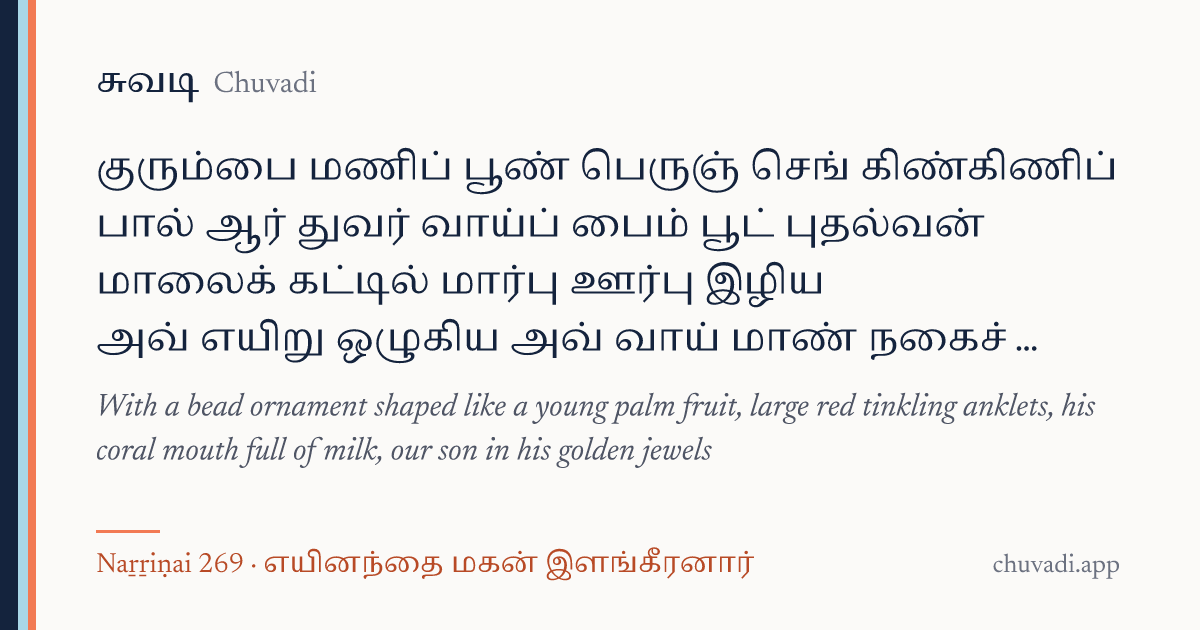
- With a bead ornament shaped like a young palm fruit, large red tinkling anklets,
- his coral mouth full of milk, our son in his golden jewels
- climbs up onto your chest on the evening bed and slides down;
- and with lovely teeth set in a row, her lovely mouth with its fine smile,
- your beloved of faultless ways, dear to us as life:
- the pair of eyes that roll in her lovely face, night after night,
- bind you like the vaḷḷi creeper, my lord. They do not think of this,
- those who go off crossing the many small hills:
- who can know what is in their minds?
What the poem says
The friend speaks to the hero, who is planning to leave. The colophon describes it either as refusing his request, or as making him give up his journey; in either case she is talking him out of going.
She sets before him the life he already has. In the evening his small son, dressed in tiny jewels and tinkling anklets, his mouth still smelling of milk, climbs up and slides down his chest on the bed. His wife, faultless in conduct and dear "to us as life", has a fine smile and lovely eyes, and every night those eyes hold him like the vaḷḷi creeper twining round a tree.
Then she speaks of "those who cross the many small hills", the men who leave home for wealth, in the third person. They do not think of any of this; who can tell what they are after? The general form is a polite way of reproaching the hero without accusing him directly. The kurumpai, the young unripe palm fruit, is a familiar shape for children's ornaments.