



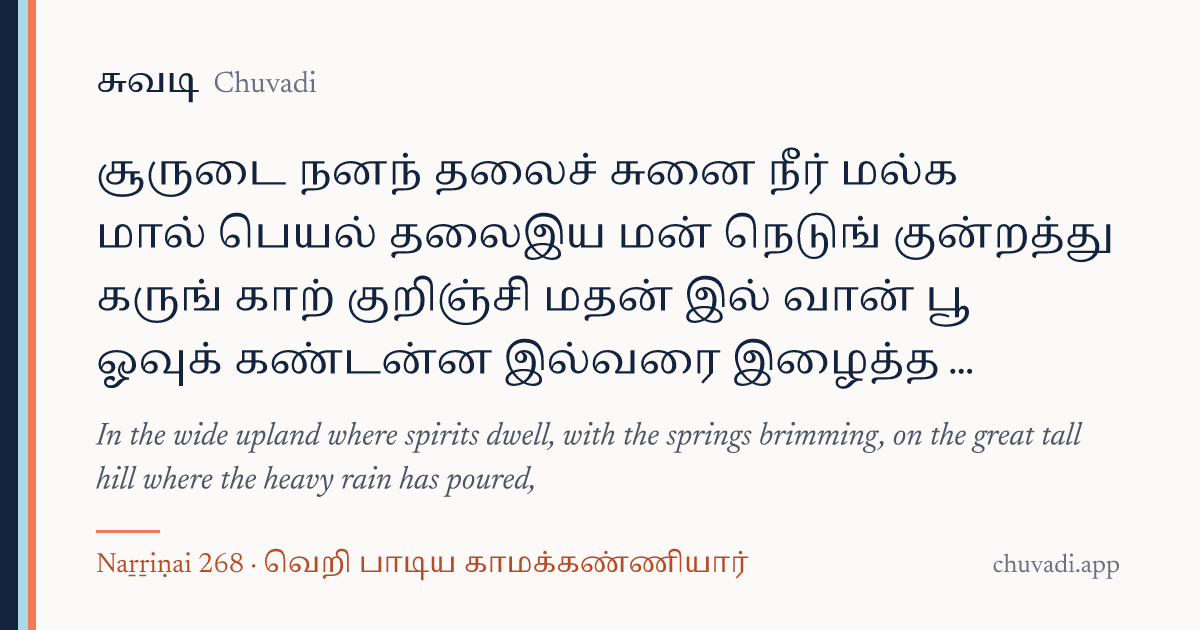

நற்றிணை 268
பாடல் · The poem
Tap a word to see where else it occurs.
பொருள் · Meaning in TamilAI
தெய்வங்கள் வாழும் அகன்ற மலைப்பகுதியில் சுனைகளில் நீர் நிறைந்து வழிய, பெருமழை பெய்த உயர்ந்த நெடிய குன்றத்தில், கரிய தண்டையுடைய குறிஞ்சிச் செடியின் செழிப்பான அழகிய மலர்களிலிருந்து, ஓவியத்தைப் பார்ப்பது போன்ற அழகுடைய, மலைச்சரிவில் கட்டப்பட்ட தேன்கூடுகளில் மணமுள்ள தேன் ஊறுகிறது. அத்தகைய நாட்டுத் தலைவனுக்கு நாம் காதல் செய்ததும், அவன் நம்மிடம் காதல் காட்டாமல் இருப்பதும் எதனால் என்று, தோழி, கேட்டுப் பார்ப்போம்: மணல் பரப்பிய முற்றத்தைக் காவல் செய்து, உண்மை சொல்லும் கழங்குகளையுடைய வேலனை அழைத்து வந்து அவனிடமே வினவுவோம்.
குறிஞ்சித் திணை; தோழி தலைவியிடம் சொல்லியது. தலைவன் வந்து போனாலும் தலைவியின் வேறுபாட்டை அன்னை கண்டாள்; வெறியாட்டு நடத்தும் நிலை வந்துவிட்டது என்று சொல்லியதாகவும் கொள்வர். வெறியாட்டில் வேலன் கழங்கு எறிந்து நோயின் காரணம் சொல்வான்; உண்மையான காரணம் தலைவனே என்பதால் தோழியின் சொல் நகைப்பு கலந்தது. தலைவன் கேட்டு விரைந்து மணம் செய்ய வேண்டும் என்பதே நோக்கம்.
ஆங்கிலம் · English translationAI
Translation
- In the wide upland where spirits dwell, with the springs brimming,
- on the great tall hill where the heavy rain has poured,
- from the dark-stemmed kuṟiñci's rich and lovely flowers,
- in combs built on the cliff's face, like a painting to behold,
- fragrant honey seeps: for the man of that country
- the love we have given, and the lack of love in return,
- what can be the cause of these, friend? Let us ask,
- guarding the courtyard spread with fresh sand,
- once we have brought the vēlaṉ with his kaḻaṅku beads that tell the truth.
What the poem says
The poet's name, "Kāmakkaṇṇiyār who sang of veṟi", points to the subject: the veṟi, the rite in which a diviner called the vēlaṉ, using kaḻaṅku beads (molucca seeds), declares that a lovesick girl has been seized by Murukaṉ and must be appeased. The colophon says the friend speaks to the heroine. The hero still visits, but the mother has noticed that the girl has changed; an alternative reading has the friend say, "even though he comes, you have changed, in such a way that they will hold a veṟi."
The friend's suggestion is ironic. The girls know perfectly well what is wrong: the heroine has given her love to the man of the mountain, and he has not given his in return by marrying her. Let us, says the friend, sand the courtyard, call the vēlaṉ and ask his truthful beads to explain that. The joke is aimed at the hero, who is presumably meant to hear it and see that the family is about to find out, or to misunderstand.
The hill country is rich, rain-fed and haunted by spirits, and in it bees make honey from kuṟiñci flowers in combs hanging like paintings on the cliff. The honey of kuṟiñci flowers may suggest the sweetness of the love that has grown there, but the poem does not press the point.