




நற்றிணை 267
பாடல் · The poem
Tap a word to see where else it occurs.
பொருள் · Meaning in TamilAI
நொச்சியின் கரிய அரும்புகளைப் போன்ற கண்களையுடைய, மணல்மேட்டில் வாழும் நண்டுகளின் பெரிய கூட்டம், ஒளிரும் பற்களும் அழகிய இனிய சிரிப்பும் உடைய பெண்கள் காயும் தினையைக் கையால் கிளறுவது போல, ஞாழல் மரத்தின் மணம் கமழும் நறுமலர்களில் கோடு கிழிக்கும் துறையை உடையவன் அவன். அவன் அவளோடு கூடியிருந்த இனிய விருப்பத்திற்குரிய கடற்கரைச் சோலைக்குத் தனியே வருவது மிகுந்த தனிமைத் துயரைத் தரும் என்று எண்ணி வரமாட்டேன் என்றிருந்தேன்; ஆனாலும் வந்தேன். சிறிய நாக்கையுடைய ஒளிரும் மணியின் தெளிந்த ஓசையைப் போல, மீன் கூட்டத்தை உண்ண வந்து கூடும் பறவைகள் ஒலிக்கின்றன. அது அவன் தேரோசை என்று நான் சொல்வதற்குள், வலிய குதிரைகளையுடைய தலைவன் வந்து நின்றான்.
நெய்தல் திணை; தோழி கூற்று. காவல் மிகுந்து காதல் பெருகிய காலத்தில், வேலிக்கு அப்பால் தலைவன் கேட்கும்படி சொல்லியது; மணத்தைத் தூண்டியது என்றும் கொள்வர். தனிமை உணர்வு தலைவிக்கே பொருந்துவதால், தோழி அவள் சார்பாகப் பேசுகிறாள் எனலாம். பதினோராம் அடியின் பொருள் உறுதியாகத் தெரியவில்லை. மணம் என்ற சொல் திருமணத்தையும் குறிப்பாக நினைவூட்டலாம்.
ஆங்கிலம் · English translationAI
Translation
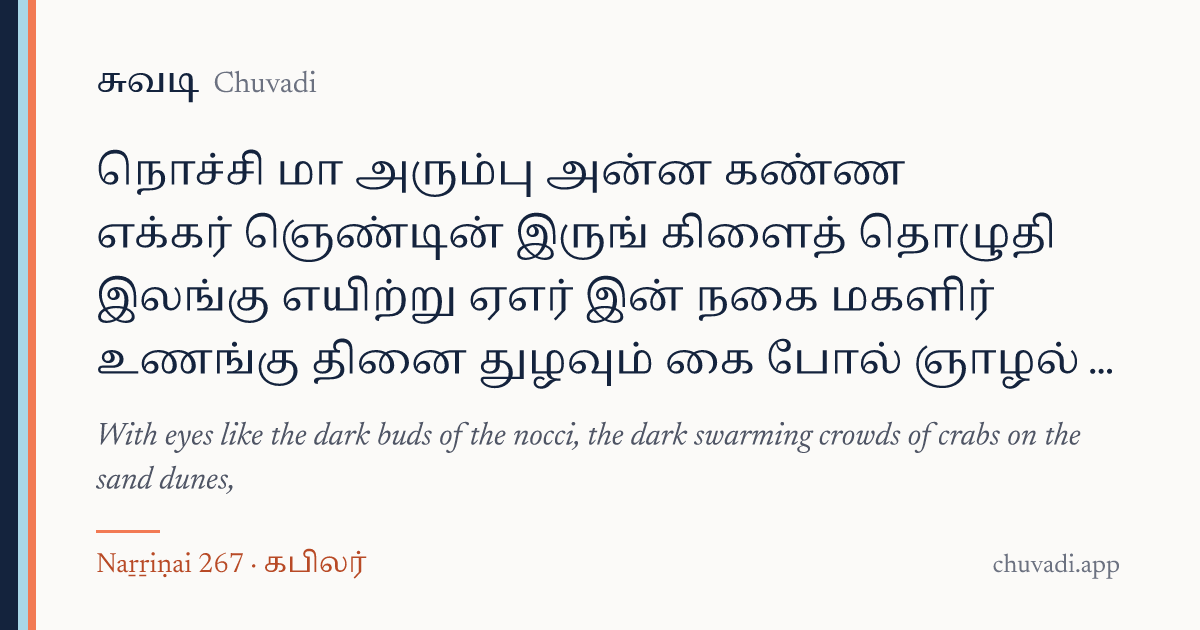
- With eyes like the dark buds of the nocci,
- the dark swarming crowds of crabs on the sand dunes,
- like the hands of girls with gleaming teeth and lovely sweet smiles
- stirring millet laid out to dry, of the ñāḻal
- draw lines through the fragrant flowers, wedding-sweet: the lord of the shore,
- in the sweet, beloved seaside grove where he was joined with her,
- to come alone, I thought, would be full of loneliness,
- and so I would not have come; but come I did,
- and, like the clear sound of a bright bell with a little tongue,
- the cries of the birds that gather to feed on shoals of fish:
- before I could even say, 'That must be him',
- the young lord with his strong horses came and stood there.
What the poem says
Kapilar, best known for kuṟiñci, here writes a neytal poem. The colophon says the friend speaks when the heroine is being guarded more closely and her love has grown, with the hero within earshot; a second reading takes it as a push towards marriage.
The scene is the seaside grove where the lovers used to meet. Crabs with eyes like dark nocci buds swarm over the sand and draw furrows through the fallen ñāḻal blossoms, as girls stir drying millet with their hands. The speaker had not wanted to come there alone, since the place would only remind her of what has been lost. But she came; and as the cries of fishing birds rang out like the clear sound of a bell, the hero suddenly appeared with his chariot.
There is a small puzzle in the speaker. The colophon gives the poem to the friend, but the feeling of desolation in coming "alone" to the grove where "he was joined with her" fits the friend speaking on the heroine's behalf, or the heroine herself. Line 11 is difficult; the translation takes it as the speaker mistaking the bell-like bird cries for the sound of the hero's chariot, before he really does arrive. The word for the ñāḻal's scent, maṇam, also means "wedding", and may carry that second sense here.