




நற்றிணை 277
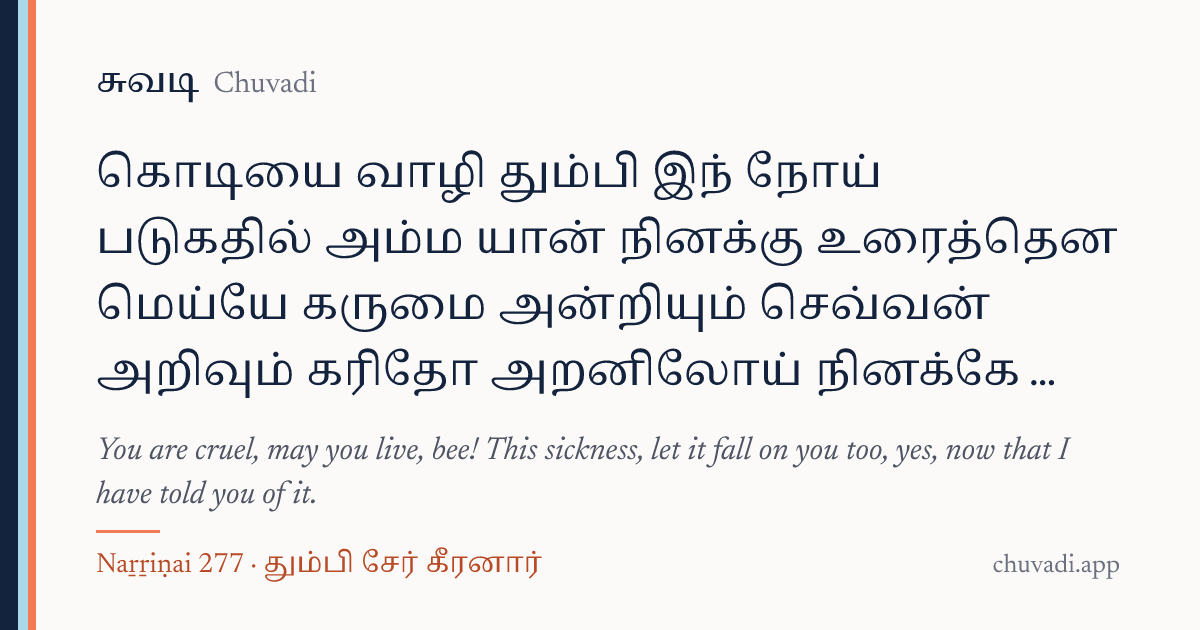
பாடல் · The poem
Tap a word to see where else it occurs.
பொருள் · Meaning in TamilAI
தும்பியே, நீ கொடியவள்; நீ வாழ்க! உனக்கு இதைச் சொன்னதால், இந்தக் காதல் நோய் உனக்கும் வரட்டும். உன் உடல் மட்டும் கருமையானது அன்று; அறமற்றவளே, உண்மையில் உன் அறிவும் கரியதுதானோ? வீட்டை நன்றாகக் காக்கும் அகன்ற சிறந்த வேலியில், நுண்ணிய முட்களையுடைய புதரில், மகரந்தம் நிறைந்து கொத்துக் கொத்தாகப் பூத்திருக்கும் பீர்க்க மலர்களை நீ ஊதுகிறாய்; ஆனால் அவற்றைப் போலவே இருந்தும் மணம் இல்லாததால் என் பசலையை நீ ஊதுவதில்லை. சிறிய பறவைகள் உன்னைப் பிடிக்காதபடி விரைந்து ஓடி அவற்றை விரட்டி, உன் மேல் என் நெஞ்சம் நெகிழ்ந்ததன் பயன் இதுதானோ? அன்பில்லாமல், வெப்பமான மலையின் கடக்க அரிய பாலை வழியைக் கடந்து சென்றவரிடம் போய், அவர் இங்கே திரும்பி வரும்படி என் நிலையை நீ சொல்லவில்லையே!
பாலைத் திணை; தலைவி கூற்று. களவில் கூடிய பின் மணம் செய்யாமல் தலைவன் பொருளுக்காக நெடுந்தொலைவு பிரிந்ததால் ஆற்றாத தலைவி தும்பியிடம் சொல்லியது. பீர்க்கம்பூவின் மஞ்சள் நிறம் பசலைக்கு வழக்கமான உவமை. இறுதிச் சொல்லை என் நிலையைச் சொல் என்ற ஏவலாகவும் கொள்ளலாம்.
ஆங்கிலம் · English translationAI
Translation
- You are cruel, may you live, bee! This sickness,
- let it fall on you too, yes, now that I have told you of it.
- Not only is your body black, but truly,
- is your mind black as well, you who have no virtue?
- On the fine, wide fence that guards the house closely,
- thick with pollen on its small-thorned hedge,
- you hum at the clustered pīram flowers, yet, since it is different
- and has no scent, you never hum at my pallor;
- is this my reward for running quickly to chase off the little birds
- and letting my heart melt for you? To him who has no love,
- who has crossed the hot hills and the hard wasteland,
- you do not go and tell my state, so that he may come back from there.
What the poem says
The poet's name, "Kīraṉār of the bee", comes from this poem. According to the colophon, the heroine has given herself to the hero, but instead of marrying her he has gone far away for wealth; unable to bear it, she speaks to a bee (tumpi).
Her complaint has a neat logic. The bee is black outside, and must be black inside too, because it shows her no kindness. It hums over the pīram flowers on the hedge, which are yellow like the pallor of lovesickness, but it never hums over her pallor, because that has no scent. Pīram, a gourd-like creeper, is the stock comparison for pasalai, the yellowish pallor of a lovesick woman.
She also reminds the bee of a favour: she ran to chase away the small birds that might have eaten it, and her heart softened towards it. What she wants in return is for it to fly over the hot hills to the man without love and tell him how she is, so that he will come back. The last word, uraiyāy, can be an order ("tell!") or a reproach ("you do not tell"); the translation takes it as reproach, in keeping with "you are cruel" in the first line. The threat in line 2, that her sickness should fall on the bee too, is a light curse.